

Sarah Sammons, MD, discusses research efforts in breast cancer focused on HER2-directed therapeutic approaches with central nervous system activity.
Sarah Sammons, MD, discusses research efforts in breast cancer focused on HER2-directed therapeutic approaches with central nervous system activity.
Press Release
Catherine J. Wu, MD, of Dana-Farber Cancer Institute, has been awarded the Sjöberg Prize today for her pioneering research in the field of personalized vaccines to treat cancer.

Pasi A. Jänne, MD, PhD, discusses the FDA approval of osimertinib plus chemotherapy in patients with EGFR-mutant locally advanced or metastatic NSCLC.
Sarah Sammons, MD, discusses what is known about the incidence of brain metastases in patients with breast cancer.
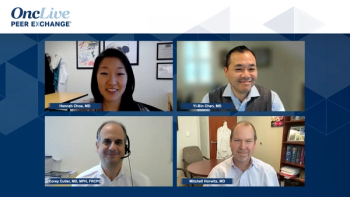
Drs Yi-Bin Chen, Corey Cutler, Hannah Choe, and Mitchell Horwitz discuss a complex chronic GVHD case post-allogeneic transplant. The panel explores third-line options, including belumosudil, ibrutinib, photopheresis, and clinical trials, emphasizing shared decision-making and the need for well-designed trials in guiding treatment decisions.
Drs Yi-Bin Chen, Corey Cutler, Hannah Choe, and Mitchell Horwitz review a clinical scenario of chronic GVHD post-allogeneic transplant. They explore treatment options and emphasize shared decision-making, considering patient preferences and therapeutic benefits.
In the treatment of unresectable or metastatic Merkel cell carcinoma, immune checkpoint inhibitors have activity and tolerability.

Sarah Sammons, MD, discusses the rationale for examining brain metastases in HER2-positive breast cancer, highlighting the implications of recent data.
A panel of experts discuss how to sequence BTK inhibitors and CAR T-cell therapies in patients with MCL.
Experts on mantle cell lymphoma discuss third-line treatment options available for patients.

HPN328, was well tolerated and elicited responses in patients with neuroendocrine prostate cancer and other neuroendocrine neoplasms.
The expert panel explores belumosudil's role in treating chronic GVHD after multiple systemic therapy lines. They discuss the ROCKstar trial, highlighting its overall response rates and real-world experiences.
Drs Yi-Bin Chen, Corey Cutler, Hannah Choe, and Mitchell Horwitz discuss the approval and real-world experiences of ibrutinib and ruxolitinib for chronic GVHD. The panel discusses the challenges and varying effectiveness observed in real-world usage, contrasting the experiences of the two drugs.
Experts on mantle cell lymphoma discuss second-line treatment options available for patients.
A panel of experts review latest data from ASH 2023 on approved and emerging therapies in frontline MCL.
Drs Mayer and Kalinsky conclude their discussion with a look at agents in development and unmet needs for patients with breast cancer and ESR1 mutations.
Bradley McGregor, MD, discusses the next steps for investigating cabozantinib plus atezolizumab in patients with advanced renal cell carcinoma.

Sarah Sammons, MD, discusses the real-world incidence of brain metastases in HER2-positive breast cancer per line of treatment as well as cumulatively.
Jorge J. Castillo, MD, discusses preliminary data from a phase 2 study of acalabrutinib plus rituximab in patients with IgM symptomatic anti-MAG peripheral neuropathy.

Press Release
Cancer survivors with elevated levels of NT-proBNP have a higher risk of death, according to an analysis conducted by Dana-Farber Cancer Institute.
The expert panel explores the approval of ruxolitinib for chronic GVHD based on the REACH3 trial. The panel highlights the trial’s outcomes, long-term follow-up data, and the evolving shift in clinical practices.
The panel examines the transition from systemic steroids to second-line therapies in chronic GVHD, explore standardized clinical trial definitions and real-world challenges in treating chronic GVHD.

Gabriela Hobbs, MD, discusses the significance of key research across myeloproliferative neoplasms from the 2023 ASH Annual Meeting.
Medical oncologists discuss oral SERDs, with a focus on the SERENA-2 trial looking at camizestrant in patients with advanced ER+/HER2- breast cancer.
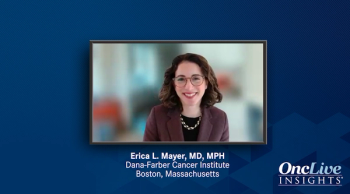
Erica L. Mayer, MD, MPH, discusses the role of elacestrant in the breast cancer treatment landscape and provides clinical insights on its safety profile.
Experts on mantle cell lymphoma discuss first-line treatment options available for patients.
Laurie Sehn, MD, and Bijal Shah, MD, discuss remaining unmet needs for patients with relapsed/refractory FL.
Treatment with adjuvant pembrolizumab significantly improved overall survival vs placebo in patients with clear cell renal cell carcinoma.
Press Release
Dana-Farber Cancer Institute researchers are the recipients of the Outstanding Investigator Award from the NCI, part of the National Institutes of Health.
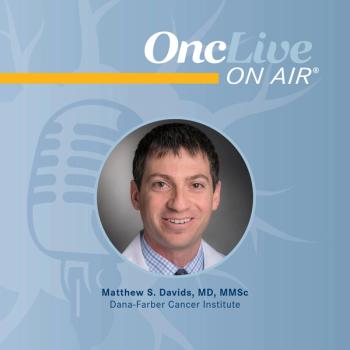
Dr Davids discusses the FDA approval of pirtobrutinib for patients with previously treated chronic lymphocytic leukemia/small lymphocytic lymphoma.