Dana-Farber Cancer Institute | Strategic Alliance Partners
Latest from Dana-Farber Cancer Institute
Belzutifan significantly reduced the risk of progression of clear cell renal cell carcinoma, the most common type of kidney cancer, in patients previously treated with immune checkpoint inhibitors and anti-angiogenic therapies compared with everolimus in a phase 3 clinical trial.

Efficiency in Diagnostic Resolution: Imaging vs. Molecular Tissue of Origin
ByElizabeth O’Donnell, MD, Dana-Farber Cancer Institute,Jon O. Ebbert, MD, Mayo Clinic,Adam H. Buchanan, MS, MPH, LGC,Tomasz Beer, MD Shared insight into the efficiency of diagnostic resolution approaches, comparing imaging-based and molecular tissue of origin strategies in multi-cancer early detection testing.
Advancing Cancer Detection With the ASCEND Trial: Key Objectives and Rationale
ByElizabeth O’Donnell, MD, Dana-Farber Cancer Institute,Jon O. Ebbert, MD, Mayo Clinic,Adam H. Buchanan, MS, MPH, LGC,Tomasz Beer, MD Expert perspectives about the ASCEND trial, its study design, and the critical role it plays in developing advanced cancer detection methods.

Dana-Farber Cancer Institute, a Harvard Medical School affiliated teaching hospital and one of the world's leading cancer treatment and oncology research institutions, and Oncoclínicas & Co, the largest group dedicated to cancer in Latin America, announce the expansion of their collaboration with the opening of the first Oncoclínicas Cancer Center as an International Collaborative Member of Dana-Farber Cancer Institute.

Melissa L. Johnson, MD, Terufumi Kato, MD, and Pasi A. Jänne, MD, PhD, present updates from the International Association for the Study of Lung Cancer 2023 World Conference on Lung Cancer.
Cancer Screening Breakthroughs: Implications for Clinical Practice
ByElizabeth O’Donnell, MD, Dana-Farber Cancer Institute,Jon O. Ebbert, MD, Mayo Clinic,Adam H. Buchanan, MS, MPH, LGC,Tomasz Beer, MD Discover the potential clinical implications of groundbreaking cancer screening studies, DETECT-A and PATHFINDER, and the evolving landscape of multi-cancer early detection.

Glenn J. Hanna, MD, discusses the significance of the FDA approval of toripalimab for patients with recurrent or metastatic nasopharyngeal carcinoma.
Paolo Tarantino, MD, discusses the importance of understanding the role that payloads play in treatment with antibody-drug conjugates in breast cancer.

Julia Rotow, MD, discusses results from a first-in-human phase 1 study of the EGFR-targeting, BCL-XL–inhibiting antibody-drug conjugate ABBV-637 in combination with osimertinib in patients with relapsed/refractory, EGFR-mutated non–small cell lung cancer.
Toni K. Choueiri, MD, discusses findings from the phase 2 LITESPARK-003 study of belzutifan in combination with cabozantinib for patients with advanced clear cell renal cell carcinoma.

While progress in outcomes has been greater in non–small cell lung cancer, recent advances, including molecularly targeted therapies against EGFR and ALK, checkpoint inhibitors that boost immune response, improved staging, and video-assisted surgery have all contributed to progress in treatment of all types of lung cancer, including in SCLC.
Bradley Bernstein, MD, PhD, Chair of Cancer Biology at Dana-Farber Cancer Institute, has been elected to the National Academy of Medicine.
Latest Insights from the PATHFINDER Study: Cancer Detection Advancements
ByElizabeth O’Donnell, MD, Dana-Farber Cancer Institute,Jon O. Ebbert, MD, Mayo Clinic,Adam H. Buchanan, MS, MPH, LGC,Tomasz Beer, MD Panelists explore recent findings of the PATHFINDER study, focusing on the objectives, study design, key results, and differences from previous studies, shedding light on the potential of early cancer detection tests.
DETECT-A Study: Advancements in Early Cancer Detection
ByElizabeth O’Donnell, MD, Dana-Farber Cancer Institute,Jon O. Ebbert, MD, Mayo Clinic,Adam H. Buchanan, MS, MPH, LGC,Tomasz Beer, MD Shared insight into findings of the DETECT-A study, a prospective interventional trial, covering feasibility, safety, and performance of multicancer early detection tests in a healthcare system setting.

Patients with advanced neuroendocrine tumors who experienced progression following prior therapy experienced a significant improvement in terms of progression-free survival after treatment with cabozantinib compared with placebo.
Belzultifan in combination with cabozantinib generated durable responses independent of International Metastatic RCC Database Consortium risk category in patients with treatment-naïve clear cell renal cell carcinoma or those who had received prior immunotherapy.
Novel treatments, combination therapies, and personalized medicine headline several studies led by Dana-Farber Cancer Institute and presented for the first time at the European Society of Medical Oncology Congress 2023 in Madrid, Spain.
The Transformative Potential of Multicancer Early Detection Testing
ByElizabeth O’Donnell, MD, Dana-Farber Cancer Institute,Jon O. Ebbert, MD, Mayo Clinic,Adam H. Buchanan, MS, MPH, LGC,Tomasz Beer, MD Expert panelists delve into multicancer early detection testing and discuss its potential to revolutionize cancer screening, close healthcare gaps, and complement standard care approaches.

Loss of the “housekeeping” gene methylthioadenosine phosphorylase, or MTAP, is a common event in cancer.
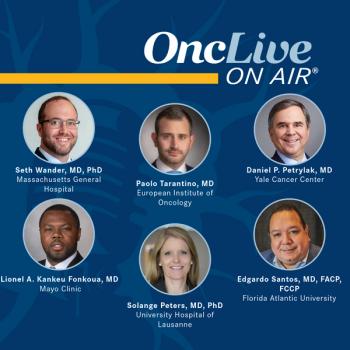
Oncology experts discuss the platinum chemotherapy shortage in the United States.

Rinath M. Jeselsohn, MD, discusses enrollment criteria for the phase 3 VERITAC-2 trial, as well as the potential clinical implications of this research for patients with advanced estrogen receptor–positive/HER2-negative metastatic breast cancer.
Toni K. Choueiri, MD, discusses the benefit of ongoing investigations in metastatic, advanced renal cell carcinoma.

New research from Dana-Farber Cancer Institute researcher Cigall Kadoch, PhD, along with colleagues at Princeton University and Washington University in St. Louis, reveals a key role for intrinsically disordered proteins known as IDRs that are implicated in a wide range of human diseases, from cancer to neurodegeneration

Patients with breast cancer who received hypofractionated postmastectomy radiotherapy experienced similar toxicities vs those who received conventionally fractionated postmastectomy radiotherapy, according to a presentation shared at the 2023 American Society for Radiation Oncology Annual Meeting.

Dr Richardson discusses the background of mezigdomide, key efficacy and safety findings with the agent plus dexamethasone in patients with relapsed/refractory multiple myeloma, and the implications of this combination for heavily pretreated patients in this population.

Biagio Ricciuti, MD, discusses the association between PD-L1 expression levels and long-term survival with anti–PD-L1 monotherapy in patients with advanced non–small cell lung cancer.

Treatment with teclistamab-cqyv in real-world patients with relapsed/refractory multiple myeloma elicited similar efficacy results and a comparable safety profile to findings from the phase 1/2 Majes-TEC-1 trial.
Addressing Health Inequities in Cancer Screening: Challenges and Opportunities
ByBetsy O'Donnell, MD,Jon O. Ebbert, MD, Mayo Clinic,Adam H. Buchanan, MS, MPH, LGC,Tomasz Beer, MD Explore critical issues surrounding health disparities in cancer screening, as discussed by experts, and the urgent need to bridge gaps in access, trust, and follow-up care for underserved populations.
Cancer Screening and Management: Overview of the Current Landscape
ByBetsy O'Donnell, MD,Adam H. Buchanan, MS, MPH, LGC,Tomasz Beer, MD,Jon O. Ebbert, MD, Mayo Clinic A panel of esteemed cancer experts explore the challenges and opportunities in cancer screening and identification, shedding light on the evolving landscape and its impact on clinical practice.

Use of the novel T-charge rapid manufacturing platform for the production of durcabtagene autoleucel CAR T cells within 2 days was successful in producing rapid and robust in vivo expansion, as well as long-term T-cell persistence in patients with relapsed/refractory multiple myeloma, according to a correlative analysis of data from an ongoing phase 1 trial presented at the 2023 IMS Annual Meeting.
