
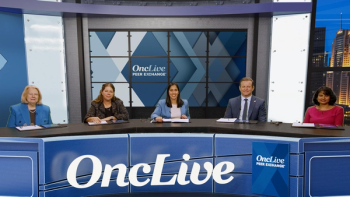
A panel of expert gynecologic oncologists introduce themselves and review frontline maintenance treatment options in ovarian cancer.
A panel of expert gynecologic oncologists introduce themselves and review frontline maintenance treatment options in ovarian cancer.
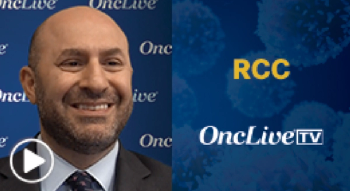
Toni Choueiri, MD, discusses remaining questions associated with the role of immune checkpoint inhibitor continuation following progression on a prior checkpoint blockade in advanced renal cell carcinoma, and attempts to address them through continued research.

Shared insight on the impact risk status has on the selection of optimal therapy for patients with newly diagnosed multiple myeloma.

Key opinion leaders on multiple myeloma management review available induction therapy regimens in the transplant-eligible setting.
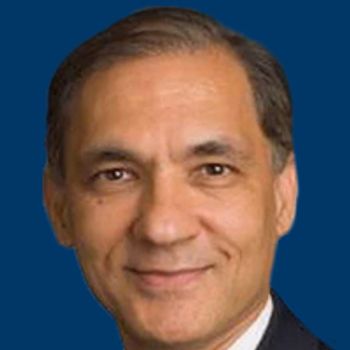
Nikhil C. Munshi, MD, discusses the significance of the FDA approval of cilta-cel in patients with multiple myeloma, shares the long-term findings from the pivotal CARTITUDE-1 trial, and highlights future directions for CAR T-cell therapy in this disease.
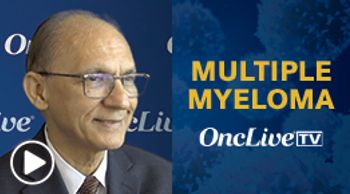
Nikhil C. Munshi, MD, discusses potential future directions for ciltacabtagene autoleucel and other CAR T-cell therapies in patients with multiple myeloma.

Pasi A. Jänne, MD, PhD, discusses findings from a first-in-human phase 1 trial investigating the EGFRxHER3 bispecific antibody-drug conjugate BL-B01D1 in patients with advanced non–small cell lung cancer and other advanced solid tumors.

Comprehensive insight on patient and disease characteristics that help to inform best available therapy for patients with newly diagnosed multiple myeloma.

Expert panelists reflect on the continuing role of stem cell transplant in patients with newly diagnosed multiple myeloma.

Press Release
Researchers from Dana-Farber Cancer Institute, Brigham and Women’s Hospital, and Medical University of Lodz have found a way to detect increased cancer risk associated with BRCA1 and BRCA2 mutations without genetic sequencing, according to a new study in Nature Communications.

Lakshmi Nayak, MD, discusses the treatment landscape for patients with primary central nervous system lymphoma and how tirabrutinib may serve as an option for those with relapsed/refractory disease.
Marios Giannakis, MD, PhD, discusses preliminary efficacy data from a phase 1 study of CGX1321 with or without pembrolizumab in advanced gastrointestinal tumors.
Toni Choueiri, MD, discusses the results of the phase 3 CONTACT-03 trial (NCT04338269) of atezolizumab and cabozantinib in patients with metastatic renal cell carcinoma.
Nikhil C. Munshi, MD, discusses the efficacy data from the final analysis of the phase 1b/2 CARTITUDE-1 trial of ciltacabtagene autoleucel in patients with relapsed/refractory multiple myeloma.

Ann H. Partridge, MD, MPH, discusses the incidence of second primary breast cancer in young patients with a history of breast cancer.
Benjamin L. Schlechter, MD, discusses the future implications of TAC01-HER2 therapy in patients with HER2-positive solid tumors.

Patients with depression and/or anxiety prior to a diagnosis of diffuse large B-cell lymphoma had shorter survival times than patients without a mental health diagnosis.

Jia Luo, MD, discusses the potential use of KB-0742 to target specific MYC-driven tumor types, as well as challenges in the detection of MYC amplification or overexpression in clinical practice.
Sara M. Tolaney, MD, MPH, discusses key data from a final overall survival analysis of the phase 3 TROPiCS-02 trial in hormone receptor–positive, HER2-negative breast cancer.

Sacituzumab govitecan demonstrated an overall survival benefit vs physician's choice of treatment in patient with pretreated, endocrine-resistant, hormone receptor–positive, HER2-negative metastatic breast cancer.
The addition of atezolizumab to cabozantinib did not improve progression-free survival or overall survival vs cabozantinib alone in patients with advanced renal cell carcinoma who previously received treatment with an immune checkpoint inhibitor, missing the primary end points of the phase 3 CONTACT-03 trial.
The CAR T-cell therapy PHE885 produced responses and high minimal residual disease negativity rates with no new safety signals in patients with relapsed/refractory multiple myeloma.

Lakshimi Nayak, MD, discusses the diagnosis of patients with primary CNS lymphoma.
Press Release
Several phase 3 studies conducted by researchers from Dana-Farber Cancer Institute show promising results for patients with rectal, brain, and kidney cancers.
Investigators at Dana-Farber Cancer Institute in Boston, Massachusetts, developed a clinical outreach program combining diagnostic and patient navigation services.
A telephone and web-based weight loss intervention was successful in helping patients with breast cancer who were overweight or obese lose weight—which can ultimately lead to improved outcomes.
For the 11th consecutive year, OncLive is honored to recognize oncology leaders whose innovations have contributed to immeasurable improvements in outcomes for countless patients.
Press Release
People living with HIV remain at higher risk than people living without HIV for developing various cancers that can be treated with immune checkpoint inhibitors.
The addition of cabozantinib to nivolumab and ipilimumab led to improved progression-free survival vs nivolumab and ipilimumab alone in patients with treatment-naïve advanced renal cell carcinoma; however, the rate of grade 3/4 adverse effects with the triplet was 79%.

The combination of osimertinib and platinum-based chemotherapy led to a statistically significant and clinically meaningful improvement in progression-free survival compared with osimertinib alone in patients with locally advanced or metastatic non–small cell lung cancer harboring EGFR mutations.