Dana-Farber Cancer Institute | Strategic Alliance Partners
Latest from Dana-Farber Cancer Institute
Dr Matulonis discusses the FDA approval of mirvetuximab soravtansine-gynx in folate receptor alpha–positive, platinum-resistant ovarian cancer, key efficacy and safety data from the SORAYA trial, and how further research can continue the momentum behind finding effective ovarian cancer treatments.
Dr Leone discusses the distinguishing features of male breast cancer, the benefits and limitations of current treatments, and the importance of raising awareness about this breast cancer subset to propel further research.

In a new study, investigators at Dana-Farber Cancer Institute demonstrate that changes in immune system cells can indicate which patients with high-risk "smoldering" myeloma are likely to progress to myeloma and which will benefit the most from treatment.
Dr Florez discusses why cancer care equity and survivorship should be a priority for all physicians, the steps the health care system needs to take to address disparities in these areas, and specific ways that Dana-Farber is working to close these gaps.

Mirvetuximab soravtansine has been granted accelerated approval by the U.S. Food and Drug Administration on November 14 for the treatment of recurrent platinum-resistant high-grade serous ovarian cancer that highly expresses folate receptor alpha.

Ursula A. Matulonis, MD, discusses the significance of the FDA approval of mirvetuximab soravtansine-gynx in patients with folate receptor α–positive, platinum-resistant ovarian cancer.
Because androgen deprivation therapy alone or with docetaxel is not recommended for most patients with metastatic castration-sensitive prostate cancer, a decision must be made between leveraging couplets vs triplets.

Bradley McGregor, MD, discusses the rationale behind combining belzutifan with lenvatinib in pretreated patients with advanced renal cell carcinoma with clear cell components.

Bradley McGregor, MD, discusses the factors that affect frontline treatment decisions for patients with advanced RCC, the importance of longer-term follow-up of phase 3 trials in kidney cancer, and the benefits of dual immunotherapy and immunotherapy/TKI treatment combinations.

Stephanie Berg, DO, discusses two key clinical trials that have advanced the standard of care in metastatic hormone-sensitive prostate cancer.
Guru P. Sonpavde, MD, discusses the investigation of enfortumab vedotin-ejfv with or without pembrolizumab in urothelial cancer.
Rana R. McKay, MD, discusses the evolution of frontline treatment options for metastatic RCC, and the key clinical trials that have shifted the treatment paradigms in metastatic castration-resistant prostate cancer, nonmetastatic castration-resistant prostate cancer, and advanced prostate cancer.
Richard M. Stone, MD, highlights how uproleselan disrupts E-selectin in the AML tumor microenvironment, the variety of AML regimens that uproleselan may amplify in efficacy, including chemotherapies and venetoclax combinations, and the need for further research to determine whether minimal residual disease negativity rates will improve patient prognoses.

Wenxin Xu, MD, discusses future considerations for the treatment of patients with kidney cancer.
Christine Ryan, MD, discusses the significance of data for ibrutinib plus obinutuzumab in relapsed/refractory chronic lymphocytic leukemia.
A computer platform developed at Dana-Farber Cancer Institute makes the matching process for clinical trials for patients with genomic alterations both easier and faster.

Dana-Farber Cancer Institute, one of the world’s leading cancer research and treatment centers, has partnered with the Parker Institute for Cancer Immunotherapy, the leading network of immuno-oncology expertise in the world, as a member of the PICI Network with a goal to better understand the tumor microenvironment across cancer types and translate these basic discoveries to the clinic as impactful cancer immunotherapies.
Study establishes rationale for combination approaches targeting multiple proteins — therapy produces responses in 70% of study participants, including those who who relapsed after prior CAR T therapy.

TAC01-HER2 demonstrated early signals of clinical activity with a tolerable safety profile in patients with HER2-overexpressed solid tumors.
OncLive® will be LIVE with OncLive® News Network: On Location at the 2022 ESMO Congress. Each day, we will broadcast a series of interviews with top thought leaders, to learn their thoughts and reactions to data presented across oncology during the conference.
Belzutifan plus cabozantanib sustained antitumor activity in patients with advanced clear cell renal cell carcinoma who previously received immunotherapy.
The triplet regimen of cabozantinib plus standard-of-care nivolumab and ipilimumab reduced the risk of disease progression or death by 27% vs placebo in patients with advanced renal cell carcinoma.
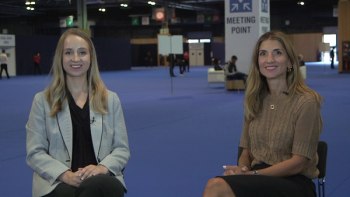
OncLive® will be LIVE with OncLive® News Network: On Location at the 2022 ESMO Congress. Each day, we will broadcast a series of interviews with top thought leaders, to learn their thoughts and reactions to data presented across oncology during the conference.
A dramatic presentation at the 2022 American Society of Clinical Oncology Annual Meeting changed treatment standards seemingly overnight for women with previously treated metastatic HER2-low breast cancer. However, fundamental questions remain.

Drs Bekaii-Saab, George, and von Mehren discuss patient-reported outcomes from the INTRIGUE trial, the rationale for a phase 1/2 study investigating DCC-3116 in patients with RAS or RAF–mutated solid tumors, and how vimseltinib may alleviate unmet needs in the tenosynovial giant cell tumors population.
Matthew P. Goetz, MD, discusses overall survival data with ribociclib and abemaciclib in estrogen receptor–positive, HER2-negative disease; the role of adjuvant pembrolizumab in patients with triple-negative breast cancer; and the efficacy of PARP inhibitors in earlier settings.

An online tool developed by researchers and physicians at Dana-Farber Cancer Institute can accurately and rapidly identify people who should undergo testing for inherited genetic changes that raise the risk of developing certain cancers, a new study shows.

Jacqueline S. Garcia, MD, discusses the role of ruxolitinib (Jakafi) in myelofibrosis.

Toni Choueiri, MD, discusses the future examination of adjuvant pembrolizumab in renal cell carcinoma.
Dana-Farber Brigham Cancer Center opened a new facility in Foxborough, MA, which provides world-class cancer care to patients in southern Massachusetts and Rhode Island.
