

A combination of two drugs that open the floodgates to an immune system attack on cancer curtailed tumor growth in some patients with non–small cell lung cancer that was resistant to a single immunotherapy agent.
A combination of two drugs that open the floodgates to an immune system attack on cancer curtailed tumor growth in some patients with non–small cell lung cancer that was resistant to a single immunotherapy agent.
Jacob Sands, MD, physician, discusses the importance of next-generation sequencing testing in lung cancer.

NECS to be the first and only affiliate member of the Dana-Farber Cancer Institute.
Over a 42-month period, the combination of nivolumab and ipilimumab induced a longer treatment-free survival compared with sunitinib (Sutent) when used as frontline therapy in patients with advanced renal cell carcinoma.
Venetoclax proved to be safe and highly active when used in patients with relapsed or refractory Waldenström macroglobulinemia, including those who previously received BTK inhibitors and those harboring CXCR4 mutations.

Sara M. Tolaney, MD, MPH, sheds light on zanidatamab and the data reported with the agent in combination with chemotherapy for the treatment of patients with HER2-positive breast cancer.

Christopher S. Lathan, MD, MS, MPH, discusses the lack of dissemination and implementation of evidence-based health care delivery innovations focused on addressing disparities in care.
Ian E. Krop, MD, PhD, discusses progress made in 2021 in the management of HER2-positive breast cancer.

Following an extensive, nationwide search, Goldie Taylor has been named Senior Vice President, Chief Communication and Marketing Officer at Dana-Farber Cancer Institute.

The combination of tucatinib, trastuzumab, and capecitabine continued to produce an improvement in overall survival compared with trastuzumab/capecitabine alone in patients with HER2-positive metastatic breast cancer who had stable or active brain metastases.

Sara M. Tolaney, MD, MPH, chief, discusses the importance of evaluating enobosarm in metastatic estrogen receptor–positive, HER2-negative breast cancer.

Sara M. Tolaney, MD, MPH, discusses the mechanism of action that makes bispecific antibodies an intriguing approach in managing HER2-positive breast cancer, efficacy data with zanidatamab that were presented during the 2021 SABCS, and her thoughts on sequencing strategies with bispecific antibodies among other agents in the paradigm.
Sara Tolaney, MD, MPH, discusses the data with the oral selective estrogen receptor degrader, elacestrant, and the androgen receptor agonist, enobosarm, in estrogen receptor–positive, HER2-negative breast cancer.
Cancer physicians have long disagreed about whether stem cell transplants from donors with an asymptomatic blood condition called clonal hematopoiesis put recipients at risk for subsequent health problems.
Investigators hope to improve upon the efficacy and tolerability of androgens in the treatment of breast cancer with the October 13, 2021, initiation of the phase 3 ARTEST trial.
Approval of the drug abatacept opens up bone marrow transplant as an option for many more patients with cancer or blood disorders — especially patients of diverse ethnicities, who have extra difficulty finding a good match
A phase 3 clinical trial will compare the safety and efficacy of a co-formulation of pembrolizumab and quavonlimab plus lenvatinib, and that of pembrolizumab, belzutifan, and lenvatinib, vs pembrolizumab/lenvatinib alone in the frontline treatment of patients with advanced renal cell carcinoma.
Pembrolizumab demonstrated a statistically significant and clinically meaningful improvement in disease-free survival vs placebo as a postnephrectomy adjuvant therapy in patients with renal cell carcinoma at intermediate-high or high risk of recurrence, and in those who are M1 with no evidence of disease.

A combination of two targeted cancer drugs showed unprecedented, “clinically meaningful” activity in patients with highly malignant brain tumors that carried a rare genetic mutation, according to a clinical trial report by investigators from Dana-Farber Cancer Institute.
Acalabrutinib, with or without obinutuzumab, induced a significant efficacy benefit for patients with treatment-naïve chronic lymphocytic leukemia compared with ibrutinib or venetoclax plus obinutuzumab, according to findings presented during the 63rd ASH Annual Meeting and Exposition.
Datopotamab deruxtecan showed highly encouraging and durable efficacy through overall response rates in patients with advanced or metastatic triple-negative breast cancer.
Dr. Choueiri discusses the significance of the FDA approval of pembrolizumab as adjuvant therapy in renal cell carcinoma and key data from the pivotal phase 3 KEYNOTE-564 trial.
Researchers from Rutgers Cancer Institute of New Jersey and Dana-Farber Cancer Institute developed and evaluated a computational pipeline that utilizes information commonly provided in tumor sequencing assays to predict the origin of detected DNA alterations.
Dana-Farber Cancer Institute is proud to announce that 35 of its researchers have been named to the Highly Cited Researchers list of 2021 released today by the Institute for Scientific Information at Clarivate.

Matthew L. Meyerson, MD, PhD, is constantly curious, both about the world and the people around him and as one of the top cancer researchers on the planet, he has a talent for elevating younger scientists, turning obstacles into discoveries, and sensing future research opportunities.
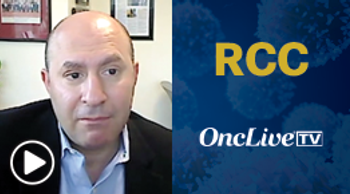
Toni K. Choueiri, MD, discusses the FDA approval of adjuvant pembrolizumab in renal cell carcinoma.
Patients with lymphoid malignancies, especially those who have received recent anti-CD20 antibody therapy, have reduced humoral responses to the mRNA COVID-19 vaccines, and as such, should continue to take precautionary measures against COVID-19 infection irrespective of vaccination status.
Corey S. Cutler, MD, MPH, FRCPC, discusses the diagnostic and treatment landscape of chronic graft-vs-host disease.

Glenn J. Hanna, MD, discusses promising data reported with tipifarnib in patients with HRAS-mutated head and neck cancer.

The 9th Annual Giants of Cancer Care® awards ceremony was a featured event at the 39th Annual CFS®: Chemotherapy Foundation Symposium Innovative Cancer Therapy for Tomorrow®, hosted by Physicians’ Education Resource® LLC.