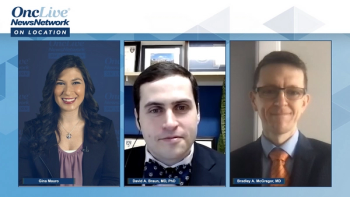
Omar Nadeem, MD, discusses the integration of isatuximab-irfc in relapsed/refractory multiple myeloma.
Omar Nadeem, MD, discusses the integration of isatuximab-irfc in relapsed/refractory multiple myeloma.

Giada Bianchi, MD, discusses diagnostic factors for light chain amyloidosis.

Judy Garber, MD, MPH, discusses the efficacy of adjuvant olaparib in patients with high-risk, HER2-negative breast cancer, as demonstrated in the phase 3 OlympiA trial.

Omar Nadeem, MD, discusses the emergence of quadruplet regimens in multiple myeloma.

The expanding therapeutic landscape in multiple myeloma is poised to integrate daratumumab-based quadruplet therapies and novel cellular therapies as standard options for patients with newly diagnosed and relapsed/refractory disease.

Adam Sperling, MD, PhD, discusses the rationale to evaluate cellular therapy in multiple myeloma.

Atish D. Choudhury, MD, PhD, discusses emerging treatment strategies in metastatic castration-resistant prostate cancer.

Although circulating tumor cell analysis of patients with HER2-negative metastatic breast cancer identified patients with CTC amplification, the utility of subsequent HER2-directed treatment with trastuzumab plus vinorelbine in this patient population was low.
Dr. Munshi discusses the significance of the FDA approval of ide-cel in relapsed/refractory multiple myeloma, data from the KarMMa trial, which served as the basis for the approval, and next steps for CAR T-cell therapy in the field.

James A. DeCaprio, MD, discusses raising awareness in Merkel cell carcinoma.

Despite a modest central nervous system overall response rate, the combination of pertuzumab and high-dose trastuzumab was found to induce clinical benefit in 68% of patients with HER2-positive metastatic breast cancer enrolled to the phase 2 PATRICIA trial.
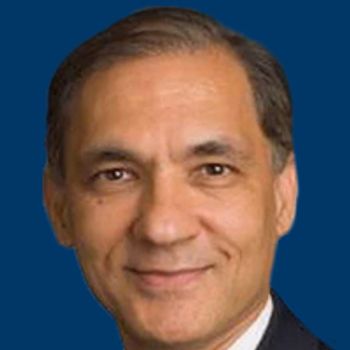
Nikhil C. Munshi, MD, discusses how idecabtagene vicleucel has potentially marked the beginning of a new chapter for cellular therapy in multiple myeloma.

Guru P. Sonpavde, MD, discusses anticipated data in bladder cancer.

Atish D. Choudhury, MD, PhD, discusses future research directions for the combination of pembrolizumab and radium-223 dichloride in patients with metastatic castration-resistant prostate cancer.

The plethora of actionable targets in intrahepatic cholangiocarcinoma has created opportunities for these patients to be treated with targeted therapy.
Dr. Sonpavde discusses key data presented during the 2021 Genitourinary Cancers Symposium in urothelial carcinoma and anticipated research directions with immunotherapy, chemotherapy, and antibody-drug conjugates.
In our exclusive interview, Dr. Choueiri and Dr. Motzer discuss the clinical implications of the phase 3 CheckMate-9ER trial in advanced renal cell carcinoma and how to best use the combination in practice.

Narjust Duma, MD, has been named as the new associate director of the Cancer Care Equity Program at the Dana-Farber Cancer Institute, as well as an assistant professor of medicine at Harvard Medical School.

Nikhil C. Munshi, MD, discusses the FDA approval of idecabtagene vicleucel for patients with relapsed/refractory multiple myeloma after 4 or more prior lines of therapy, including an immunomodulatory agent, a proteasome inhibitor, and an anti-CD38 monoclonal antibody.

Dostarlimab plus niraparib and bevacizumab showcased favorable antitumor activity and tolerability in patients with platinum-resistant ovarian cancer.

Paul G. Richardson, MD, discusses the toxicity profile of melphalan flufenamide in relapsed/refractory multiple myeloma.
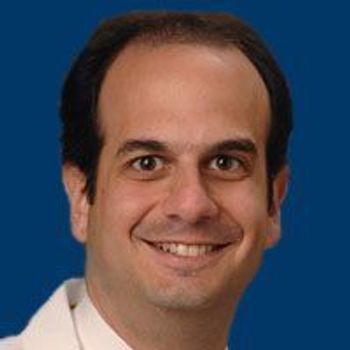
Corey S. Cutler, MD, MPH, FRCPC, discusses the potential clinical implications should belumosudil gain FDA approval in chronic GVHD.

The treatment paradigm for chronic lymphocytic leukemia has expanded beyond continuous treatment with BTK inhibitors with the addition of the time-limited regimen of venetoclax plus obinutuzumab.

Paul G. Richardson, MD, discusses the FDA approval of melphalan flufenamide in relapsed/refractory multiple myeloma.

February 19, 2021 - The National Comprehensive Cancer Network has issued guidelines for the management of children with a rare type of kidney cancer referred to as Wilms Tumor, or nephroblastoma.
Patients with metastatic renal cell carcinoma have a new frontline treatment alternative following FDA approval of the combination of nivolumab plus cabozantinib combination.
During a recent OncLive Peer Exchange®, a panel of experts in kidney cancer from the United States and France convened to discuss several important immunotherapy studies presented during the ESMO Virtual Congress 2020, as well as several others that are under way and expected to report out over the next few years.
February 13, 2021 - Belzutifan used in combination with cabozantinib shrank tumors for 88% of patients and the disease control rate was 90% for patients with previously treated advanced clear cell renal cell carcinoma.