

Glenn J. Hanna, MD, discusses the role of second-line cetuximab (Erbitux) in head and neck cancer.
Glenn J. Hanna, MD, discusses the role of second-line cetuximab (Erbitux) in head and neck cancer.
Ziad Bakouny, MD, MSc, discusses recent ongoing research into the genomic drivers and biology of tRCC that could lead to improved outcomes for patients.

Irene Ghobrial, MD, discusses future efforts to prevent the development of multiple myeloma.
Toni Choueiri, MD, discusses key highlights from the 2021 Kidney Cancer Research Summit and exciting research efforts underway in renal cell carcinoma.

Irene Ghobrial, MD, discusses the key objectives of the PROMISE study in multiple myeloma.
Bradley McGregor, MD, discusses ongoing trials in patients with non-clear cell renal cell carcinoma (RCC).
The frontline triplet combination comprised of acalabrutinib, venetoclax, and obinutuzumab proved to be highly active and well tolerated when used in the treatment of patients with chronic lymphocytic leukemia.

Sara M. Tolaney, MD, MPH, discusses progress made with escalation and de-escalation strategies in HER2-positive breast cancer, ongoing research with immunotherapy, and efforts being made to further move the needle forward.

Toni K. Choueiri, MD, discusses the results of the KEYNOTE-564 study in renal cell carcinoma.
Adjuvant treatment with pembrolizumab led to a significant improvement in disease-free survival compared with placebo after nephrectomy in patients with renal cell carcinoma who are at high risk for recurrence, as underscored by data from the pivotal phase 3 KEYNOTE-564 trial.
Jorge J. Castillo, MD, discusses the integration of BTK inhibitors in Waldenström macroglobulinemia.

When George P. Canellos, MD, first joined the field of oncology in the 1960s, many of his peers thought he was making huge mistake.
Increased intake of vitamin D was associated with a decreased risk of early-onset colorectal cancer and precursors in younger women between the ages of 25 years and 42 years.
The FDA has granted a priority review designation to a supplemental biologics license application seeking the approval of abatacept for the prevention of moderate to severe acute graft-versus-host disease in patients aged 6 years and older who are receiving unrelated donor hematopoietic stem cell transplantation.

Primary central nervous system lymphoma is a rare and aggressive variant of extranodal non-Hodgkin lymphoma that occurs in the brain, spinal cord, cerebrospinal fluid, or eyes in the absence of systemic disease.
Ongoing research efforts are pushing to establish minimal residual disease negativity as a surrogate end point for patient outcomes in multiple myeloma clinical trials, and MRD assessment is becoming an increasingly utilized tool to inform real-world clinical decisions.
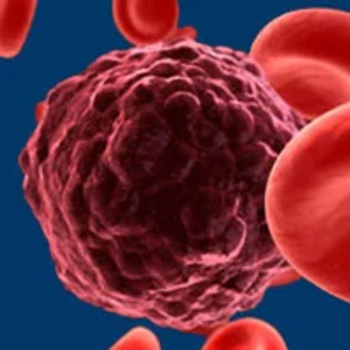
Peter G. Miller, MD, PhD, discusses the characteristics and risks associated with clonal hematopoiesis and risk-stratification efforts for patients with cancer who are at risk of developing therapy-related secondary malignancies from clonal hematopoiesis.
Chris Labaki, MD, and Quoc-Dien Trinh, MD, discuss their research on the decline in cancer screenings during the height of the COVID-19 pandemic, the recovery of these tests, and potential existing disparities to be addressed.
Dr. Labaki and Dr. Trinh discuss their research on the recovery of cancer screening tests, its link with potential racial disparities from the COVID-19 pandemic, and how the community can continue to emphasize the importance of cancer screening while working to close these disparities in cancer care.
The David Liposarcoma Research Initiative will spearhead groundbreaking research into liposarcoma at Dana-Farber and external collaborating partner institutions, with the aim of transforming the treatment of this rare, underfunded, and understudied disease in order to improve care of patients through research.
Peter G. Miller, MD, PhD, discusses the characteristics of clonal hematopoiesis.
The first participants from the United States have been dosed with LUT014, a novel, topical BRAF inhibitor in a phase 2 trial that is evaluating the agent in patients with metastatic colorectal cancer who have developed dose-limiting acneiform lesions following treatment with an EGFR inhibitor.

Chris Labaki, MD, discusses racial disparities with regard to mammography screenings during the COVID-19 pandemic.

Quoc-Dien Trinh, MD, discusses findings from a study examining the temporal changes in cancer tests and diagnoses in a large healthcare system in the United States during the COVID-19 pandemic.

Sara M. Tolaney, MD, MPH, discusses data from the phase 3 ExteNET trial utilizing neratinib in the treatment of patients with HER2-positive breast cancer.
Ipatasertib plus abiraterone acetate and prednisone demonstrated a significant improvement in radiographic progression-free survival vs placebo plus abiraterone in patients with metastatic castration-resistant prostate cancer with PTEN loss, according to findings from the ongoing phase 3 IPATential150 trial now published in The Lancet.
Omar Nadeem, MD, discusses the uptake of novel therapies in heavily pretreated multiple myeloma.

Adam Sperling, MD, PhD, discusses future research with CAR T-cell therapy in multiple myeloma.

Adam Sperling, MD, PhD, discusses managing CAR T-cell therapy–related toxicities in multiple myeloma.

Adam Sperling, MD, PhD, discusses future research directions with idecabtagene vicleucel for the treatment of patients with multiple myeloma.