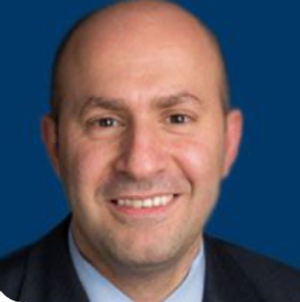
Joshua G. Cohen, MD, FACOG, FACS, discusses the efficacy of PARP inhibitors in ovarian cancer, remaining questions regarding repeat inhibition and treatment duration, and the potential for combinations.
Joshua G. Cohen, MD, FACOG, FACS, discusses the efficacy of PARP inhibitors in ovarian cancer, remaining questions regarding repeat inhibition and treatment duration, and the potential for combinations.
Breast cancer specialists discuss noteworthy data on efficacy and safety about fam-trastuzumab deruxtecan-nxki, neratinib, and tucatinib.
Claudine J. Isaacs, MD, discusses significant advances that have been made across all different breast cancer subtypes in recent years, as well as ongoing research efforts.
Elisavet Paplomata, MD, discusses the lack of standard third-line regimens for patients with metastatic HER2-positive breast cancer, especially for those with brain metastases.
Helena A. Yu, MD, discusses novel non–small cell lung cancer combinations and biomarkers that are under investigation in order to overcome osimertinib resistance
Gottfried E. Konecny, MD, discusses potential strategies to overcome PARP resistance, future combinations with PARP inhibitors, and other unmet needs in ovarian cancer.
Ritu Salani, MD, MBA, discusses updates to PARP inhibition and FRα-targeting agents in ovarian cancer, the role of bevacizumab across all lines of ovarian cancer therapy, and immunotherapy highlights in cervical and endometrial cancer.
Nicholas Rohs, MD, discusses the progress made with chemoimmunotherapy combinations in frontline non–small cell lung cancer, future research directions, and emerging approaches that seek to propel progress in this disease.
Charles Schiffer, MD, discusses integration of TKIs, such as imatinib, into the chronic myeloid leukemia treatment paradigm.
The addition of enzalutamide to androgen deprivation therapy in men with metastatic hormone-sensitive prostate cancer improved radiographic progression-free survival, regardless of baseline prostate-specific antigen levels.
Andrew Kin, MD, discusses the shift in goals for frontline treatment in multiple myeloma.
Justin F. Gainor, MD, discusses the recent FDA approvals of pralsetinib and selpercatinib, which led to expanded treatment options for patients with non–small cell lung cancer who harbor RET rearrangements.
Hossein Borghaei, DO, MS, further discusses the benefit of immunotherapy combinations, the potential of tiragolumab, and the need for better biomarkers to guide treatment in NSCLC.
César Serrano-García, MD, PhD, highlights ripretinib and the meaningful benefit it provides as a fourth- and later-line therapy in patients with advanced gastrointestinal stromal tumor who harbor KIT or PDGFRA mutations.

Parameswaran Hari, MD, MRCP, discusses key data that has read out in relapsed/refractory multiple myeloma, exciting agents generating excitement, and the role of minimal residual disease.
In an interview with OncLive Ruth O’Regan, MD, discusses the challenges faced with personalizing treatment in early-stage HER2-positive breast cancer
Brian T. Hill, MD, PhD, discusses the advent of CAR T-cell therapies, such as axicabtagene ciloleucel, tisagenlecleucel, and brexucabtagene autoleucel, and how they have shifted lymphoma treatment into a new era.
Ripretinib continues to show clinically meaningful benefit with an acceptable safety profile when used as a fourth- or later-line treatment for patients with advanced gastrointestinal stromal tumor.
Sara M. Tolaney, MD, MPH, discusses the challenges in treating patients with heterogenous HER2 expression and what treatments could potentially improve outcomes for this subgroup.
Aziz Nazha, MD, discusses risk stratification in polycythemia vera, options that have emerged for patients, approaches to consider following hydroxyurea, and the need for agents that will reverse fibrosis in the bone marrow.
Maha H.A. Hussain, MD, FACP, FASCO, discusses the updated findings from the PROfound trial, its clinical significance in the treatment of patients with mCRPC paradigm, and the promise of precision medicine.
Erlene Seymour, MD, discusses BTK inhibitors and how they have shifted the standard of care for the frontline treatment of patients with chronic lymphocytic leukemia.
Rebecca Silbermann, MD, MMS, discusses combinations featuring the monoclonal antibodies daratumumab or isatuximab-irfc and how they have made notable differences in outcomes for patients with relapsed/refractory multiple myeloma.
David Gerber, MD, highlights the impact of the PACIFIC trial and other next steps with immunotherapy in patients with stage III NSCLC.
Goutham Narla, MD, PhD, discusses the revolution of genetic testing and how it has led to more accurate and widespread assays for patients with cancer.
Caroline Farrington, PhD, shares her insight as both a researcher and a cancer survivor on the importance of patient advocacy, as well as the proper resources to aid patients through a cancer diagnosis.
John M. Carethers, MD, MACP, discusses recent developments in multi-gene panel testing.
Geoffrey T. Gibney, MD, provides an update on the evolution of frontline treatment in metastatic melanoma.
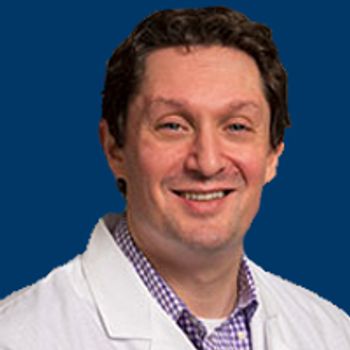
Benjamin Drapkin, MD, PhD, discusses the road ahead in small cell lung cancer research, and the challenges that still need to be solved in the first- and second-line settings.
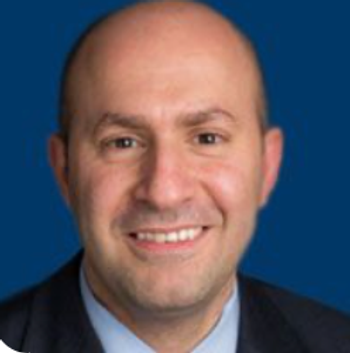
Toni Choueiri, MD, discusses the CheckMate-9ER trial, the next steps for nivolumab/cabozantinib, and other cabozantinib regimens under exploration.

October 22nd 2020