
Dr Duma discusses the leading causes of lung cancer in women, the ongoing failure to screen a sufficient number of women for lung cancer, and how gender bias interferes with treatment.
Dr Duma discusses the leading causes of lung cancer in women, the ongoing failure to screen a sufficient number of women for lung cancer, and how gender bias interferes with treatment.
Daniel DeAngelo MD, PhD, discusses the data seen with obecabtagene autoleucel as a novel treatment in the CAR T-cell arena, emphasizes unmet needs in B-cell acute lymphoblastic leukemia, and highlights important next steps in the study of obe-cel.
Sikander Ailawadhi, MD, discusses early efficacy observed with iopofosine I-131, the rationale of investigating the agent in the CLOVER WaM trial in patients with Waldenström macroglobulinemia, and how the radiotherapeutic could affect the treatment paradigm.

Daniel J. DeAngelo, MD, PhD, discusses rates of cytokine release syndrome with obecabtagene autoleucel in acute lymphoblastic leukemia.

Ursula A. Matulonis, MD, discusses the current treatment landscape of recurrent ovarian cancer.

Nancy U. Lin, MD, discusses the advantage of the oral selective estrogen receptor degrader, elacestrant, in ESR1-mutated breast cancers.
Jorge J. Castillo, MD, discusses the phase 2 CLOVER WaM trial in Waldenström macroglobulinemia.
Treatment with frontline pembrolizumab demonstrated meaningful improvements in long-term survival in patients with EGFR- or ALK- wild-type non–small cell lung cancer and a tumor proportion score of at least 90% vs those with a tumor proportion score between 50% and 89%, according to 3-year findings from a correlative analysis.
Darolutamide significantly reduced the risk of metastatic progression and improved overall survival, compared with placebo, in patients with nonmetastatic castration-resistant prostate cancer.
OncLive® will be LIVE with OncLive® News Network: On Location at the 2022 ASCO Annual Meeting. Each day, we will broadcast a series of interviews with top thought leaders, to learn their thoughts and reactions to data presented across oncology during the conference.
Single-agent dostarlimab-gxly elicited a clinical complete response rate of 100% with no evidence of residual tumor among 14 patients with stage II/III mismatch repair–deficient locally advanced rectal cancer.

Higher treatment discontinuation rates with abemaciclib were associated with factors including age of 65 year or older, enrollment in either North America or Europe, an ECOG performance status of 1, postmenopausal status, 1 to 3 positive lymph nodes, and 4 or more preexisting comorbidities in patients with hormone receptor–positive, HER2-negative high-risk early breast cancer.

Mobocertinib may have limited intracranial activity in patients with EGFR exon 20 insertion–positive, non–small cell lung cancer with brain metastases at baseline, given the numerically lower response rate observed with the agent in this population.
The combination of lenalidomide (Revlimid), bortezomib, and dexamethasone (RVd) plus autologous stem cell transplant as initial therapy followed by lenalidomide maintenance demonstrated a significant improvement in progression-free survival vs RVd alone followed by lenalidomide maintenance in patients with newly diagnosed multiple myeloma.
Novel agents seek to improve and expand the efficacy of the current standard of care for patients with acute graft-vs-host disease, specifically those with high-risk disease.

The addition of sorafenib to conventional chemotherapy was safe and demonstrated evidence of improved outcomes in pediatric patients with FLT3-ITD–positive acute myeloid leukemia.

Paolo Tarantino, MD, discusses the importance of the phase 3 DESTINY-Breast04 trial in HER2-low breast cancer.
Dr Tarantino provides background on the categorization of HER2-low disease in breast cancer, issues with standardization and interpretation, historical management strategies, and ongoing research with agents including trastuzumab deruxtecan, trastuzumab duocarmazine, and disitamab vedotin.
In the context of checkpoint blockade in nasopharyngeal carcinoma, the results of the phase 3 RATIONALE-309 trial support earlier findings of the role immunotherapy may play for patients in the first line.

Ann H. Partridge, MD, MPH, discusses the utilization of GnRH agonists to preserve ovarian function in premenopausal patients with breast cancer.
Mark Awad, MD, PhD, discusses how the approval of nivolumab opens the door for the new regimen to become a backbone for future treatment strategies.
Press Release
Dana-Farber Cancer Institute and the Lifespan Cancer Institute have agreed to renew their strategic alliance to advance cancer treatment and research. Dana-Farber and the Lifespan Cancer Institute signed an initial agreement in 2017.
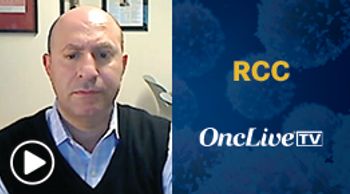
Toni Choueiri, MD, discusses the next steps for the evaluation of pembrolizumab in the phase 3 KEYNOTE-564 trial (NCT03142334) in renal cell carcinoma.
Press Release
The Gairdner Foundation has announced that Stuart H. Orkin, MD, is one of the 2022 Canada Gairdner Award laureates for seminal discoveries and contributions to biomedical science.

Press Release
Dana-Farber Cancer Institute is launching a year-long celebration of its 75th anniversary to highlight its history and progress in cancer care and transformative cancer research.

Specialization in oncology research affords investigators the opportunity to dive into tumor biology and uncover unique approaches to care.
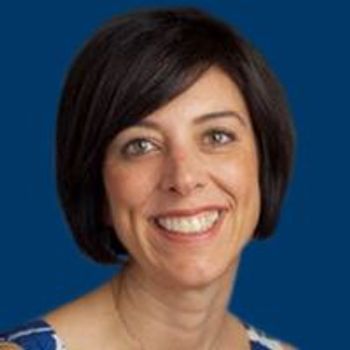
Ann S. LaCasce, MD, MMSc, discusses updates in lymphoma, myelofibrosis, and chronic lymphocytic leukemia.

Jacqueline S. Garcia, MD, discusses the results of the phase 2 REFINE trial in patients with myelofibrosis.
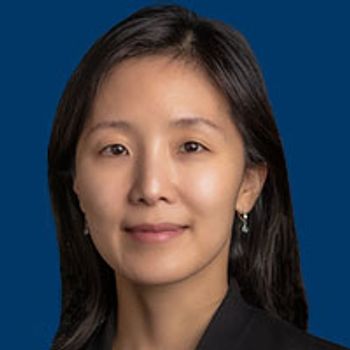
Inhye Ahn, MD, discusses the evolving treatment landscape of chronic lymphocytic leukemia, the advances made with BTK inhibitors and venetoclax-based regimens, novel combination regimens under exploration, and other research efforts that are underway.
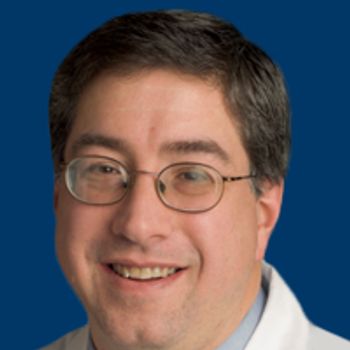
Daniel J. DeAngelo, MD, PhD, discusses how the addition of uproleselan to various chemotherapy backbones is being investigated in ongoing clinical trials, plus the encouraging safety data tied to the lowered mucositis levels.