
Treatment with the combination of isatuximab, carfilzomib, lenalidomide, and dexamethasone generated high rates of minimal residual disease negativity in patients with newly diagnosed, high-risk multiple myeloma, irrespective of transplant status.
Treatment with the combination of isatuximab, carfilzomib, lenalidomide, and dexamethasone generated high rates of minimal residual disease negativity in patients with newly diagnosed, high-risk multiple myeloma, irrespective of transplant status.
A team of Dana-Farber researchers has identified a potential new way to assess clinically valuable features of clear cell renal cell carcinoma, a form of kidney cancer, using image processing with deep learning.
The panel closes by reviewing the patient case once more and shares clinical pearls on the treatment of patients with GVHD.
Pasi A. Jänne, MD, PhD, discusses key findings from the primary analysis of the phase 2 DESTINY-Lung02 trial in patients with HER2-mutant non–small cell lung cancer.
Alessandro Di Federico, MD, discusses findings from a study investigating the correlation between TTF-1 expression and outcomes with immunotherapy-based treatments in patients with lung adenocarcinoma.
A new agent that subverts myeloma cells from within while also subjecting them to an immune system attack produced impressive responses in combination with dexamethasone in patients with multiple myeloma that had relapsed and stopped responding to all currently available therapies

Jia Luo, MD, discusses a retrospective analysis of initial chemotherapy regimens for the treatment of patients with locally advanced and metastatic NUT carcinoma, which was presented at the 2023 IASLC World Conference on Lung Cancer.
Dr Gooptu highlights how she selects therapy for a patient who is refractory to steroids for chronic GVHD and Dr Inyang notes the adverse events seen with these therapies.
GVHD experts outline the treatment options for patients with steroid-refractory chronic GVHD.

Dana-Farber Cancer Institute and Beth Israel Deaconess Medical Center announced plans for a comprehensive new collaboration designed to advance the future of cancer care and build the region’s only independent, free-standing inpatient hospital for adult cancer patients.

Paul G. Richardson, MD, discusses how the continued development of the novel agent mezigdomide could affect the treatment paradigm for patients who progressed on, and developed resistance to, other available BCMA-directed therapies.

Osimertinib in combination with platinum-based therapy and pemetrexed demonstrated a statistically significant and clinically meaningful improvement in progression-free survival vs osimertinib monotherapy in patients with EGFR-mutated advanced non–small cell lung cancer.
Details of steroid use for chronic GVHD, including taper and response criteria, are described by the panel.
The panel provides an overview of the frontline treatments available for chronic GVHD.
Pasi A. Jänne, MD, PhD, discusses findings from the phase 3 FLAURA2 trial in patients with EGFR-mutant non–small cell lung cancer.

Sara M. Tolaney, MD, MPH, highlights updated survival and safety data seen with sacituzumab govitecan in patients with hormone receptor–positive, HER2-negative breast cancer; underscores how Trop-2 and HER2 testing is not necessarily needed for this agent in this population at this time; and shares how ongoing efforts are exploring the utilization of this agent earlier in the treatment course.
Interim data from the phase 3 CABINET trial demonstrated significant improvement in progression-free survival with cabozantinib vs placebo in patients with advanced pancreatic or extra-pancreatic neuroendocrine tumors following progression on prior systemic therapy.
Pasi A. Jänne, MD, PhD, discusses the advantages of bispecific ADCs that target both HER3 and EGFR; preliminary efficacy and safety data seen with BL-B01D1 in patients with non–small cell lung cancer; and the activity of this agent in patients with head and neck squamous cell carcinoma, small cell lung cancer, and nasopharynx cancer.
Paolo Tarantino, MD, discusses the use of antibody drug conjugates in patients with hormone receptor-positive breast cancer.
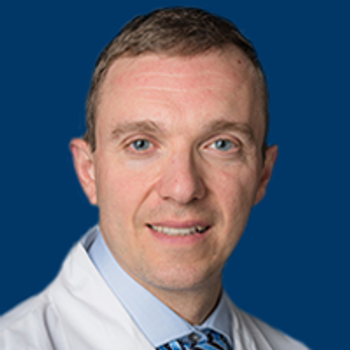
Marios Giannakis, MD, PhD, discusses how targeting the WNT signaling pathway could harness a previously underutilized pathway involved in GI tumor development, spotlights the activity and safety of CGX1321 with or without pembrolizumab in phase 1 studies, and emphasizes the need for continued investigation of CGX1321 to further validate this precision medicine approach.
Drs Gootpu and Inyang explain use of corticosteroids as frontline treatment for acute GHVD.
Dr Gooptu shares guidance on the assessment and grading of acute GVHD.

Praful K. Ravi, MB, BChir, MRCP, discusses the use of prostate-specific membrane antigen-targeted therapies in metastatic castration-resistant prostate cancer, highlighting the use of the targeted radioligand lutetium Lu 177 vipivotide tetraxetan.
Paolo Tarantino, MD, discusses typical conversations oncologists should have with patients regarding the platinum chemotherapy shortage, as well as the importance of honest communication about treatment regimen changes.
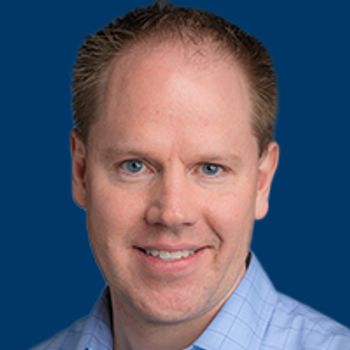
Recent years have brought tremendous progress in demonstrating that there is hope for improving mortality from pancreatic ductal adenocarcinoma through early detection.
Acute GVHD presentation and diagnosis is assessed for the clinical scenario previously discussed.
GVHD prophylaxis techniques are analyzed by the panelists.
A panel of expert oncologists offer closing thoughts on the future treatment landscape and unmet needs in small-cell lung cancer.
The safety and efficacy achieved with the combination of savolitinib and durvalumab vs standard-of-care sunitinib or durvalumab monotherapy will be evaluated in patients with MET-driven papillary renal cell carcinoma in the phase 3 SAMETA trial.
The panel looks to the future and offers closing thoughts on the evolving treatment landscape in endometrial cancer.