Joshua Richter, MD, Tisch Cancer Center at Mount Sinai
Articles by Joshua Richter, MD, Tisch Cancer Center at Mount Sinai
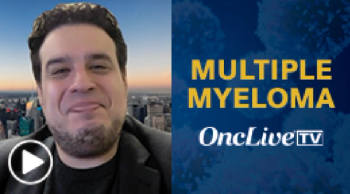
Joshua Richter, MD, discusses how bispecific antibodies fit into the current treatment armamentarium for patients with multiple myeloma, highlighting his presentation from the 41st Annual CFS®.
Multiple Myeloma: Unmet Needs and Future Directions in Care
ByJoshua Richter, MD, Tisch Cancer Center at Mount Sinai,Susan Bal, MD, O'Neal Comprehensive Cancer Center at UAB,Natalie S. Callander, MD, University of Washington Carbone Cancer Center ,Alfred L. Garfall, MD, Abramson Cancer Center,Elizabeth O’Donnell, MD, Dana-Farber Cancer Institute After discussing earlier-line use of CAR T-cell therapy in patients with multiple myeloma, the panel considers key takeaways and future evolutions in the treatment landscape.
CAR T-Cell Therapy in Multiple Myeloma: Updates from ASCO 2023 and Beyond
ByJoshua Richter, MD, Tisch Cancer Center at Mount Sinai,Susan Bal, MD, O'Neal Comprehensive Cancer Center at UAB,Natalie S. Callander, MD, University of Washington Carbone Cancer Center ,Alfred L. Garfall, MD, Abramson Cancer Center,Elizabeth O’Donnell, MD, Dana-Farber Cancer Institute Before closing out their discussion on novel therapies in multiply relapsed multiple myeloma, panelists identify the evolving role of CAR T-cell therapy.
Combination Strategies With Bispecifics in Multiple Myeloma
ByJoshua Richter, MD, Tisch Cancer Center at Mount Sinai,Susan Bal, MD, O'Neal Comprehensive Cancer Center at UAB,Natalie S. Callander, MD, University of Washington Carbone Cancer Center ,Alfred L. Garfall, MD, Abramson Cancer Center,Elizabeth O’Donnell, MD, Dana-Farber Cancer Institute Key opinion leaders on multiple myeloma reflect on the use of combination strategies with bispecifics in the multiply relapsed setting.

Bispecifics in Multiple Myeloma: Adverse Event Management
ByJoshua Richter, MD, Tisch Cancer Center at Mount Sinai,Susan Bal, MD, O'Neal Comprehensive Cancer Center at UAB,Natalie S. Callander, MD, University of Washington Carbone Cancer Center ,Alfred L. Garfall, MD, Abramson Cancer Center,Elizabeth O’Donnell, MD, Dana-Farber Cancer Institute Expert perspectives on adverse event management in patients on bispecific therapy for multiply relapsed multiple myeloma.
Bispecifics in Multiple Myeloma: Dosing and Transition of Care
ByJoshua Richter, MD, Tisch Cancer Center at Mount Sinai,Susan Bal, MD, O'Neal Comprehensive Cancer Center at UAB,Natalie S. Callander, MD, University of Washington Carbone Cancer Center ,Alfred L. Garfall, MD, Abramson Cancer Center,Elizabeth O’Donnell, MD, Dana-Farber Cancer Institute A brief review of logistical considerations that play a part in selecting novel therapy for patients with multiply relapsed multiple myeloma.
Multiple Myeloma: Sequencing Novel Therapies in Later Lines of Treatment
ByJoshua Richter, MD, Tisch Cancer Center at Mount Sinai,Susan Bal, MD, O'Neal Comprehensive Cancer Center at UAB,Natalie S. Callander, MD, University of Washington Carbone Cancer Center ,Alfred L. Garfall, MD, Abramson Cancer Center,Elizabeth O’Donnell, MD, Dana-Farber Cancer Institute Focused discussion on the sequencing of bispecifics or CAR T-cell therapies in patients with multiply relapsed multiple myeloma.
Patient Scenario: Bispecifics in MM After Multiple Prior Lines of Therapy
ByJoshua Richter, MD, Tisch Cancer Center at Mount Sinai,Susan Bal, MD, O'Neal Comprehensive Cancer Center at UAB,Natalie S. Callander, MD, University of Washington Carbone Cancer Center ,Alfred L. Garfall, MD, Abramson Cancer Center,Elizabeth O’Donnell, MD, Dana-Farber Cancer Institute Centering discussion on a patient scenario of multiply relapsed multiple myeloma, panelists consider available novel therapies within the treatment landscape.
Factors in Selecting Therapy at First Relapse in Multiple Myeloma
ByJoshua Richter, MD, Tisch Cancer Center at Mount Sinai,Susan Bal, MD, O'Neal Comprehensive Cancer Center at UAB,Natalie S. Callander, MD, University of Washington Carbone Cancer Center ,Alfred L. Garfall, MD, Abramson Cancer Center,Elizabeth O’Donnell, MD, Dana-Farber Cancer Institute Shared insight from experts in multiple myeloma on patient and disease characteristics that inform selection of best therapy at first relapse.
Patient Scenario: Treatment Options in MM at First Relapse
ByJoshua Richter, MD, Tisch Cancer Center at Mount Sinai,Susan Bal, MD, O'Neal Comprehensive Cancer Center at UAB,Natalie S. Callander, MD, University of Washington Carbone Cancer Center ,Alfred L. Garfall, MD, Abramson Cancer Center,Elizabeth O’Donnell, MD, Dana-Farber Cancer Institute Key opinion leaders review the case of a patient at first relapse with multiple myeloma and consider optimal treatment strategies in this setting.
Treatment Duration in Patients With Newly Diagnosed Multiple Myeloma
ByJoshua Richter, MD, Tisch Cancer Center at Mount Sinai,Susan Bal, MD, O'Neal Comprehensive Cancer Center at UAB,Natalie S. Callander, MD, University of Washington Carbone Cancer Center ,Alfred L. Garfall, MD, Abramson Cancer Center,Elizabeth O’Donnell, MD, Dana-Farber Cancer Institute A panel of experts reflects on treatment duration and its role in optimizing management of patients with newly diagnosed multiple myeloma.
Determining Frailty in Patients With Newly Diagnosed Multiple Myeloma
ByJoshua Richter, MD, Tisch Cancer Center at Mount Sinai,Susan Bal, MD, O'Neal Comprehensive Cancer Center at UAB,Natalie S. Callander, MD, University of Washington Carbone Cancer Center ,Alfred L. Garfall, MD, Abramson Cancer Center,Elizabeth O’Donnell, MD, Dana-Farber Cancer Institute Focused discussion on the importance of patient frailty in determining optimal treatment pathways in newly diagnosed multiple myeloma.
Treatment Options for Transplant-Ineligible Newly Diagnosed Multiple Myeloma
ByJoshua Richter, MD, Tisch Cancer Center at Mount Sinai,Susan Bal, MD, O'Neal Comprehensive Cancer Center at UAB,Natalie S. Callander, MD, University of Washington Carbone Cancer Center ,Alfred L. Garfall, MD, Abramson Cancer Center,Elizabeth O’Donnell, MD, Dana-Farber Cancer Institute Expert perspectives on the treatment armamentarium for transplant-ineligible newly diagnosed multiple myeloma.
Impact of Risk Status on Treatment Pathways in Newly Diagnosed Multiple Myeloma
ByJoshua Richter, MD, Tisch Cancer Center at Mount Sinai,Susan Bal, MD, O'Neal Comprehensive Cancer Center at UAB,Natalie S. Callander, MD, University of Washington Carbone Cancer Center ,Alfred L. Garfall, MD, Abramson Cancer Center,Elizabeth O’Donnell, MD, Dana-Farber Cancer Institute Shared insight on the impact risk status has on the selection of optimal therapy for patients with newly diagnosed multiple myeloma.
Induction Therapy Regimens for Transplant-Eligible NDMM
ByJoshua Richter, MD, Tisch Cancer Center at Mount Sinai,Susan Bal, MD, O'Neal Comprehensive Cancer Center at UAB,Natalie S. Callander, MD, University of Washington Carbone Cancer Center ,Alfred L. Garfall, MD, Abramson Cancer Center,Elizabeth O’Donnell, MD, Dana-Farber Cancer Institute Key opinion leaders on multiple myeloma management review available induction therapy regimens in the transplant-eligible setting.
NDMM: Identifying Patient and Disease Factors to Select Appropriate Therapy
ByJoshua Richter, MD, Tisch Cancer Center at Mount Sinai,Susan Bal, MD, O'Neal Comprehensive Cancer Center at UAB,Natalie S. Callander, MD, University of Washington Carbone Cancer Center ,Alfred L. Garfall, MD, Abramson Cancer Center,Elizabeth O’Donnell, MD, Dana-Farber Cancer Institute Comprehensive insight on patient and disease characteristics that help to inform best available therapy for patients with newly diagnosed multiple myeloma.
What is the Role of Transplant in Newly Diagnosed Multiple Myeloma?
ByJoshua Richter, MD, Tisch Cancer Center at Mount Sinai,Susan Bal, MD, O'Neal Comprehensive Cancer Center at UAB,Natalie S. Callander, MD, University of Washington Carbone Cancer Center ,Alfred L. Garfall, MD, Abramson Cancer Center,Elizabeth O’Donnell, MD, Dana-Farber Cancer Institute Expert panelists reflect on the continuing role of stem cell transplant in patients with newly diagnosed multiple myeloma.
Key opinion leaders remark about recently approved therapies and exciting future treatment options for relapsed/refractory multiple myeloma.
Factors to consider when choosing the optimal treatment approach after the first relapse of multiple myeloma.
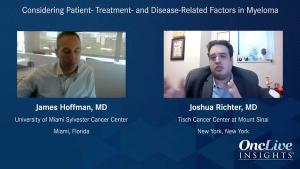
James Hoffman, MD, and Joshua Richter, MD, discuss the IKEMA study, the appropriate selection of therapy, and the differences between various options.
Experts in the field of multiple myeloma discuss the BOSTON trial, the study design, and the benefits of using selinexor in a patient after CAR T-cell therapy.
Drs Hoffman and Richter discuss a promising new treatment for patients with relapsed/refractory multiple myeloma who are not eligible for a clinical trial after 4 lines of therapy.
Experts in treating multiple myeloma discuss the trials that led to the approval of selinexor with bortezomib and dexamethasone, and which patient population would benefit from treatment, as well as the dosing, safety, and efficacy.
Key opinion leaders discuss newly approved agents and their impact on treatment decisions for relapsed/refractory multiple myeloma.
Myeloma experts, Drs James Hoffman and Joshua Richter, discuss the factors that increase a patient’s risk of relapse after frontline treatment for multiple myeloma.