
Mark E. Robson, MD, discusses the importance of educational efforts aimed at understanding the differences between biosimilars and biologics in oncology.
Mark E. Robson, MD, discusses the importance of educational efforts aimed at understanding the differences between biosimilars and biologics in oncology.
Azadeh Namakydoust, MD, discusses recent advancements in lung cancer and what the future holds.
Jamie E. Chaft, MD, medical oncologist, Memorial Sloan Kettering Cancer Center, discusses investigational neoadjuvant immunotherapy approaches in non–small cell lung cancer (NSCLC).
Azadeh Namakydoust, MD, FACP, thoracic oncologist, Memorial Sloan Kettering Cancer Center, discusses the use of next-generation sequencing (NGS) in lung cancer.
Miguel-Angel Perales, MD, discusses replacing autologous stem cell transplant with CAR T-cell therapy in diffuse large B-cell lymphoma.
Mark G. Kris, MD, discusses the impact of targeted therapy in patients with EGFR-mutant NSCLC and the encouraging activity that has been reported with checkpoint inhibitors in advanced squamous disease.
Sergio A. Giralt, MD, professor of medicine at Weill Cornell Medical College, and chief, Adult Bone Marrow Transplant Service, Melvin Berlin Family Chair in Multiple Myeloma, at Memorial Sloan Kettering Cancer Center, discusses methods of evaluating measurable residual disease (MRD) in multiple myeloma.
Tiffany A. Traina, MD, discusses emerging therapies for the management of metastatic triple-negative breast cancer.
Isabel Preeshagul, DO, MBS, discusses encouraging updates with molecular drivers in non–small cell lung cancer and her advice to community oncologists treating patients.
Mark G. Kris, MD, discusses the ongoing search for additional biomarkers in advanced squamous non­–small cell lung cancer.

Komal Jhaveri, MD, FACP, discusses updates in research for metastatic HR-positive, HER2-negative breast cancer.
Michael D. Offin, MD, discusses targeted agents in MET- and RET-altered non–small cell lung cancer.
The use of immunotherapy, either as monotherapy or in combination with chemotherapy, continues to raise the bar with regard to overall survival benefit in patients with newly diagnosed, advanced nonsquamous non–small cell lung cancer.
W. Victoria Lai, MD, discusses the results of the phase III CASPIAN trial in small cell lung cancer.
Michael D. Offin, MD, discusses ongoing research focusing on some of the less-common targetable mutations in non–small cell lung cancer.
Komal Jhaveri, MD, FACP, discusses the use of trastuzumab biosimilars in breast cancer.
Sergio A. Giralt, MD, professor of medicine at Weill Cornell Medical College, and chief, Adult Bone Marrow Transplant Service, Melvin Berlin Family Chair in Multiple Myeloma, at Memorial Sloan Kettering Cancer Center, discusses transplant eligibility criteria in multiple myeloma.
Jae H. Park, MD, discusses encouraging data with CAR T-cell therapy in acute lymphoblastic leukemia.
Anthony R. Mato, MD, MSCE, discusses the introduction of rituximab biosimilars in chronic lymphocytic leukemia.
OncLive interviewed experts at the State of the Science Summits™ in October 2019 on what they wish more people knew in community practice that is not yet widespread.
Overall, compelling response rates and rates of conversion to resection for patients with initially unresectable colorectal liver metastases treated with hepatic arterial infusion suggest consideration of earlier initiation of the technique in chemotherapy-naïve patients as well as its adoption in patients who have failed first-line systemic chemotherapy before proceeding to second- or third-line regimens.
Ghassan K. Abou-Alfa, MD, discusses the results of the phase III ClarIDHy trial in advanced cholangiocarcinoma.
W. Victoria Lai, MD, discusses the impact immunotherapy has had in the management of patients with extensive-stage small cell lung cancer.
Gregory J. Riely, MD, PhD, discusses the current treatment landscape for ALK- and ROS1-positive non–small cell lung cancer.
Treatment with iodine-131 apamistamab led to a high bone marrow transplant rate compared with salvage chemotherapy in elderly patients with relapsed/refractory acute myeloid leukemia.
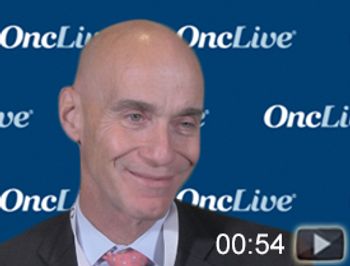
Mark E. Robson, MD, chief, Breast Medicine Service, Memorial Sloan Kettering Cancer Center, discusses the driving force behind biosimilar use in oncology.
MCLA-128, an investigational bispecific HER2/HER3 antibody, demonstrated radiological and clinical responses in patients with metastatic pancreatic ductal adenocarcinoma and metastatic non–small cell lung cancer who have NRG1 fusions.
Eileen M. O’Reilly, MD, discusses emerging strategies in pancreatic cancer.
Daniela Molena, MD, discusses the role of screening and the implementation of minimally invasive surgical techniques in early-stage lung cancer.
Daniela Molena, MD, discusses factors that determine if a patient with non–small cell lung cancer is eligible for surgical resection.