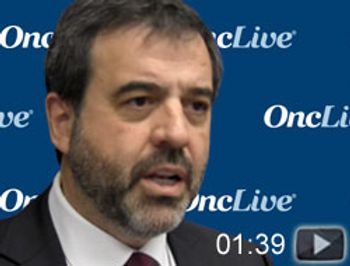
Francisco J. Esteva, MD, PhD, medical oncologist, New York Langone Medical Center, discusses the importance of having a clinical trial of the trastuzumab (Herceptin) biosimilar MYL-1401O for patients with HER2-positive breast cancer.
Francisco J. Esteva, MD, PhD, medical oncologist, New York Langone Medical Center, discusses the importance of having a clinical trial of the trastuzumab (Herceptin) biosimilar MYL-1401O for patients with HER2-positive breast cancer.
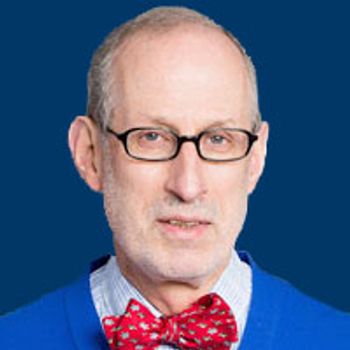
Jeffery S. Weber, MD, PhD, discusses findings from the phase II CheckMate-064 trial, in which patients were randomized to receive either nivolumab followed by ipilimumab followed by nivolumab maintenance therapy, or ipilimumab followed by nivolumab and maintenance therapy with nivolumab.
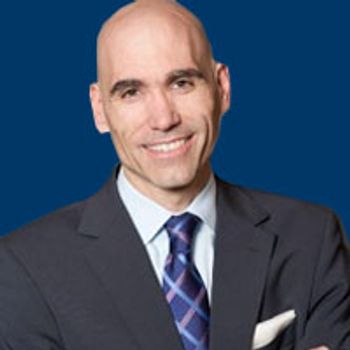
Brian L. Schmidt, DDS, MD, PhD, discusses the difficulties of studying cancer pain and developing new drugs.

Potential to render cancer cells less able to cope with hypoxia.
The presence of certain bacteria in the mouth may reveal increased risk for pancreatic cancer and enable earlier, more precise treatment. This is the main finding of a study led by researchers at NYU Langone Medical Center and its Laura and Isaac Perlmutter Cancer Center.
Melanoma, mesothelioma are the focus of first joint studies.
New findings could lead to anti-cancer drug developments that reverse immunosuppressive environments.
The American Association for Cancer Research has announced that Dafna Bar-Sagi, PhD, senior vice president and vice dean for science and chief scientific officer at NYU Langone, has been named to its Board of Directors for a three-year term formally commencing at the AACR’s annual meeting April 16-20, 2016.
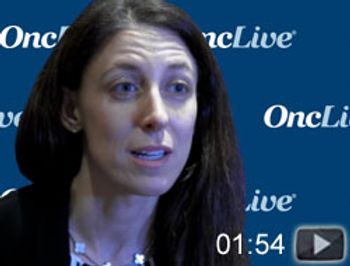
Deirdre J. Cohen, MD, assistant professor, Department of Medicine, NYU Langone Medical Center, discusses emerging agents for the treatment of patients with gastric cancer.
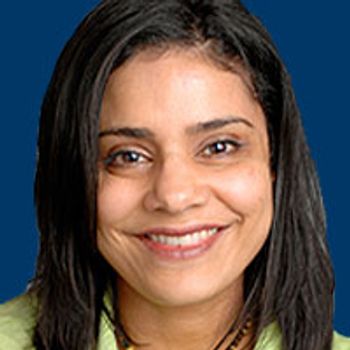
Renewing a commitment to advance its reputation in lung cancer and other thoracic malignancies, NYU Langone Medical Center has announced the appointment of physician-scientist Leena Gandhi, MD, PhD, as director of thoracic medical oncology at its Laura and Isaac Perlmutter Cancer Center.
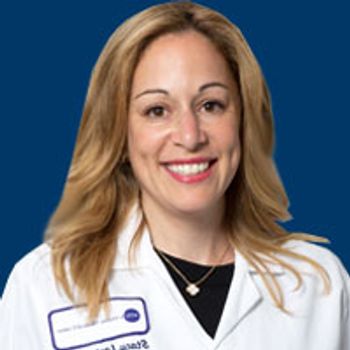
Stacy Loeb, MD, discusses how screening tests for prostate cancer work, what their benefits are, and what urological specialists need to know in order to best utilize them.
Timothy W. Strawderman, PhD, has been named the new Executive Director of the Laura and Isaac Perlmutter Cancer Center at NYU Langone Medical Center, an NCI-designated cancer center.
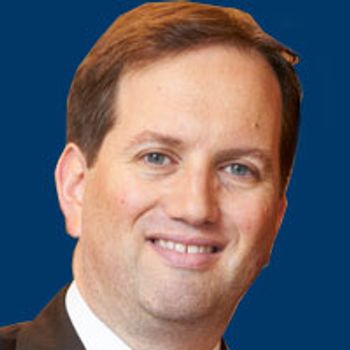
Internationally renowned surgeon and scientist Douglas A. Levine, MD, FACOG, FACS, whose seminal biomarker research has helped to advance early detection and treatment of ovarian cancer, will join the faculty of NYU Langone Medical Center as director of the Division of Gynecologic Oncology at its Laura and Isaac Perlmutter Cancer Center and the Department of Obstetrics and Gynecology.
Arjun V. Balar, MD, discusses the phase II data demonstrating the efficacy of atezolizumab as a single agent, its potential as part of combination regimens, and planned clinical trials looking at immunotherapy in patients with metastatic bladder cancer.

Jeffrey S. Weber, MD, PhD, discusses the role that melanoma specialists can play in educating other oncologists, immunotherapy use for BRAF-mutated patients with melanoma, and how the use of chemotherapy may evolve as immunotherapies take the forefront.
Experimental drugs that alter cell metabolism also halted tumor growth and extended survival in mice with cancers caused by a gene mutated in several types of brain tumors.

Study identifies a potential drug target for inhibiting common radiation-induced fibrosis.
New study shows blood test does better job than current standard test at tracking severity and potential spread of metastatic melanoma.

The largest analysis of breast cancer cell function to date suggests dozens of new uses for existing drugs, new targets for drug discovery, and new drug combinations.

Researchers there have discovered an inherited genetic marker that might provide clinicians with a personalized tool to gauge an individual’s survival and determine which patients require closer monitoring in the years following surgery.

NYU Langone Medical Center first in Northeast to utilize new technology allowing surgeons to destroy only suspicious prostate tissue.
The largest analysis of breast cancer cell function to date suggests dozens of new uses for existing drugs, new targets for drug discovery, and new drug combinations.
Jennifer Wu, MD, sheds light on TAS-102, as well as some emerging agents likely to play a role in the treatment of patients with colorectal cancer.
Jennifer Wu, MD, assistant professor of Medicine, Department of Medicine, Perlmutter Cancer Center, NYU Langone Medical Center, discusses potential combinations with TAS-102 for the treatment of patients with colorectal cancer.
Jennifer Wu, MD, assistant professor of Medicine, Department of Medicine, Perlmutter Cancer Center, NYU Langone Medical Center, discusses the potential for immunotherapy in colorectal cancer with mismatch repair deficiency.
Jeffrey S. Weber, MD, PhD, deputy director, Laura and Isaac Perlmutter Cancer Center, co-director of its Melanoma Program, head of Experimental Therapeutics, NYU Langone Medical Center, compares the efficacy of dabrafenib plus trametinib versus vemurafenib plus cobimetinib.
The FDA has expanded the approval for single-agent nivolumab (Opdivo) to include the frontline treatment of patients with BRAF wild-type advanced melanoma.
Combinations of targeted therapies continue to advance toward full regulatory approval for patients with metastatic or unresected melanoma, given the substantial benefits seen with these agents.

Internationally renowned clinician-scientist Alec Kimmelman, MD, PhD, has been named Chair of the Department of Radiation Oncology at NYU Langone Medical Center. His appointment is effective February 1, 2016.

Sylvia Adams, MD, explains the potential of TILs, as well as other biomarkers, including PD-1/PD-L1, in TNBC and other breast cancer types.