

Sarah Lee, MD, MBA, discusses the association of microsatellite instability–high, mismatch repair deficiency, and tumor mutational burden–high features in endometrial cancer.
Sarah Lee, MD, MBA, discusses the association of microsatellite instability–high, mismatch repair deficiency, and tumor mutational burden–high features in endometrial cancer.

Michael L. Grossbard, MD, and Rabi Upadhyay, MD, Instructor, Department of Medicine at NYU Grossman School of Medicine, share their experiences as a fellowship director and an oncology fellow, respectively.
Jeffrey S. Weber, MD, PhD, overviews the successes made in the melanoma setting in the past decade and the challenges to overcome in the future.
Jeffrey S. Weber, MD, PhD, discusses unmet needs in ocular and mucosal melanoma.

Bhavana Pothuri, MD, discusses the challenges of DNA polymerase epsilon mutation testing in endometrial cancer.
Joshua K. Sabari, MD, discusses selecting between available ALK inhibitors in ALK-positive non–small cell lung cancer.
Dr. Neel discusses the momentum of molecularly-driven research and treatment strategies in oncology, the continuation of current research trends, and potential future directions throughout the field.
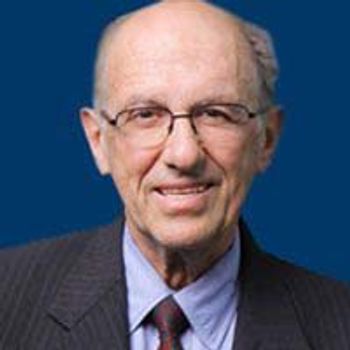
Franco Muggia, MD, a fixture at NYU Langone’s Perlmutter Cancer Center and a leader in the study and treatment of patients with gynecologic cancers, died on September 8, 2021. He was 85 years old.
Dr. Chachoua discusses key guidelines for lung cancer screening, the psychological and financial implications of screening, and the opportunities of a screening initiative instated by NYU Langone Health.
Dr. Weber discusses exciting research presented during the 2021 ASCO Annual Meeting in melanoma with combination and single-agent checkpoint inhibitors, tumor-infiltrating lymphocyte therapy, and more.
Gareth J. Morgan, MD, PhD, discusses differences in low- and high-risk multiple myeloma.
Wassim Abida, MD, PhD, discusses the clinical significance of the results from the phase 2 TRITON2 trial in metastatic castration-resistant prostate cancer.

Chordoma is described as an extremely rare sarcoma that attacks the bones of the spine and base of the skull.
Faith Davies, MD, discusses the approval of isatuximab-irfc-based combinations for patients with relapsed/refractory multiple myeloma.
Faith E. Davies, MD, discusses the next steps for CAR T-cell therapy in the treatment of patients with relapsed/refractory multiple myeloma.
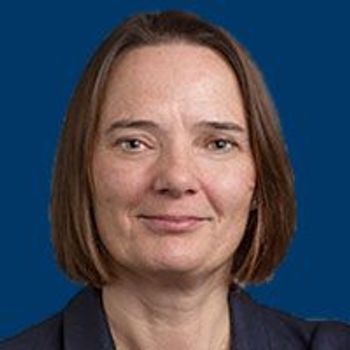
Faith E. Davies, MD, discusses the how to approach patients with high-risk myeloma, as well as how isatuximab and CAR T-cell therapies fit best for that patient population.
Faith Davies, MD, discusses future research directions with isatuximab in the treatment of patients with multiple myeloma.

Bhavana Pothuri, MD, discusses the role of maintenance therapy in BRCA-positive ovarian cancer.
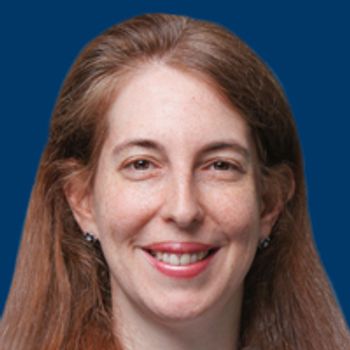
Patients with relapsed/refractory diffuse large B-cell lymphoma treated with a novel combination of polatuzumab vetodin, rituximab and lenalidomide contributed to an improved overall response and complete response, with 82% remaining in remission at the study’s cutoff date.
Faith Davies, MD, discusses key considerations for developing a treatment strategy for patients with early-relapse multiple myeloma.
Gareth J. Morgan, MD, PhD, discusses optimizing treatments for patients with ultra high–risk multiple myeloma.
Dostarlimab demonstrated durable antitumor activity in patients with mismatch repair deficient and MMR proficient endometrial cancer, regardless of investigator assessment or blinded independent central review and immune-related RECIST or RECIST v1.1 criteria.
Marc J. Braunstein, MD, PhD, discusses the evolution and promise of immunotherapeutics in multiple myeloma.
February 12, 2021 - Enfortumab vedotin elicited the highest response rates observed for any regimen examined in cisplatin-ineligible patients with locally advanced or metastatic urothelial cancer who received prior PD-1/PD-L1 inhibitors.
Shella Saint Fleur-Lominy, MD, PhD, discusses the current landscape of MPNs and the importance of addressing disease burden and progression.
Marc J. Braunstein, MD, PhD, discusses the current landscape of newly diagnosed multiple myeloma and the utility of minimal residual disease in the research sphere.
Joshua K. Sabari, MD, discusses the role of concurrent plasma- and tissue-based molecular testing in lung cancer.
In our exclusive interview, Dr. Braunstein and Dr. Richter discuss navigating treatment selection for patients with the newly diagnosed multiple myeloma and the evolving role of minimal residual disease testing.

Marc J. Braunstein, MD, PhD, discusses the expanding treatment armamentarium in multiple myeloma.
Jeffrey S. Weber, MD, PhD, discusses unmet needs in melanoma.