

Insight into the typical response to first-line chemotherapy in advanced endometrial cancer and the clinical factors that influence treatment outcomes, with a focus on improving therapies for this high-risk cohort.
Insight into the typical response to first-line chemotherapy in advanced endometrial cancer and the clinical factors that influence treatment outcomes, with a focus on improving therapies for this high-risk cohort.
Key factors influencing frontline treatment choices in endometrial cancer, including biomarker status, comorbidities, guidelines, and patient preferences, with a focus on the evolving landscape of therapies.

Jeffrey S. Weber, MD, PhD, discusses findings from the phase 2b mRNA-4157-P201/KEYNOTE-942 trial of mRNA-4157 in combination with pembrolizumab in resected high-risk melanoma.
Explore the case of a 67-year-old patient with recurrent endometrial cancer, highlighting the importance of MMR testing, NGS, and emerging treatment options in today's landscape.
Dive into the evolving landscape of endometrial cancer, including rising incidence, classification, racial disparities, and emerging modalities, as discussed by experts Ritu Salani, MD, MBA, and Bhavana Pothuri, MD.

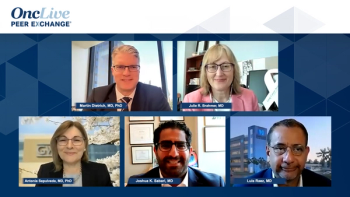
Closing out their discussion on biomarker testing and targeted therapies in non–small cell lung cancer, the panel of expert oncologists share clinical pearls and thoughts on the evolving treatment landscape.
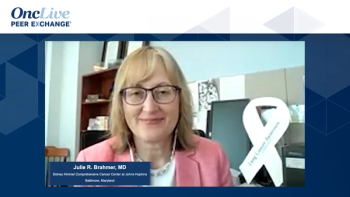
Julie R. Brahmer, MD, details emerging targets in non–small cell lung cancer and the outlook for the future of treatment.
In this final episode of OncChats: Leveraging Endoscopic Ultrasound in Pancreatic Cancer, Toufic A. Kachaamy, MD, Madappa Kundranda, MD, PhD, and Tamas A. Gonda, MD, reiterate that the role of endoscopic therapies in pancreatic cancer continues to evolve.

Faith E. Davies, MD, discusses challenges experienced by hematologist-oncologists and specialist nurses when treating patients with multiple myeloma.
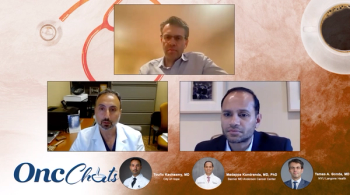
In this sixth episode of OncChats: Leveraging Endoscopic Ultrasound in Pancreatic Cancer, Toufic A. Kachaamy, MD, Madappa Kundranda, MD, PhD, and Tamas A. Gonda, MD, briefly discuss pancreatic cancer ablation and immune modulation.
The focus turns to therapeutic strategies for treating MET exon 14 non–small cell lung cancer.
Experts on non–small cell lung cancer share their approaches to treating patients who have RET fusions and review updates on selpercatinib and pralsetinib.
In this fifth episode of OncChats: Leveraging Endoscopic Ultrasound in Pancreatic Cancer, Toufic A. Kachaamy, MD, Madappa Kundranda, MD, PhD, and Tamas A. Gonda, MD, underscore the need for additional research evaluating the role of radiofrequency ablation and other approaches in pancreatic cancer, and avenues that are ripe for further exploration.
Julie R. Brahmer, MD, and Joshua K. Sabari, MD, review recent data on entrectinib and larotrectinib for the treatment of patients with NSCLC with NTRK fusions.
The expert panel discusses factors that influence treatment decisions when choosing appropriate therapy for patients with ALK-rearranged NSCLC.
Closing out their program on multiple myeloma, expert panelists consider the role of holistic and multidisciplinary care when managing patients within the current paradigm.
Continuing its discussion on clinical trials in multiple myeloma, the panel emphasizes the impact that data may have on the real-world treatment landscape.

Bhavana Pothuri, MD, discusses the use of antibody-drug conjugates in patients with ovarian cancer and AEs to be aware of when treating patients with these therapies.
Experts on non–small cell lung cancer discuss recent data on brigatinib and lorlatinib for the treatment of patients with ALK rearrangements.
Luis Raez, MD, offers insights on how co-mutations in STK11 or KEAP1 impact the use of immunotherapies in KRAS G12C–mutant non–small cell lung cancer.

Bhavana Pothuri, MD, discusses treatment considerations for patients in tough-to-treat subgroups of ovarian cancer based on currently available data.
Key opinion leaders in multiple myeloma management elucidate the value of clinical trials and share enthusiasm for improving enrollment when possible.
A focused discussion on the regulatory aspects of drug testing and approval, globally, with respect to the setting of multiple myeloma management.
In this third episode of OncChats: Leveraging Endoscopic Ultrasound in Pancreatic Cancer, Toufic A. Kachaamy, MD, Madappa Kundranda, MD, PhD, and Tamas A. Gonda, MD, share how they would best utilize genetic testing results obtained from endoscopic ultrasound–guided biopsies in pancreatic ductal adenocarcinomas.
Joshua K. Sabari, MD, discusses adagrasib as a treatment of patients with NSCLC with KRAS G12C mutations, and provides insight on treating patients who have progressed on prior KRAS G12C inhibitors.
Expert panelists review the CodeBreaK trials focused on sotorasib in the treatment of patients with KRAS G12C-mutant non–small cell lung cancer.
Expert panelists consider best methods in educating patients on their options for therapy following a diagnosis of multiple myeloma.
Comprehensive insight to disparities that may impact a patient’s access to therapy for multiple myeloma and how these may be overcome.

Bhavana Pothuri, MD, discusses the promise of the phase 3 NRG-GY018 and RUBY trials in patients with endometrial cancer.