

The panel reviews recent developments in treatments, therapeutic approaches post-transplant, and the importance of clear communication in navigating patient expectations.
The panel reviews recent developments in treatments, therapeutic approaches post-transplant, and the importance of clear communication in navigating patient expectations.
Drs Yi-Bin Chen, Corey Cutler, Hannah Choe, and Mitchell Horwitz discuss challenges in detecting and diagnosing chronic GVHD. The panel advocates for vigilant communication, early detection, and ongoing patient education for comprehensive post-transplant care.
The expert panel explores the immunological aspects of chronic GVHD, highlighting challenges in simultaneous management, addressing fibrosis, and emphasizing the importance of early intervention in evolving transplant care practices.
Drs Yi-Bin Chen, Corey Cutler, Hannah Choe, and Mitchell Horwitz distinguish acute from chronic graft-versus-host disease (GVHD), how such distinction has changed over the last decades, and provide an overview of consensus definitions for disease grading.

Evandro D. Bezerra, MD, discusses real-world outcomes associated with brexucabtagene autoleucel in relapsed/refractory B-cell acute lymphoblastic leukemia.

David P. Carbone, MD, PhD, sought to transform lung cancer care and did it—but didn’t anticipate the personal journey it would put him on.

Although there are no FDA-approved treatments specifically indicated for low-grade serous ovarian cancer, therapeutic options for these patients are rapidly expanding, with promising new approaches progressing through clinical development.
Pirtobrutinib continued to showcase clinically meaningful efficacy in heavily pretreated patients with chronic lymphocytic leukemia or small lymphocytic lymphoma who had prior exposure to a covalent BTK inhibitor.
A machine learning, artificial intelligence algorithm analyzing diagnostic bone marrow biopsy digital whole-slide images was able to effectively differentiate with 92.3% accuracy between prefibrotic primary myelofibrosis and essential thrombocythemia.
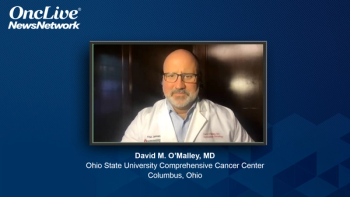
Expert oncologist David M. O’Malley, MD, reviews data from the RAMP 201 study utilizing avutometinib +/- defactinib in patients with recurrent low grade serous ovarian cancer and considers how this combination approach may impact the treatment landscape.
Jennifer A. Woyach, MD, elucidates the updated results generated from a phase 2 study of venetoclax monotherapy in patients with relapsed/refractory chronic lymphocytic leukemia (CLL) whose disease progressed on a prior B-cell receptor inhibitor, expanded on key findings from a genomic analysis from the study, and highlighted what these findings could mean for the CLL treatment paradigm.

Dionisia Quiroga, DO, PhD, discusses the emergence of the HER2-low categorization in breast cancer as well as current treatment options for patients with HER2-low disease.

Margaret E. Gatti-Mays, MD, MPH, FACP, discusses updated biomarker data from the phase 2 NeoPACT trial of neoadjuvant chemoimmunotherapy in triple-negative breast cancer.

Bhuvaneswari Ramaswamy, MD, discusses the importance of real-world data when considering the efficacy of the CDK 4/6 inhibitor palbociclib in hormone receptor–positive breast cancer.

John L. Hays, MD, PhD, discusses unmet needs for patients with colorectal cancer and future directions for research in this disease.

Bhuvaneswari Ramaswamy, MD, and colleagues highlight treatment for patients with HR-positive breast cancer, discuss the role of pembrolizumab plus chemotherapy in early-stage triple-negative breast cancer, and expand on unmet needs for patients with metastatic HER2-positive breast cancer.

Nicole O Williams, MD, discusses unmet needs for patients with HER2-positive breast cancer and potential future research directions in the space.

Kai Conrad Cecil Johnson, MD, discusses key invasive disease-free survival findings from the final 10-year analysis of the phase 2 APT trial and HER2DX exploratory analyses in patients with HER2-positive breast cancer.

ONC-392/BNT316 demonstrated early signs of antitumor activity and manageable safety in patients with metastatic, PD-(L)1–resistant non–small cell lung cancer.

The addition of sintilimab to chemoradiotherapy demonstrated a significant reduction in the risk of disease recurrence or death, distant metastasis and locoregional recurrence compared with chemoradiotherapy alone as frontline therapy in patients with locally advanced nasopharyngeal carcinoma, according to findings from the phase 3 CONTINUUM trial.
Nivolumab plus ipilimumab and chemotherapy continued to show durable benefit at 4 years compared with chemotherapy alone as first-line therapy in patients with advanced non–small cell lung cancer, particularly in the PD-L1–negative and squamous populations.

For the 11th consecutive year, OncLive is honored to recognize oncology leaders whose innovations have contributed to immeasurable improvements in outcomes for countless patients.

John L. Hays, MD, PhD, discusses the evolution of the treatment paradigm for patients with metastatic colorectal cancer who experience disease progression following standard chemotherapy regimens.
Eric A. Singer, MD, discusses the safety of perioperative nivolumab and cabozantinib in patients with metastatic clear cell renal cell carcinoma.

Pannaga G. Malalur, MBBS, discusses several unmet needs within pancreatic cancer, including the implementation of updated germline genetic testing guidelines, increased screening of high-risk patients, and improved sequencing of available therapeutics.
Eric A. Singer, MD, discusses the findings from cohort B of KEYNOTE-057 and explains why systemic therapy with pembrolizumab could be beneficial for patients with Bacillus Calmette-Guérin–unresponsive, high-risk, papillary-only non–muscle invasive bladder cancer who hope to avoid radical cystectomy.

Anne M. Noonan, MBBCh, discusses unmet needs that remain to be addressed in hepatocellular carcinoma, including challenges regarding the navigation and sequencing of treatment options
John L. Hays, MD, PhD, discusses the significance of the approval for tucatinib and trastuzumab for patients with HER2-expressing metastatic colorectal cancer.
Eric A. Singer, MD, discusses the use of systemic pembrolizumab monotherapy in patients with Bacillus Calmette-Guérin–unresponsive, high-risk non–muscle invasive bladder cancer.

Treatment with pembrolizumab monotherapy resulted in stable long-term disease-free survival rates in patients with Bacillus Calmette-Guérin–unresponsive, high-risk non–muscle-invasive bladder cancer.