
Ze'ev Ronai, PhD, discusses key advancements in the treatment of patients with melanoma, including the discovery of NRAS and BRAF mutations, as well as the development of immunotherapy approaches.
Ze'ev Ronai, PhD, discusses key advancements in the treatment of patients with melanoma, including the discovery of NRAS and BRAF mutations, as well as the development of immunotherapy approaches.

Rahul S. Shinde, DVM, PhD, reflects on his journey to realizing his dreams of operating his own laboratory and serving as a leader in scientific research.

Wistar’s Cancer Center became the first National Cancer Institute-designated basic cancer center in the nation in 1972 and has held this national recognition for the past 46 years.
In a multi-institutional collaborative study, scientists at The Wistar Institute and the Medical University of Vienna, Austria, have identified the role of tumor-infiltrating or tumor-associated B-cells (
Prestigious National Cancer Institute (NCI) grant awarded for nearly $8 million to pursue unencumbered research on cancer progression.
Scientists from The Wistar Institute demonstrate how a mutation in ovarian clear cell carcinoma can be exploited to design a targeted treatment.
The Wistar Institute, an international biomedical research leader in cancer, immunology, infectious diseases, and vaccines, announces the appointment of Joseph M. Salvino, PhD, as professor in the Molecular and Cellular Oncogenesis Program and Scientific Director of the Institute’s Molecular Screening Facility.
The Wistar Institute, an international biomedical research leader in cancer, immunology and infectious diseases, welcomes Kenneth W. Hance, Ph.D., M.P.H., Director of Antibody Therapies, Immuno-Oncology & Combinations DPU at GlaxoSmithKline (GSK), as its first Visiting Professor from GSK at Wistar.
The total funding includes a National Cancer Institute award for more than $6 million that supports multidisciplinary prostate cancer research with goal of developing future drug therapies.
The Wistar Institute, an international leader in cancer, immunology and infectious diseases research, is pleased to announce that Ashani Weeraratna, PhD, associate professor and program leader in the Tumor Microenvironment and Metastasis Program, has been named the Ira Brind Associate Professor.
Amid growing evidence of their importance in the immune system, myeloid-derived suppressor cells are gaining traction as a target for anticancer therapies.
The L'Oreal Paris USA-MRA Team Science Award for Women in Scientific Research grant for $900,000 is focused on understanding and treating metastatic melanoma.
Global collaboration applies Wistar expertise to promising Cormorant therapeutic drug development.
The Wistar Institute is pleased to welcome Cavan Redmond to its Board of Trustees.
Ashani Weeraratna, PhD, associate professor, Tumor Microenvironment and Metastasis Program, member, The Wistar Institute Melanoma Research Center, discusses a study examining the effects of aging on Wnt/ß-catenin signaling in melanoma.

Inhibiting EZH2 may improve outcomes in patients with clear cell ovarian carcinoma who harbor a ARID1A mutation.
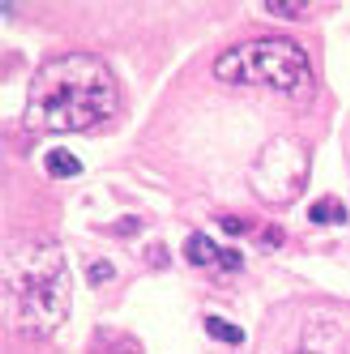
A 10-year collaboration between scientists at The Wistar Institute and the University of Pennsylvania has recently resulted in the emergence of an exciting new target for cancer therapy, heat shock protein 70, that could be helpful in treating patients with melanoma.

The promise of personalized medicine in cancer will only be met once physicians have both the arsenal of therapeutics they need and a more complete understanding of genomic tumor profiles.

In more than 40 years as a National Cancer Institute (NCI)-designated cancer center-and the first center in the network devoted purely to basic research-The Wistar Institute has built a reputation for furthering the sort of scientific research that will improve clinical cancer medicine.

OncLive® is pleased to announce that the Wistar Institute has joined its Strategic Alliance Partnership program.