
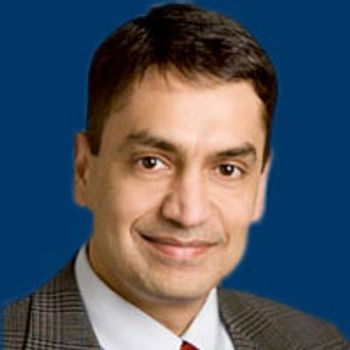
Madhav Dhodapkar, MBBS, discusses research showing that nflammation and chronic stimulation of the immune system by lipids may trigger multiple myeloma in approximately one-third of all cases.
Madhav Dhodapkar, MBBS, discusses research showing that nflammation and chronic stimulation of the immune system by lipids may trigger multiple myeloma in approximately one-third of all cases.

Yale Cancer Center researchers have identified a link between lipids and a third of all myelomas, a type of cancer affecting plasma cells.
A team of researchers from Yale School of Public Health and Yale Cancer Center recently published a study in the Journal of Cancer Survivorship that addresses the needs of cancer survivors who are at least nine years beyond an initial diagnosis.

Substantial evidence exists that a subset of squamous cell cancers of the head and neck display phenotypic changes that predict activity for immune checkpoint inhibitors.

Anees B. Chagpar, MD, shares her thoughts on the final US Preventive Services Task Force guidelines and how they change the focus of breast cancer screening.
Patricia M. LoRusso, D.O. was among a group of 15 top cancer researchers and physician-scientists who met in Washington with aides to Vice President Joe Biden on Jan. 8 to discuss his “moonshot†program to advance cancer treatment.

The US Preventive Services Task Force has issued final guidelines that stand by its recommendation that women at average risk of breast cancer should not start routine screenings until they reach age 50 years and that they should then undergo testing every 2 years.
Choosing a research mentor is one of the most important steps when beginning a successful academic research career.

Treatment with pembrolizumab reduced the risk of death by 29% compared with docetaxel for patients with PD-L1-positive non–small cell lung cancer.
Daniel P. Petrylak, MD, professor of medicine at Yale University Cancer Center, discusses the anti–PD-L1 antibody atezolizumab in bladder cancer.
A Yale Cancer Center study published recently in the Journal of Clinical Oncology found that among minority women treated with early chemotherapy, black women fare worse than the other groups.

Marianne Davies, NP, Assistant Professor of and Clinical Instructor in Nursing, Yale Cancer Center, discusses immune-mediated adverse events in lung cancer.

PD-1/PD-L1 agents have shown significant potential for the treatment of urothelial bladder cancer, Daniel Petrylak, MD, from Yale Cancer Center, noted in a recent interview with OncLive.
Less than a decade after the FDA set the ground rules for developing assays that pair molecular targets with new drugs, experts say there have been strides in personalizing anticancer therapies but that many hurdles remain before next-generation sequencing and other precision medicine advances are incorporated into the diagnostic paradigm.
Most patients with non-small cell lung cancer (NSCLC) that has metastasized to the brain have a dire prognosis.

The National Cancer Institute has named Craig Crews, PhD, a recipient of its Outstanding Investigator Award.
Patricia M. LoRusso, DO, Professor of Medicine and Associate Director of Innovative Medicine, Yale Cancer Center, discusses taking a personalized medicine approach to treat melanoma patients whose tumors do not have BRAF alterations.
Yale Cancer Center and Smilow Cancer Hospital at Yale-New Haven will launch a new research program in non-small cell lung cancer, one of the world's most prevalent and lethal forms of cancer.
Lajos Pusztai, MD, DPhil, professor of Medicine (Medical Oncology), chief, Breast Medical Oncology, co-director, Cancer Genetics Research Program, Yale Cancer Center, discusses the Breast Cancer Index in patients with ER-positive/HR-positive breast cancer.
Achieving true precision medicine with PD-1/PD-L1 agents in NSCLC will only come from biomarker-driven frontline regimens delivered to the right patients.

Anees B. Chagpar, MD, MA, MPH, MBA, FRCS(C), FACS, associate professor of surgery (oncology), director, The Breast Center at Smilow Cancer Hospital at Yale-New Haven, assistant director, Global Oncology, Yale Comprehensive Cancer Center, discusses sequencing therapies for patients with HER2-positive breast cancer.
Novel combination approaches are currently under exploration that hope to capitalize on the varying mechanisms of action for each newly approved agent for men with metastatic castration-resistant prostate cancer.
Barbara Ann Burtness, MD, discusses the impact of two studies examining reductions in radiation and chemotherapy dose in low-risk HPV-associated oropharyngeal cancer.
Anees B. Chagpar, MD, discusses initial results of the SHAVE trial for patients with breast cancer.
Melinda Liggett Irwin, PhD, MPH, associate professor of epidemiology (chronic diseases), Yale School of Public Health, co-program leader, Cancer Prevention and Control Research Program, Yale Cancer Center, discusses the impact of the LIVESTRONG at the YMCA Program on survivors' fitness, physical activity, and quality of life.
Daniel Petrylak, MD, Professor of Medicine and of Urology; Professor, Signal Transduction Research Program at Yale Cancer Center discusses the future of immunotherapy in bladder cancer.

Tara Sanft, MD, assistant professor of medicine, director, Survivorship Clinic, Smilow Cancer Hospital at Yale-New Haven, discusses survivorship care plans and how they can differ among patients.
Jennifer M. Kapo, MD, chief, palliative medicine, Yale Cancer Center, associate professor of medicine (medical oncology and geriatrics), Yale School of Medicine, discusses how oncologists can address palliative care with their patients.
Patricia M. LoRusso, DO, Associate Director of Innovative Medicine, Yale Cancer Center, discusses the Dream Team Melanoma trial, which is investigating using personalized medicine to treat non-V600E melanoma subtypes.
Yale University has launched a multicenter clinical trial, sponsored by Stand Up to Cancer and Melanoma Research Alliance, that will apply the latest in personalized medicine technology to treat metastatic melanoma.