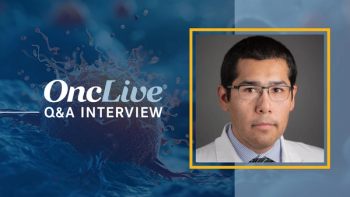
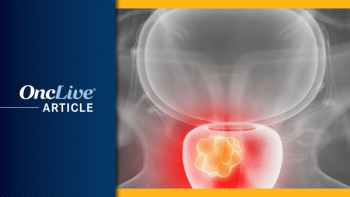
Aglatimagene besadenovec (CAN-2409) in combination with the prodrug valacyclovir and external beam radiation therapy (EBRT) displayed encouraging efficacy and safety in patients with localized prostate cancer enrolled in the phase 3 PrTK03 trial (NCT01436968) trial, according to Mark Garzotto, MD.1,2
“There’s a large unmet need in prostate cancer, particularly for men who have intermediate- or high-risk disease [because] there is at least a 30% chance for those men that their cancer will recur, despite the best of intentions and the best treatment being applied,” Garzotto, a professor of urology in the Oregon Health & Science University School of Medicine and chief of urology at the Portland VA Medical Center, said in an interview with OncLive. “One of the things that our research tried to do was to fill this unmet need for these men and try to lower the risk that their cancer could come back and that they would have to subsequently go through therapies that are toxic and have very negative impacts on their quality of life.”
In the interview, Garzotto discussed the data from the phase 3 trial, which he presented during the 2026 American Urological Association (AUA) Annual Meeting. He also discussed the combination’s mechanism of action and the future of aglatimagene besadenovec in this patient population.
Updated Data From PrTK03 in Prostate Cancer: Key Takeaways
- Updated phase 3 PrTK03 data showed that aglatimagene besadenovec plus valacyclovir and EBRT reduced the likelihood of cancer detected during follow-up by approximately 40%, decreased the need for salvage therapy and biochemical failure by approximately 50%, and produced a 90% reduction in metastases in the intermediate-risk subgroup.
- The gene therapy works by delivering the thymidine kinase gene, enabling valacyclovir to generate a cytotoxic nucleotide that enhances radiation-induced tumor cell death and stimulates an antitumor immune response.
- The regimen remained well tolerated, with low rates of mostly grade 1/2 treatment-related AEs, no new safety signals, and no grade 4 or higher treatment-related AEs, supporting its potential integration into routine urology and radiation oncology practice.
OncLive: What were the updated data from the phase 3 study?
Garzotto: We had an additional 8 months of follow-up with this study, and we also evaluated a new end point: prostate cancer disease-free survival [DFS]. Additionally, we conducted a subgroup analysis of the intermediate-risk group.
We showed a 39% reduction in the likelihood of having cancer detected during follow-up in patients who received aglatimagene besadenovec in combination with valacyclovir compared with placebo [HR, 0.61; 95% CI, 0.44-0.85; P = .0031]. We also showed a reduction in metastases that was particularly pronounced in the intermediate-risk group. [Among patients with intermediate-risk disease], there was a 90% reduction in metastases in the aglatimagene besadenovec group compared with the placebo group [HR, 0.1; 95% CI, 0.01-0.85].
Furthermore, we demonstrated approximately a 50% reduction in the need for any salvage therapy with long-term follow-up, as well as about a 50% reduction in biochemical failure.
The most notable finding was that patients treated with aglatimagene had a 39% lower likelihood of having cancer detected during follow-up compared with those who received placebo.
That translates into meaningful real-world benefits. If a patient is 39% less likely to have recurrent cancer detected during follow-up, they are also less likely to require subsequent treatment and less likely to develop metastases.
With longer follow-up, we will also be evaluating survival. At this point, however, the data are still too immature to analyze that end point.
Please explain the mechanism of action of aglatimagene and valacyclovir, and what makes this approach unique.
This is true gene therapy. We use an adenoviral vector to introduce a gene called thymidine kinase. Thymidine kinase converts the prodrug valacyclovir, which the patient takes orally, into a cytotoxic nucleotide. That cytotoxic nucleotide is then incorporated into the DNA of tumor cells, causing those cells to undergo cell death because they can no longer divide.