The top 5 OncLive TV videos of the week.
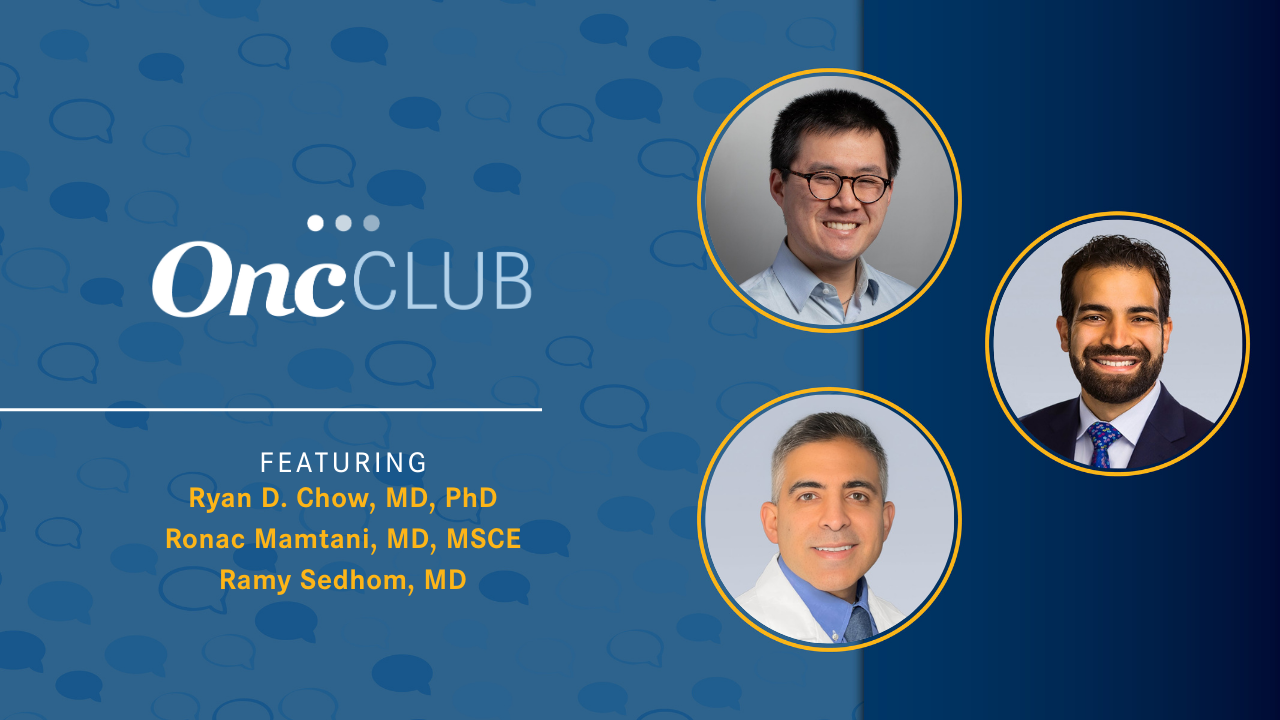
Ramy Sedhom, MD, Ryan Chow, MD, and Ronac Mamtani, MD, MSCE, discuss dose reducing enfortumab vedotin to improve tolerability, without in patients with bladder cancer
In today’s OncClub episode, we spoke with Ramy Sedhom, MD; Ryan Chow, MD; and Ronac Mamtani, MD, MSCE, about a pragmatic real-world question in advanced urothelial carcinoma: Can upfront dose reduction of enfortumab vedotin-ejfv (Padcev) improve tolerability, particularly neuropathy and treatment interruption, without compromising clinical outcomes in patients with bladder cancer? Dr Sedhom is co-lead of Geriatric Oncology at the Penn Cancer Service Line; associate director of the Penn Center for Cancer Care Innovation; and clinical director of Medical Oncology, co-lead of Psychosocial Oncology Services, division chief of the Palliative Care Division, and a clinical assistant professor of medicine (hematology-oncology) at Penn Medicine Princeton Health in Plainsboro, New Jersey. Dr Chow is an internal medicine resident at Penn Medicine in Philadelphia, Pennsylvania. Dr Mamtani is section chief of Genitourinary Cancers at Penn Medicine and an associate professor of medicine (hematology-oncology) at the Hospital of the University of Pennsylvania.
In our exclusive interview, the group reviewed the clinical rationale for evaluating proactive dose modification with enfortumab vedotin, discussed the design of a retrospective Flatiron Health cohort analysis they conducted, and outlined how physiologic vulnerability was defined using age, renal function, and performance status. The panel then summarized key findings from this study that suggested the possibility of fewer treatment interruptions with upfront dose reduction and no apparent difference in overall survival vs with standard dosing, including in vulnerable patient subgroups. Finally, the conversation examined how these data challenge traditional assumptions that greater initial dose intensity necessarily yields greater benefit in modern oncology. They also noted that prospective outcomes, particularly toxicity trajectories, patient-reported quality of life, and longitudinal effectiveness, are needed before integrating these findings into current treatment guidelines.