
Opinion|Videos|January 3, 2025
Clinical Perspectives Selecting 2L Treatment Options in R/R FL: Chemoimmunotherapy vs Lenalidomide Combinations in Relapsed Disease
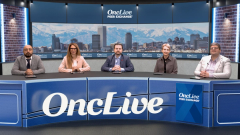
Panelists discuss how their treatment approaches in the second-line (2L) setting for relapsed or progressive follicular lymphoma (R/R FL) are influenced by factors such as the duration of response to first-line therapy, tumor burden, and symptomatology, while also exploring the use of chemoimmunotherapy, lenalidomide combinations, and anti-CD20 monotherapy in clinical decision-making.
Advertisement
Episodes in this series
Video content above is prompted by the following:
- For those with progression of disease, what is your treatment approach in the 2L setting? How do you factor in the duration of response to 1L therapy in selecting your 2L option as well as patient factors such as those with high tumor burden and/or symptomatic disease?
- How often are you utilizing chemoimmunotherapy with an anti-CD20 in the 2L setting? What percentage of your patients are receiving a bendamustine-based or cyclophosphamide-based regimen in the 1L setting?
- What is your treatment approach in selecting lenalidomide in combination with anti-CD20 vs anti-CD20 monotherapy?
- What patient and/or disease factors do you consider?
- Please feel free to comment on any differences and/or similarities in practice when selecting lenalidomide monotherapy vs in combination with anti-CD20 vs anti-CD20 monotherapy.
Advertisement
Related to this article

FDA has granted fast track designation to LYT-200 plus a hypomethylating agent in relapsed/refractory high-risk myelodysplastic syndromes.

Toon Van Gorp, MD, PhD, discusses key data with TUB-040 in platinum-resistant ovarian cancer and next steps for development.

Japan approved subcutaneous pembrolizumab and berahyaluronidase alfa across all indications for which intravenous pembrolizumab is approved in the country.

New research reveals how cancers carrying mutations in the p53 tumor-suppressor protein can hide those mutations from T cells.
Elise A. Chong, MD, discusses real-world liso-cel efficacy and safety, outpatient use, and future directions in relapsed/refractory mantle cell lymphoma.

Brad S. Kahl, MD, discusses TRIANGLE and EA4151 data reshaping ASCT use in frontline MCL, induction intensity, and high-risk disease strategies.

Mary Ann Anderson, MBBS, FRACP, FRCPA, PhD, discusses recent CLL approvals, BTK and BCL-2 inhibitor safety, and individualizing frontline therapy.

The top 5 OncLive TV videos of the week cover insights in NSCLC, large granular lymphocytic leukemia, ovarian cancer, and myelofibrosis.
Advertisement
Advertisement
Trending on OncLive
1
CLL Treatment Individualization Prompts Changes in Patient Evaluation and Care
2
Japan Approves Subcutaneous Pembrolizumab for All Approved Pembrolizumab Indications
3
FDA Grants Fast Track Designation to LYT-200 in R/R High-Risk MDS
4
Integrating Bispecific Antibodies Into Frontline Therapy for Newly Diagnosed Multiple Myeloma
5