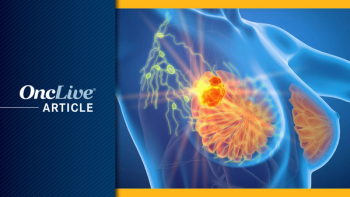
Researchers at Wake Forest University School of Medicine identified a protein that may help breast cancer spread to the brain and evade immune defenses.
Courtney D. DiNardo, MD, MSCE, discusses the FDA approval of decitabine/cedazuridine plus venetoclax in acute myeloid leukemia.
“What is really impactful about this [approval] is that we now have an all oral [option for patients].”
Courtney D. DiNardo, MD, MSCE, a professor in the Division of Cancer Medicine at The University of Texas MD Anderson Cancer Center and an associate member of The University of Texas Graduate School of Biomedical Sciences, explained the significance of the FDA approval of decitabine and cedazuridine (Inqovi) plus venetoclax (Venclexta) in patients with newly diagnosed acute myeloid leukemia (AML).
On May 13, 2036, the FDA approved decitabine and cedazuridine in combination with venetoclax for the treatment of adult patients with newly diagnosed AML who are at least 75 years of age or who have comorbidities that preclude the use of intensive induction chemotherapy.
The regulatory decision is supported by findings from the phase 2 ASCERTAIN-V study (NCT04657081), which showed that patients treated with the combination achieved a complete response (CR) rate of 41.6% (95% CI, 31.9%-51.8%) with a median time to CR of 2 months (range, 0.4-15.3 months). The median duration of CR was not reached (range, 0.5-16.3 months).
Although the decision is significant, the mechanism of action of decitabine and cedazuridine plus venetoclax is not entirely new in the AML treatment paradigm, DiNardo noted. She referenced venetoclax in combination with azacitidine (Vidaza) and decitabine and its
Approval of an all-oral formulation of treatment is important for improving the quality of life for patients with AML, who usually tend to be older and spend a lot of time in the hospital, DiNardo added.
Additional results from ASCERTAIN-V showed that at a median follow-up of 11.2 months, the combination elicited a complete response (CR) rate of 46.5% (95% CI, 36.5%-56.7%); the CR/CR with incomplete hematologic recovery rate was 63.4% (95% CI, 53.2%-72.7%) and the CR/CR with partial hematologic recovery rate was 51.5% (95% CI, 41.3%-61.6%). The median time to CR was 2.4 months. Eighty percent of complete responders continued to respond for 6 months and 75.3% responded for at least 12 months. The median overall survival experienced with the regimen was 15.5 months (95% CI, 7.6-not estimable).