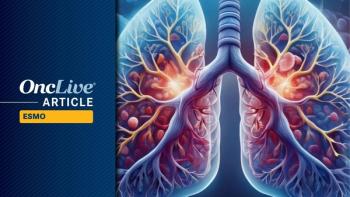
Read on to see which data are poised to shape clinical discussions and decision-making in lung cancer at the 2026 ESMO Congress in Madrid, Spain.
John V. Heymach, MD, PhD, discusses updated outcomes from the AEGEAN trial of perioperative durvalumab vs placebo in resectable non–small cell lung cancer.
John V. Heymach, MD, PhD, chair, Thoracic/Head and Neck Medical Oncology, and the David Bruton Endowed Chair in Cancer Research, The University of Texas MD Anderson Cancer Center, discusses updated outcomes from the phase 3 AEGEAN trial (NCT03800134), which examined perioperative durvalumab (Imfinzi) vs placebo for the treatment of patients with resectable non–small cell lung cancer.
Updated data from AEGEAN presented during the
The EFS benefit observed with durvalumab vs placebo was also maintained across all the key predefined patient subgroups, Heymach adds. At 35% data maturity, investigators observed an overall survival (OS) trend favoring the durvalumab arm, Heymach notes. The median OS in the durvalumab arm was NR (95% CI, NR-NR) compared with 53.2 months (95% CI, 44.3-NR) in the placebo arm (stratified HR, 0.89; 95% CI, 0.70-1.14). The 12-, 24-, and 36-month OS rates in the durvalumab arm were 84.3%, 74.4%, and 67.1%, respectively. In the placebo arm, these respective rates were 85.3%, 72.2%, and 63.9%.
In terms of safety, patients in the durvalumab (n = 401) and placebo (n = 398) arms experienced any-grade adverse effects (AEs) at rates of 96.5% vs 95.2%, respectively. Patients in both arms also experienced grade 3 or 4 AEs (43.6% vs 43.2%), serious AEs (39.2% vs 31.7%), AEs leading to death (5.7% vs 3.8%), and AEs leading to treatment discontinuation (12.7% vs 6.3%).