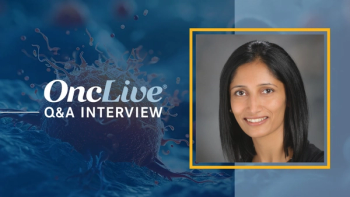
Neeta Somaiah, MD, discusses exon 9 and crossover data from the PEAK trial of bezuclastinib plus sunitinib and velzatinib activity in KIT-mutated GIST.
Gino K. In, MD, MPH, discusses treatment challenges after checkpoint inhibitor failure and the potential of oncolytic therapies in melanoma.
“We have limited options, and we really want to find something that balances efficacy and tolerability as well. We also have to think about what are the other available salvage options [and] how…we sequence them.”
Gino K. In, MD, MPH, associate professor of clinical medicine at the Keck School of Medicine of the University of Southern California (USC) and a member of USC Norris Comprehensive Cancer Center, discussed the role of vusolimogene oderparepvec-wtpg (Tudriqev; RP1) plus nivolumab (Opdivo) in the advanced melanoma treatment paradigm, along with the need for treatment options for patients whose disease does not respond, or stops responding, to immune checkpoint blockade.
In August 2026,
In explained that patients who respond to checkpoint inhibitors can do well, whereas managing disease after primary resistance or subsequent progression remains challenging. He emphasized that clinicians need therapies that balance efficacy and tolerability, highlighting the complexity of choosing among salvage treatments and determining how to sequence options.
In compared the newer oncolytic approach using RP1 with prior experience using talimogene laherparepvec (Imlygic; T-VEC). He noted that T-VEC had demonstrated activity, although he characterized its benefit as limited in comparison with the approach under discussion. He expressed enthusiasm for an additional treatment with a similar mechanism and the potential for greater effectiveness, rather than establishing superiority through a direct comparison.
Although he described the development as a major breakthrough, In acknowledged that treatment selection in the post–checkpoint inhibitor setting remains complex, and he explained the need to weigh tolerability, efficacy, and the sequencing of salvage therapies in this difficult clinical setting.