

Invikafusp alfa plus sacituzumab govitecan produced responses and disease control in metastatic TNBC and HR-positive/HER2-negative breast cancer.
Invikafusp alfa plus sacituzumab govitecan produced responses and disease control in metastatic TNBC and HR-positive/HER2-negative breast cancer.
A post hoc analysis of SPEARHEAD-1 found that MAGE-A4 H-score was independently tied to response and progression-free survival, whereas baseline tumor burden was tied to overall survival.
The IL-12–expressing self-replicating mRNA STX-001 showed a favorable therapeutic window at 100 µg, with regression in both injected and non-injected lesions.
Most of the survival time accrued with RP1 plus nivolumab in the IGNYTE trial was spent in good health among patients with advanced melanoma after anti–PD-1 therapy.
VET3-TGI produced responses in injected and non-injected lesions without dose-limiting toxicities in the phase 1/1b STEALTH-001 trial.
Steven Isakoff, MD, PhD, MMSc, discusses data for invikafusp alfa plus sacituzumab govitecan in advanced HR-positive or triple-negative breast cancer.
Laura Graham, MD, discusses phase 1 safety and PSA response data for JNJ-87189401 plus pasritamig in metastatic castration-resistant prostate cancer.
IL-1β blockade with canakinumab was well tolerated and reduced nodule size in patients with high-risk indeterminate pulmonary nodules.

VGX-3100 met its composite primary end point in the phase 3 HPV-303CHN trial, supporting a nonsurgical treatment approach for HPV-16/18–associated cervical HSIL.
EVX-01 plus pembrolizumab generated sustained neoantigen-specific T-cell responses in advanced melanoma.
IDP-023 plus isatuximab was tolerable and generated responses in heavily pretreated relapsed/refractory multiple myeloma.
Yana Najjar, MD, discusses phase 1/1b STEALTH-001 data for the oncolytic virus VET3-TGI in advanced solid tumors, including cutaneous cancers.
Daniel W. Lee, III, MD, discusses a case study of polatuzumab vedotin/glofitamab and CD19 CAR T-cell therapy in a child with refractory Burkitt lymphoma.
Mecbotamab vedotin showed promising survival gains and manageable safety in treatment-refractory soft tissue sarcomas.
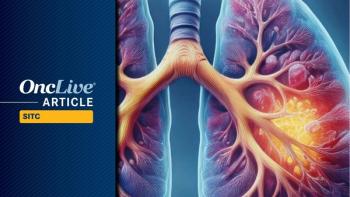
STK-012 plus pembrolizumab and chemotherapy showed early efficacy and manageable safety in PD-L1–negative NSCLC.
Paolo Caimi, MD, discusses the rationale behind evaluating LMY-920, a novel BAFF CAR T-cell therapy, in relapsed/refractory non-Hodgkin lymphoma.
Jennifer Scalici, MD, discusses data for IMNN-001plus chemotherapy in advanced ovarian cancer.
Steven H. Lin, MD, PhD, discusses the safety of NKTR-255 in enhancing immune recovery post-chemoradiation in locally advanced NSCLC.
Victor Moreno, MD, PhD, discusses insights into the pharmacodynamic activity of CLN-619 for patients with advanced solid tumors.
RP1 plus nivolumab generated responses in advanced melanoma that progressed on or after prior anti–PD-1 therapy.

The investigational PRAME-targeted T-cell therapy IMA203 generated responses in melanoma and other solid tumors,

Phase 1 data showed the potential for invikafusp alfa as a precision cancer immunotherapeutic agent in solid tumors after exposure to PD-(L)1 therapy.

Patients with newly diagnosed glioblastoma had improved survival when treated with TTFields plus temozolomide and pembrolizumab.

E-602 plus cemiplimab elicited preliminary antitumor activity and had a tolerable safety profile in PD-(L)1–resistant solid tumors.
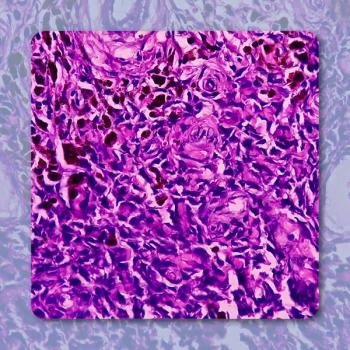
Administration of fixed-dose CAR T cells followed by escalating doses of UB-TT170 led to changes in cytokine levels in relapsed/refractory osteosarcoma.

Early cytokine induction after CAR T-cell therapy infusion predicts CAR expansion in patients with leukemia or lymphoma treated with axi-cel or brexu-cel.
Overall survival findings from the PERLA trial showed continued success with dostarlimab plus chemotherapy in patients with advanced non–small cell lung cancer.

THIO plus cemiplimab displayed durable activity in patients with advanced checkpoint inhibitor–resistant NSCLC.

Treatment with magrolimab plus docetaxel led to peripheral CD47 saturation in patients with advanced NSCLC, which correlated with improved outcomes.
Co-formulated vibostolimab and pembrolizumab plus chemotherapy failed to improve OS in the first line vs atezolizumab plus chemotherapy in ES-SCLC.