
Mecbotamab vedotin showed promising survival gains and manageable safety in treatment-refractory soft tissue sarcomas.
Mecbotamab vedotin showed promising survival gains and manageable safety in treatment-refractory soft tissue sarcomas.

STK-012 plus pembrolizumab and chemotherapy showed early efficacy and manageable safety in PD-L1–negative NSCLC.
Paolo Caimi, MD, discusses the rationale behind evaluating LMY-920, a novel BAFF CAR T-cell therapy, in relapsed/refractory non-Hodgkin lymphoma.

Jennifer Scalici, MD, discusses data for IMNN-001plus chemotherapy in advanced ovarian cancer.

Steven H. Lin, MD, PhD, discusses the safety of NKTR-255 in enhancing immune recovery post-chemoradiation in locally advanced NSCLC.

Victor Moreno, MD, PhD, discusses insights into the pharmacodynamic activity of CLN-619 for patients with advanced solid tumors.

RP1 plus nivolumab generated responses in advanced melanoma that progressed on or after prior anti–PD-1 therapy.

The investigational PRAME-targeted T-cell therapy IMA203 generated responses in melanoma and other solid tumors,

Phase 1 data showed the potential for invikafusp alfa as a precision cancer immunotherapeutic agent in solid tumors after exposure to PD-(L)1 therapy.

Patients with newly diagnosed glioblastoma had improved survival when treated with TTFields plus temozolomide and pembrolizumab.

E-602 plus cemiplimab elicited preliminary antitumor activity and had a tolerable safety profile in PD-(L)1–resistant solid tumors.
Administration of fixed-dose CAR T cells followed by escalating doses of UB-TT170 led to changes in cytokine levels in relapsed/refractory osteosarcoma.

Early cytokine induction after CAR T-cell therapy infusion predicts CAR expansion in patients with leukemia or lymphoma treated with axi-cel or brexu-cel.
Overall survival findings from the PERLA trial showed continued success with dostarlimab plus chemotherapy in patients with advanced non–small cell lung cancer.

THIO plus cemiplimab displayed durable activity in patients with advanced checkpoint inhibitor–resistant NSCLC.

Treatment with magrolimab plus docetaxel led to peripheral CD47 saturation in patients with advanced NSCLC, which correlated with improved outcomes.
Co-formulated vibostolimab and pembrolizumab plus chemotherapy failed to improve OS in the first line vs atezolizumab plus chemotherapy in ES-SCLC.
The biomarker analysis of patients enrolled on part B of the CheckMate 914 trial explored the effects of PD-L1 and KIM-1 expression.
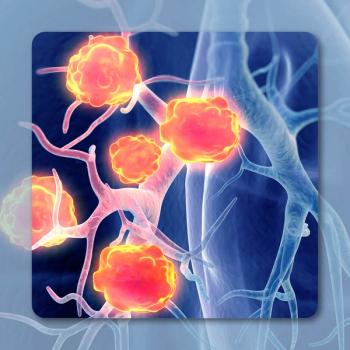
Preclinical data suggest that DLL3-TOPAbody has antitumor activity and could provide a survival advantage in DLL3-expressing tumor cells, including SCLC.

DK210 (EGFR) showed evidence of wild-type IL-2 signaling, CRS mitigation, and immune response signaling in patients with solid tumors.
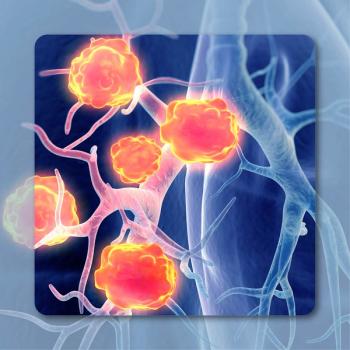
Siglec-15 was expressed in tumor cells and tumor-associated macrophages in tissue samples from non–small cell lung cancer and other solid tumors.
Radiomic biomarkers can predict treatment response through assessments of tumor growth in patients with metastatic uveal melanoma treated with roginolisib.

The Nectin-4/CD137 Bicycle–targeted immune cell agonist BT7480 had antitumor activity in patients with Nectin-4– and CD137-expressing tumors.

Cobolimab plus dostarlimab-gxly showed activity and acceptable safety across all dose levels assessed in patients with non–small cell lung cancer.
Camidanlumab tesirine was well tolerated as a monotherapy and elicited responses when given with pembrolizumab in patients with advanced solid tumors.

The combination of cabozantinib and atezolizumab generated rapid and durable responses in patients with advanced head and neck squamous cell carcinoma who received prior treatment with platinum-based chemotherapy.

PDS0101 given in conjunction with chemoradiation elicited an 100% overall response rate, along with tumor shrinkage greater than 60%, in 9 patients with high-risk, locally advanced cervical cancer, according to results of the phase 2 IMMUNOCERV trial.

The combination of sotigalimab and pembrolizumab showed encouraging antitumor activity and was well tolerated in the frontline setting of patients with metastatic melanoma.
CYNK-101 demonstrated synergistic activity when used in combination with avelumab through antibody-dependent cellular cytotoxicity against PD-L1–positive non–small cell lung cancer, triple-negative breast cancer, and bladder cancer cell lines, according to preclinical data.

CTX130, an investigational allogeneic, CRISP/Cas9 gene-edited, anti-CD70 CAR T-cell therapy, was found to be safe with early signs of clinical activity in patients with advanced clear cell renal cell carcinoma, according to findings from the phase 1 COBALT-RCC trial.