With multiple ADCs now available for use in gynecologic cancers, treatment decision-making incorporates biomarker nuances and raises sequencing questions.
Supplements and Featured Publications
Andrew Ko, MD, details the safety profile of Optune Pax in the PANOVA-3 trial for patients with locally advanced pancreatic cancer.
"The majority of these adverse effects [AEs] were in the realm of mild irritation... nothing that represents a deal breaker... with a positive trade-off, and with manageable and generally mild device-related AEs."
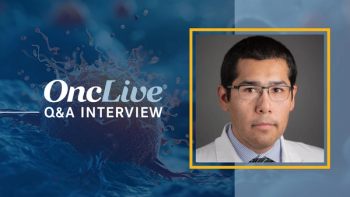
Andrew H. Ko, MD, a professor of medicine and co-director of the Pancreas Center at the University of California, San Francisco Helen Diller Family Comprehensive Cancer Center, discussed the safety profile and clinical implementation of Optune Pax.
In February 2026,
Ko emphasized that Optune Pax was well tolerated and did not increase the systemic toxicity typically associated with gemcitabine plus nab-paclitaxel. No new safety signals were identified, and the rates of serious adverse effects (AEs) were comparable between the study arms. The toxicities specific to the tumor treating fields (TTFields) were primarily dermatologic, appearing as local skin irritation or dermatitis beneath the device arrays. Although device-related skin AEs were observed in 76.3% of patients, the vast majority were grade 1 or 2 in severity; grade 3 or higher skin AEs were reported in 7.7% of the population. The most common nondermatologic device-related AE was fatigue, occurring in 5.1% of patients.
A significant aspect of treatment with Optune Pax is the daily commitment, as the device should ideally be worn for 14 to 16 hours per day. Ko acknowledged that while the logistics of wearing the device can be slightly cumbersome, the AEs are generally mild and manageable, representing a positive tradeoff for the survival benefit. He concluded that with no device-related deaths or unexpected safety issues, Optune Pax serves as a safe and effective adjunct to systemic therapy in the locally advanced setting.