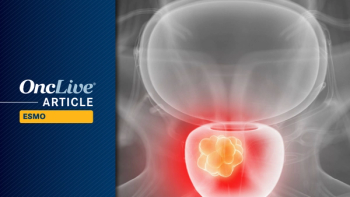
Experts spotlight the prostate and bladder cancer presentations they're most excited to see at the 2026 ESMO Congress.
Dana E. Rathkopf, MD, discusses the efficacy of niraparib plus abiraterone acetate and prednisone in patients with mCSPC and HRR gene alterations.
"After 30.8 months of median follow-up, radiographic progression-free survival favored the combination arm…and there was a 37% reduction in the [risk of progression or death in the] intention-to-treat population of [patients with] all HRR [gene] alterations that were tested in this study."
Dana E. Rathkopf, MD, a genitourinary medical oncologist and chair of the Research Council at Memorial Sloan Kettering Cancer Center, discussed efficacy results from the phase 3 AMPLITUDE trial (NCT04497844) of niraparib plus abiraterone acetate (Akeega) and prednisone for patients with homologous recombination repair (HRR) gene–mutated metastatic castration-sensitive prostate cancer (mCSPC).
Findings from the first and final analysis for radiographic progression-free survival (rPFS) and the first interim analysis for overall survival (OS) were presented at the
In the intention-to-treat population, which included all HRR gene alterations, the niraparib regimen resulted in a 37% reduction in the risk of radiographic progression or death compared with AAP alone, with a median rPFS that was NE vs 29.5 months, respectively (HR, 0.63; 95% CI, 0.49-0.80; P = .0001), Rathkopf noted. This rPFS benefit was generally consistent across predefined subgroups.
Furthermore, the niraparib regimen significantly reduced the risk of symptomatic progression vs AAP by 56% in the BRCA-mutant subgroup (HR, 0.44; 95% CI, 0.29-0.68; P = .0001) and by 50% in the overall HRR gene–mutant population (HR, 0.50; 95% CI, 0.36-0.69; P < .0001).
Regarding OS, the first interim analysis demonstrated a numerical, though not statistically significant, reduction in the risk of death with the niraparib regimen vs AAP: 25% in the BRCA-mutant subgroup (HR, 0.75; 95% CI, 0.51-1.11; P = .15) and 21% in the HRR gene–mutant population (HR, 0.79; 95% CI, 0.59-1.04; P = .10), Rathkopf stated.
These findings support the potential role of niraparib plus abiraterone acetate and prednisone in delaying disease progression in patients with HRR gene–mutated mCSPC, Rathkopf concluded.