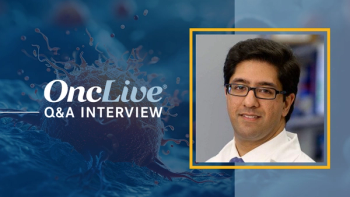
Benjamin Weinberg, MD, discusses the FDA approval of daraxonrasib, RASolute 302 survival data, safety considerations, and future RAS-targeted therapies in pancreatic cancer.
Supplements and Featured Publications
David A. Russler-Germain, MD, PhD, discusses how data with MRD and ctDNA testing in solid tumors inform their potential application in hematologic malignancies.
"The take home message is that we should be adjudicating end-of-treatment PRs [according to PET-CT imaging] after frontline treatment, or CAR T cell [therapy], for example, with ctDNA testing."
David A. Russler-Germain, MD, PhD, instructor in medicine in the Division of Oncology, John T. Milliken Department of Medicine, at Washington University School of Medicine, discussed the potential benefits of implementing circulating tumor DNA (ctDNA) testing to prognosticate and assess treatment responses in lymphoma.
Although PET-based functional imaging has been the standard for the last 15 years, outperforming traditional CT scans from a prognostic standpoint, it remains limited by a broad range of positive and negative predictive values found across clinical literature, Russler-Germain began.
He noted that PET scans frequently yield false positives at the end of treatment. For instance, data from a sub-study of the phase 3Alliance/CALGB 50303 study (NCT00118209) suggested that upwards of 60% of end-of-treatment positive PET results may actually be false positives, as those patients went on to achieve long-term remissions indicative of a cure. This makes the accurate adjudication of partial responses (PRs) vital, particularly as the field moves toward early intervention with CAR T-cell therapy for primary refractory patients, he explained.
At the
Furthermore, ctDNA testing serves as a tool to help clinicians distinguish whether PET-based PRs represent actual residual disease or false-positive uptake. Russler-Germain emphasized that this technology provides nearly equivalent information to a biopsy in straightforward cases. He concluded that ctDNA testing should be used to adjudicate responses after frontline treatment or CAR T-cell infusion to ensure clinical decisions are based on the most accurate assessment of residual disease.