The first MRD data from the phase 3 EXCALIBER-RRMM trial support iberdomide-based triplet therapy as early as first relapse, with PFS follow-up ongoing.
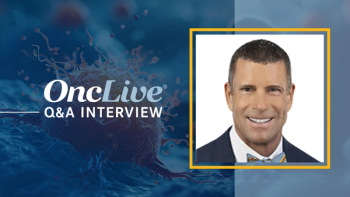
Brian M. Wolpin, MD, MPH, discusses phase 1/2 data showing high activity with daraxonrasib in first-line metastatic pancreatic ductal adenocarcinoma.
“We saw an ORR of 58% and a DCR of 90%. This is a relatively small group of patients currently, and chemotherapy has been given to many, many patients. If we [look at efficacy outcomes with daraxonrasib combinations and] chemotherapy, [daraxonrasib] seems to be better. Usually, we see that the response rate is in the 30% to 40% [range with chemotherapy].”
Brian M. Wolpin, MD, MPH, director of both the Gastrointestinal Cancer Center and Hale Family Center for Pancreatic Cancer Research, the Robert T. and Judith B. Hale Chair in Pancreatic Cancer, and a physician at Dana-Farber Cancer Institute, as well as a professor of medicine at Harvard Medical School, highlighted efficacy data with daraxonrasib (RMC-6236) as either monotherapy or in combination with chemotherapy in patients with first-line metastatic pancreatic ductal adenocarcinoma (PDAC).
In the GI-102 platform study, the combination of daraxonrasib plus gemcitabine and nab-paclitaxel (Abraxane) demonstrated robust activity. Among 40 treated patients, the combination produced an overall response rate (ORR) of 58% (95% CI, 41%-73%) and a disease control rate (DCR) of 90% (95% CI, 76%-97%). Landmark analysis at 6 months showed a progression-free survival (PFS) rate of 84% (95% CI, 68%-93%) and an overall survival (OS) rate of 90% (95% CI, 76%-96%). Wolpin stated that these outcomes are highly favorable compared with standard chemotherapy, which typically yields response rates between 30% and 40% and 6-month PFS rates of approximately 50%.
Daraxonrasib also showed significant activity as a single agent in 38 efficacy-evaluable patients with RAS-mutant metastatic PDAC. In this monotherapy cohort, the ORR was 47% (95% CI, 31%-64%) and the DCR was 92% (95% CI, 79%-98%). In the all-RAS patient population (n = 40), the Kaplan-Meier estimate for the 6-month progression-free survival (PFS) rate was 71% (95% CI, 53%-83%), and the 6-month overall survival (OS) rate was 83% (95% CI, 67%-92%). Even without the addition of cytotoxic chemotherapy, the single-agent performance of daraxonrasib compares well to historical frontline chemotherapy benchmarks, Wolpin noted. Of note, PFS and OS data remained immature at the data cutoff.
Regarding safety, the profiles for both the monotherapy and combination regimens were found to be manageable and consistent with previous clinical findings.
Wolpin concluded that while the data are still maturing and medians have not been reached, these early results highlight the potential for RAS(ON) inhibitors to significantly improve outcomes for patients in the frontline setting.
Support provided by Revolution Medicines. Content independently published by OncLive.