
Elisrasib produced a 58.8% ORR and 12.2-month median PFS in KRAS G12C inhibitor–naive NSCLC and remained active in G12C inhibitor–refractory disease.
Elisrasib produced a 58.8% ORR and 12.2-month median PFS in KRAS G12C inhibitor–naive NSCLC and remained active in G12C inhibitor–refractory disease.
Phase 1 data show HS-10504 yields encouraging responses and manageable safety in EGFR C797S–mutant NSCLC post TKI therapy.

Translational analyses from NEOPRISM-CRC also link ctDNA clearance/kinetics and TCR clonality with pCRs, supporting biomarker-guided treatment selection.

Ris-rez plus adebrelimab led to an approximate 50% response rate and durable disease control in pretreated nonsquamous NSCLC without actionable mutations.
With approximately 3 years of follow-up, TKI-naive patients with ROS1+ NSCLC experienced long-term benefits with taletrectinib.
Phase 1/2 data from 2 separate studies have shown signals of improved survival and safety with the agent, supporting its evaluation in a phase 3 trial.
Amivantamab plus lazertinib improves second-line PFS vs osimertinib in EGFR-mutant NSCLC, per post hoc data from MARIPOSA presented at AACR 2026.
The brain-penetrant, noncovalent EGFR TKI produced an ORR of 87.5% in 8 efficacy-evaluable patients with EGFR-mutant NSCLC.
The fourth-generation EGFR C797S inhibitor ABK-EGFR-1 showed promising in vivo efficacy in various EGFR C797S mutation models.
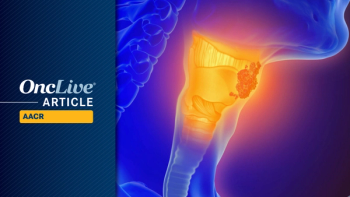
Post-treatment ctDNA positivity was associated with disease recurrence in locoregionally advanced HNSCC, including p16-positive oropharynx cancer.
The 5-year OS rate favored tebentafusp vs investigator’s choice of therapy in HLA-A*02:01–positive uveal melanoma.
Cilta-cel demonstrated feasibility in the treatment of patients with high-risk smoldering multiple myeloma in the phase 2 CAR-PRISM trial.

Molecular testing identified actionable alterations in high proportions of patients with breast and colorectal cancers, regardless of ctDNA status.
Zoldonrasib produced responses and no grade 4 or 5 TRAEs in previously treated KRAS G12D–mutated NSCLC.
Experts from across oncology specialties highlight research being presented at the 2026 AACR Annual Meeting.
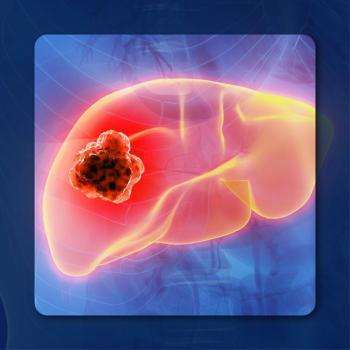
Phase 1 data support further exploration of botensilimab plus balstilimab in patients with hepatocellular carcinoma.

Experts from across oncology specialties shared some of the most talked-about abstracts and discussions from the 2025 AACR Annual Meeting.

Adjuvant aumolertinib improved disease-free survival in complete resected stage II to IIIB non–small cell lung cancer harboring EGFR mutations.

Trifluridine/tipiracil showed a favorable safety profile and numerically improved DFS vs placebo in MRD-positive CRC.

First-line adagrasib monotherapy demonstrated preliminary efficacy and tolerability in patients with SK11- and KRAS G12C–mutant NSCLC.

Botensilimab and balstilimab proved active and safe as neoadjuvant therapy in patients with mismatch repair–deficient and –proficient solid tumors.

Herbert H F Loong, MBBS(HK), PDipMDPath(HK), MRCP(UK), FRCP Edin, FHKCP, FHKAM(Medicine), FASCO, discusses the efficacy of D3S-001 in pretreated NSCLC.

Avutometinib plus abemaciclib and fulvestrant had manageable toxicity in CDK4/6-resistant, HR+/HER2– metastatic breast cancer.

A phase 1b trial examining SYN818 plus olaparib in patients with solid tumors will be conducted in the second half of 2025.

Runimotamab in combination with trastuzumab led to clinical activity and tolerability vs runimotamab alone in HER2-positive breast cancer.
Amin Sobh, PhD, discusses findings from a study investigating the immune surveillance–modulating capabilities of NSD2 overexpression in multiple myeloma.

Invikafusp alfa was active in unresectable, locally advanced or metastatic solid tumors resistant to immune checkpoint inhibitors.

Initial fruquintinib followed by regorafenib extended OS vs the reverse sequence of the agents in patients with metastatic colorectal cancer.

A low dose of ICT01 added to combination therapy with azacitidine and venetoclax proved active and safe as frontline therapy in patients with AML.
Michael Cecchini, MD, discusses the effects of neoadjuvant chemotherapy on tumor-infiltrating lymphocyte levels in colorectal cancer with liver metastases.