

Phase 1 data of TG4050 elicited tumor-specific immune responses that resulted in low relapse rates in patients with resected HPV–negative head and neck cancers.
Phase 1 data of TG4050 elicited tumor-specific immune responses that resulted in low relapse rates in patients with resected HPV–negative head and neck cancers.

Early safety and efficacy data seen with AZD1390 in a phase 1 study indicate it's potential utility as a radiosensitizing treatment in glioblastoma.

Mirvetuximab soravtansine plus pembrolizumab displays efficacy in recurrent or persistent, FRalpha-positive, pMMR/MSS serous endometrial cancer.
Samer A. Srour, MB ChB, MS, discusses efficacy and safety data for the allogeneic CAR T-cell therapy CTX130 in advanced clear cell renal cell carcinoma.

Olaparib on a gap schedule with chemotherapy does not improve responses vs chemotherapy alone in the neoadjuvant setting for patients with BRCA wild-type TNBC.
Rebecca L. Porter, MD, PhD, discusses the evaluation of mirvetuximab soravtansine plus pembrolizumab in FRα-positive, pMMR/MSS endometrial cancer.

Copanlisib plus nivolumab was active and met the primary end point of a phase 1/2 study in a cohort of patients with MSS CRC.

A microRNA assay combined with CA19-9 displayed diagnostic accuracy in the early detection of pancreatic cancer.
Saruparib's favorable activity and safety may allow patients with advanced solid tumors to stay on treatment longer vs other approved PARP inhibitors.

Adagrasib plus cetuximab elicited a 34% objective response rate in patients with previously treated KRAS G12C-mutant advanced colorectal cancer.

Administration of atezolizumab after definitive local therapy did not improve EFS or OS in patients with head and neck squamous cell carcinoma.

Linvoseltamab elicited responses with acceptable safety in patients with relapsed/refractory multiple myeloma, including difficult-to-treat subsets
The anti-CD70 CAR T-cell therapy CTX130 showed activity and manageable toxicities in advanced renal cell carcinoma.
Deborah J. Wong, MD, PhD, discusses the evaluation of atezolizumab vs placebo after definitive local therapy in high-risk, locally advanced HNSCC.
Michael R. Migden, MD, discusses efficacy data for RP1 in advanced non-melanoma skin cancer after prior solid organ transplant.

Fifty-seven percent of drugs granted accelerated approval for a cancer indication failed to show clinical benefit in confirmatory studies.

Adjuvant treatment with the personalized neoantigen vaccine, autogene cevumeran, delayed pancreatic cancer recurrence in pancreatic ductal adenocarcinoma.

Cadonilimab plus oxaliplatin and capecitabine leads to survival benefit in gastric/GEJ adenocarcinoma, regardless of PD-L1 expression.
A genome-wide methylome enrichment platform demonstrated efficacy in detecting early-stage, low-shedding cancers with limited circulating tumor DNA.
Jason J. Luke, MD, FACP, discusses initial results from the phase 1 GLIMMER-01 trial of E-602 in advanced solid tumors.
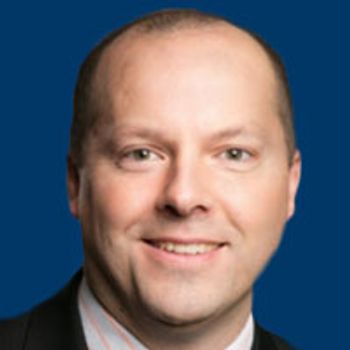
Findings from a phase 1 study showed that the fully humanized IgG4 antibody IO-108 was well tolerated and displayed durable responses when given as a monotherapy as well as in combination with pembrolizumab, supporting further development of the agent alone or with PD-1/PD-L1 targeted therapy for patients with advanced solid tumors.
Ferdinandos Skoulidis, MD, PhD, MRCP, discusses the clinical implications for data from the combination of tremelimumab plus durvalumab and chemotherapy in metastatic non–small cell lung cancer without sensitizing EGFR mutation or ALK aberrations.

Although the phase 2 CYCLONE 1 trial did not meet its primary end point of overall response rate, treatment with abemaciclib did demonstrate clinical activity among patients with metastatic castration-resistant prostate cancer.

The combination of PARP and ATR inhibition with olaparib and ceralasertib was tolerable but showed limited efficacy in pediatric patients with advanced malignancies harboring DNA replication stress and DNA repair deficiencies, according to findings from arm N of the phase 1/2 AcSé-ESMART trial.

Pemigatinib generated efficacy and tolerability in previously treated patients with advanced/metastatic or unresectable solid tumors harboring activating FGFR mutations or fusions/rearrangements, including cholangiocarcinoma, central nervous system tumors, gynecologic tumors, and pancreatic cancer.
Jayesh Desai, MBBS, FRACP, discusses efficacy data for the combination of divarasib plus cetuximab in patients with colorectal cancer harboring a KRAS G12C mutation from a phase 1B study.
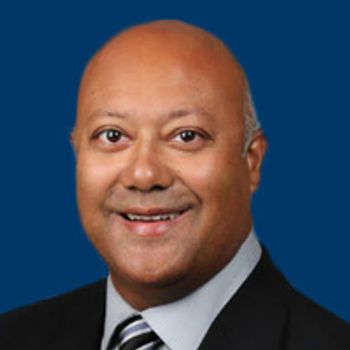
Whole-exome sequencing successfully identified genetic conditions in patients who may have been missed by clinical guidelines.
John Michael "JM" Bryant, MD, discusses the combination of nivolumab with standard of care in the management of patients with prostate cancer, detailing the results of the interim analysis of the phase 2 trial.

A deep learning risk prediction model was able to accurately identify patients with endometrial cancer at low and high risk of distant recurrence, according to data presented during the 2023 AACR Annual Meeting.

The selective, oral KRASG12C inhibitor divarasib demonstrated promising clinical activity in patients with colorectal cancer treated with the agent plus cetuximab.