

Fewer Americans are aware of the fact that the human papillomavirus can cause certain types of cancer, and vaccination rates against the virus are lagging, according to recent research presented at the AACR Annual Meeting 2023.
Fewer Americans are aware of the fact that the human papillomavirus can cause certain types of cancer, and vaccination rates against the virus are lagging, according to recent research presented at the AACR Annual Meeting 2023.

Attaya Suvannasankha, MD, discusses the safety and efficacy of REGN5459, a BCMAxCD3 bispecific antibody with low affinity to CD3 on T cells, in relapsed/refractory multiple myeloma.

The recommended phase 2 dose of IBI351 monotherapy had favorable safety and encouraging efficacy signals when administered to patients with advanced KRAS G12C–mutated non–small cell lung cancer, according to updated data from a phase 1 dose-escalation study.

Lifirafenib plus mirdametinib produced a tolerable safety profile and antitumor activity in patients with BRAF- or KRAS-mutant advanced or refractory solid tumors.

LY3537982, an investigative KRAS G12C inhibitor, demonstrated clinical efficacy across patients with non–small cell lung cancer, colorectal cancer, and other solid tumors.

The RAF dimer inhibitor BGB-3245 generated early efficacy signals with a tolerable safety profile in patients with advanced or refractory solid tumors harboring MAPK pathway mutations.

The allogeneic anti-CD70 CAR T-cell therapy ALLO-316 elicited signals of antitumor activity and showed a tolerable safety profile in patients with advanced or metastatic clear cell renal cell carcinoma.
Joshua K. Sabari, MD, discusses key findings from the phase 1 LOXO-RAS-20001 study of the KRAS G12C inhibitor LY3537982 in KRAS G12C–mutant advanced solid tumors.
Samer A. Srour, MB, ChB, MS, discusses the study design of the phase 1 TRAVERSE study, and key data on the use of ALLO-316 in patients with advanced or metastatic clear cell renal cell carcinoma.

Patients with African ancestry with colorectal cancer have fewer actionable gene mutations than those with European ancestry, leading to fewer targeted treatment options in this population.

Patients with unresectable metastatic desmoplastic melanoma achieved high response rates when treated with single-agent pembrolizumab in the SWOG S1512 trial, according to data presented during the 2023 AACR Annual Meeting.
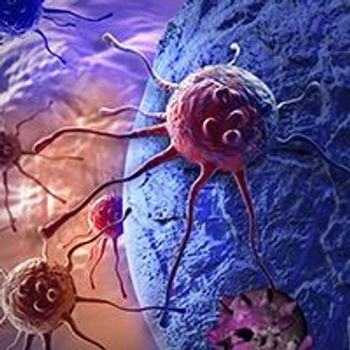
Preclinical data have demonstrated activity of a novel, small molecule CDK2 inhibitor INCB123667 in CDK2/cyclin E1 expressing cell lines prompting investigators to initiate a phase 1 study, and the agent may fill an unmet need for patients with cancers with primary or acquired CDK4/6 resistance.

The investigational tetravalent bispecific antibody AFM13 displayed clinical efficacy in heavily pretreated patients with CD30-positive relapsed/refractory peripheral T-cell lymphoma.
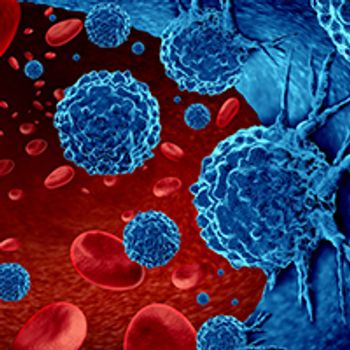
The combination of tafasitamab and lenalidomide followed by tafasitamab maintenance prolonged responses in patients with relapsed/refractory diffuse large B-cell lymphoma.
John V. Heymach, MD, PhD, discusses findings the phase 3 AEGEAN trial in patients with resectable non–small cell lung cancer.

Jessica Yasmine Islam, PhD, MPH, discusses the treatment of patients with Hodgkin’s lymphoma who do or do not have HIV.
Perioperative durvalumab plus neoadjuvant platinum-based chemotherapy demonstrated a statistically significant improvement in pathologic complete response and event-free survival vs placebo plus chemotherapy in patients with resectable non–small cell lung cancer.

mRNA-4157 in combination with pembrolizumab improved recurrence-free survival compared with pembrolizumab alone when used as an adjuvant treatment in patients with resected high-risk melanoma, regardless of tumor mutational burden.

Pembrolizumab plus cisplatin and gemcitabine produced a statistically significant and clinically meaningful improvement in overall survival vs placebo plus cisplatin and gemcitabine in previously untreated patients with advanced biliary tract cancer, according to data from the phase 3 KEYNOTE-966 trial.

Adjuvant treatment with the combination of atezolizumab (Tecentriq) and bevacizumab (Avastin) resulted in a statistically significant and clinically meaningful improvement in recurrence-free survival vs active surveillance in patients with a high risk of hepatocellular carcinoma recurrence following curative-intent resection or ablation.

The addition of durvalumab and tremelimumab to chemotherapy led to encouraging responses and a suitable safety profile as neoadjuvant therapy in patients with advanced ovarian cancer, according to findings from the phase 2 KGOG 3046.
The addition of SOT101, an interleukin-2/IL-15 Rβγ superagonist, to Pembrolizumab generated a clinical benefit and encouraging safety data in patients with advanced solid tumors.

The addition of adebrelimab to chemotherapy elicited improved overall survival compared with chemotherapy and placebo in patients with extensive-stage small cell lung cancer.

The addition of the selective oncolytic adenovirus CG0070 to pembrolizumab showed encouraging activity and safety in Bacillus Calmette-Guerin–unresponsive non-muscle invasive bladder cancer, according to early data from the phase 2 CORE1 trial.

The addition of canakinumab to frontline pembrolizumab and chemotherapy did not improve survival in previously untreated patients with locally advanced or metastatic non–small cell lung cancer. However, signals of activity were seen in patients with a baseline inflammatory biomarker high sensitivity-C-reactive protein.

The combination of the CD40 agonist antibody sotigalimab and pembrolizumab demonstrated a favorable safety profile and led to immunologic changes that correlated with clinical response in patients with unresectable stage III or IV metastatic melanoma.

Kristin G. Anderson, PhD, discusses overcoming suppressive signaling by engineering T-cells in ovarian cancer.
The combination of nivolumab and ipilimumab demonstrated a statistically significant improvement in progression-free survival vs ipilimumab alone as second-line therapy in previously treated patients with stage III unresectable or stage IV melanoma.

The addition of BO-112 to pembrolizumab demonstrated efficacy and safety in patients with advanced melanoma who were resistant to anti–PD-1 therapies, according to final results from the phase 2 SPOTLIGHT203 trial.

Stéphane Champiat MD, PhD, discusses early efficacy seen with the combination of SOT101 and pembrolizumab in solid tumors.