
Opinion|Videos|February 16, 2024
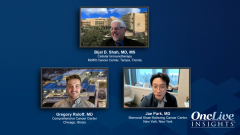
Emerging Therapies for the Older Patient With Acute Lymphoblastic Leukemia
Dr. Shah and faculty provide updates on emerging therapies, which exhibit promise for the treatment of relapsed or refractory acute lymphoblastic leukemia such as tisagenlecleucel and Obe-cel; obecabtagene autoleucel, preliminary outcomes of which were presented in the FELIX study at the 65th ASH Annual Meeting.
Advertisement
Episodes in this series
Advertisement
Related to this article
Higher EO2463-induced CD8 T-cell expansion was associated with significantly longer PFS in indolent non-Hodgkin lymphoma.

Older age independently predicted higher non-relapse mortality and inferior overall survival outcomes after PTCy-based unrelated donor transplant.

The top 5 OncLive TV videos of the week cover insights in bladder cancer, chronic myeloid leukemia, multiple myeloma, pancreatic cancer, and chronic lymphocytic leukemia.
Two optimized CD33-directed CAR T-cell therapies generated complete remissions with incomplete count recovery in heavily pretreated relapsed/refractory AML.

Experts shared the key data that stood out in hematologic oncology at the 2026 ASCO Annual Meeting.
Ruxolitinib plus extracorporeal photopheresis drove responses in steroid-refractory or -dependent chronic graft-vs-host disease.

Readouts across LBCL, relapsed/refractory myeloma, and CALR-mutated myelofibrosis anchored the hematology data presented at EHA 2026.
In case you missed any, check out our recap of the episodes of OncLive On Air that aired in June 2026.
Advertisement
Advertisement
Trending on OncLive
1
FDA Approves Bioequivalent Olaparib Across Previously Approved Cancer Indications
2
Alpha DaRT Plus Pembrolizumab Yields 100% ORR in Elderly Recurrent or Metastatic HNSCC
3
Longer-Term Data Help Shape TKI Selection in ROS1+ and ALK+ NSCLC
4
Experts Revisit the Most Notable Data in GU Oncology From ASCO 2026
5