
Opinion|Videos|August 3, 2026
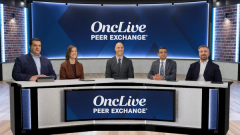
Emerging Therapies in CLL, CAR-T, Richter's Transformation, and Closing Remarks
The panel addresses two important areas not fully covered earlier.
Advertisement
Episodes in this series
The panel addresses two important areas not fully covered earlier. Dr. Hoffmann highlights a real-world dataset examining pirtobrutinib as bridge therapy to CAR-T in CLL, noting that the TRANSCEND CLL004 CAR-T study showed only 20% complete response rates in an extremely heavily pretreated population with median 5 prior lines of therapy. However, disease bulk represents a significant negative predictor of CAR-T outcomes, and effective bridging with pirtobrutinib to de-bulk patients before apheresis and infusion may improve outcomes in real-world practice compared to the challenging clinical trial population.
Dr. Parikh highlights Richter's transformation as the most significant unmet need in CLL, noting updated data from the RTE1 trial combining tislelizumab (PD-1 inhibitor) with zanubrutinib showed median PFS of approximately 10 to 12 months, which was improved over historical RCHOP outcomes. A subsequent cohort adds sonrotoclax to this combination. The SWOG study randomizing patients to R-CHOP versus R-CHOP plus pirtobrutinib represents another cooperative group approach. The RT2 study comparing RCHOP/mini-R-CHOP against pirtobrutinib-epcoritamab (without chemotherapy) tests whether T-cell redirecting therapy plus BTK inhibition could replace chemoimmunotherapy entirely in Richter's.
Closing thoughts from each panelist: Dr. Coombs celebrates improvements across the full disease spectrum including hints of progress in Richter's. Dr. Lipsky notes multiply relapsed patients can now access genuinely helpful emerging therapies while earlier lines continue advancing. Dr. Parikh emphasizes the luxury of multiple excellent options requiring individualized selection, with emerging data suggesting patient survival increasingly approaches age-matched general population outcomes. Dr. Shadman calls for the field to develop novel trial endpoints that capture combined efficacy, safety, and quality-of-life considerations rather than relying solely on traditional PFS and overall survival metrics, which may inadequately compare continuous versus time-limited strategies.
Advertisement
Related to this article

Researchers at Wake Forest University School of Medicine identified a protein that may help breast cancer spread to the brain and evade immune defenses.
Benjamin Weinberg, MD, discusses the FDA approval of daraxonrasib, RASolute 302 survival data, safety considerations, and future RAS-targeted therapies in pancreatic cancer.
Half of lenalidomide-refractory patients with 1 to 3 prior lines remained alive and progression free at least 5 years after a single cilta-cel infusion.

Andrew Kuykendall, MD, discusses the FDA approval of rusfertide and how to apply it in clinical practice for polycythemia vera management.

An NDA seeks FDA approval of savolitinib plus osimertinib for EGFR-mutated NSCLC with MET overexpression or amplification after EGFR TKI therapy.
Jason Hafron, MD, discusses the emotional, clinical, and financial burden of false positive cancer screening results and improved risk stratification.
Raajit K. Rampal, MD, PhD, discusses JAK inhibitor choice in cytopenic myelofibrosis, emerging combinations, and anemia-directed agents.

The sNDA for elinzanetant seeks FDA approval for moderate-to-severe vasomotor symptoms in women receiving endocrine therapy for HR-positive breast cancer.
Advertisement
Advertisement
Trending on OncLive
1
Ifinatamab Deruxtecan BLA Voluntarily Withdrawn in Previously Treated Extensive-Stage SCLC
2
China's NMPA Approves Pirtobrutinib Across CLL
3
FDA Grants Priority Review to Elinzanetant for Endocrine Therapy–Associated Vasomotor Symptoms in HR+ Breast Cancer
4
Long-Term PERSEUS Data Confirm Durable PFS Benefit With D-VRd in Transplant-Eligible Newly Diagnosed Myeloma
5