
Opinion|Videos|June 29, 2026
CLL14 Long-Term Follow-Up and IGHV-Guided Treatment Selection
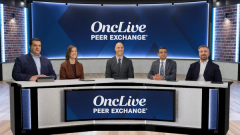
Dr. Parikh highlights the CLL14 9-year follow-up data as among the most important datasets presented at EHA 2026. The study enrolled treatment-naïve patients with significant comorbidities (high CIRS score) randomized to venetoclax-obinutuzumab versus chlorambucil-obinutuzumab. With 9-year follow-up, the median PFS for venetoclax-obinutuzumab reaches approximately 6 years overall, with a remarkably striking finding for IGHV-mutated patients achieving median PFS of approximately 8.5 to 9 years.
Advertisement
Episodes in this series
Dr. Parikh highlights the CLL14 9-year follow-up data as among the most important datasets presented at EHA 2026. The study enrolled treatment-naïve patients with significant comorbidities (high CIRS score) randomized to venetoclax-obinutuzumab versus chlorambucil-obinutuzumab. With 9-year follow-up, the median PFS for venetoclax-obinutuzumab reaches approximately 6 years overall, with a remarkably striking finding for IGHV-mutated patients achieving median PFS of approximately 8.5 to 9 years.
This finding has profound implications for older patients with IGHV-mutated disease; a patient in their mid-70s with favorable biology may require only one lifetime treatment. The abstract also reports time to next treatment extending approximately 2 years beyond PFS, as many patients experience asymptomatic progression meeting biochemical criteria before IWCLL symptomatic treatment indications develop.
Dr. Coombs steers the discussion toward treatment selection implications, arguing that for IGHV-mutated patients, time-limited venetoclax-obinutuzumab represents a compelling no-brainer recommendation given the durable outcomes, favorable cost profile, and elimination of ongoing medication burden for patients willing to commit to the intensive initial monitoring schedule. For IGHV-unmutated or high-risk patients, she expresses stronger preference for continuous BTK inhibitor therapy given more uncertain fixed-duration durability.
Dr. Lipsky cautions that despite impressive long-term follow-up, MRD negativity should not be over-weighted as a surrogate endpoint. In IGHV-mutated patients treated with venetoclax-obinutuzumab, most eventually lose MRD-negative status, yet these patients continue doing well clinically, suggesting that mature long-term PFS data remains irreplaceable. He advocates for developing dedicated studies specifically in IGHV-unmutated populations given their fundamentally different biology.
Advertisement
Related to this article

Researchers at Wake Forest University School of Medicine identified a protein that may help breast cancer spread to the brain and evade immune defenses.
Benjamin Weinberg, MD, discusses the FDA approval of daraxonrasib, RASolute 302 survival data, safety considerations, and future RAS-targeted therapies in pancreatic cancer.
Half of lenalidomide-refractory patients with 1 to 3 prior lines remained alive and progression free at least 5 years after a single cilta-cel infusion.
Andrew Kuykendall, MD, discusses the FDA approval of rusfertide and how to apply it in clinical practice for polycythemia vera management.

An NDA seeks FDA approval of savolitinib plus osimertinib for EGFR-mutated NSCLC with MET overexpression or amplification after EGFR TKI therapy.

Jason Hafron, MD, discusses the emotional, clinical, and financial burden of false positive cancer screening results and improved risk stratification.

Raajit K. Rampal, MD, PhD, discusses JAK inhibitor choice in cytopenic myelofibrosis, emerging combinations, and anemia-directed agents.

The sNDA for elinzanetant seeks FDA approval for moderate-to-severe vasomotor symptoms in women receiving endocrine therapy for HR-positive breast cancer.
Advertisement
Advertisement
Trending on OncLive
1
Ifinatamab Deruxtecan BLA Voluntarily Withdrawn in Previously Treated Extensive-Stage SCLC
2
China's NMPA Approves Pirtobrutinib Across CLL
3
FDA Grants Priority Review to Elinzanetant for Endocrine Therapy–Associated Vasomotor Symptoms in HR+ Breast Cancer
4
Long-Term PERSEUS Data Confirm Durable PFS Benefit With D-VRd in Transplant-Eligible Newly Diagnosed Myeloma
5