
Opinion|Videos|January 2, 2026
Endometrial Cancer: Framing Prognosis, Weaving Clinical Trials and Real-World Data into Patient Conversations
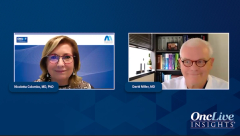
Author(s)Nicoletta Colombo, MD, PhD, David Miller, MD
Panelists discuss how combining controlled trial evidence with real-world experience supports more realistic discussions of prognosis, tolerability, and the value of durable long-term follow-up.
Advertisement
Episodes in this series
When discussing long term expectations with patients, clinicians must balance controlled trial data with real world experience. Clinical trials provide high quality evidence to compare treatment options and guide efficacy based decisions, but trial participants often differ from everyday patients in performance status and comorbidity. Real world insights therefore play an essential role in shaping a realistic understanding of tolerability and day to day outcomes.Long term follow up from major trials further enhances these discussions. The presence of durable benefit and clear survival trends helps clinicians speak more confidently about the potential course of disease. Seeing long standing survival curves gives patients a sense of hope and assists clinicians in communicating the value of sustained therapy. Together, trial evidence and real world outcomes provide a balanced and comprehensive foundation for patient counseling.
Advertisement
Related to this article

In case you missed any, read a recap of the episodes of OncLive On Air that aired in September 2026.

Japan approved Optune Pax plus gemcitabine and nab-paclitaxel for unresectable locally advanced pancreatic cancer.

A pilot study represents a milestone toward testing a faster, more powerful, and potentially less-toxic form of radiation therapy for cancer treatment.
Oral azacitidine and cedazuridine met the end point of total cycle azacitidine exposure vs subcutaneous azacitidine in MDS or CMML.

UTRxMYCN M1-14 received orphan drug status for soft tissue sarcoma and RPDD for rhabdomyosarcoma.

Interim data showed that the BCMA-directed CAR T-cell therapy NXC-201 generated complete responses in relapsed/refractory AL amyloidosis.

Estelamari Rodriguez, MD, MPH, discusses the rationale, design, and practice implications of the phase 3 RELATIVITY-1093 trial in nonsquamous NSCLC.

Experts spotlight the variety of breast cancer research being presented at the 2026 ESMO Congress.
Advertisement
Advertisement
Trending on OncLive
1
FDA Grants Fast Track Designation to Plinabulin Plus Docetaxel in Post-ICI Non-Squamous NSCLC
2
Oral Azacitidine and Cedazuridine Meets Primary Pharmacokinetic End Point in MDS and CMML
3
Breast Cancer Experts Highlight Abstracts to Watch at ESMO 2026
4
Optune Pax Is Approved in Japan for Unresectable Locally Advanced Pancreatic Cancer
5