
Opinion|Videos|December 19, 2025
Endometrial Cancer: How New Long-Term Survival Data Inform Guideline Evolution and Sequencing
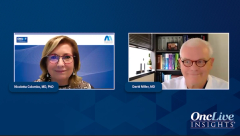
Author(s)Nicoletta Colombo, MD, PhD, David Miller, MD
Panelists discuss how emerging 5-year survival data—once rare in this setting—are influencing guideline evolution by increasing confidence in regimens that deliver sustained benefit and informing more nuanced sequencing decisions.
Advertisement
Episodes in this series
Long term survival has been rare in advanced or recurrent endometrial cancer, which makes the emergence of five year survival data an important development. These outcomes indicate that a subset of patients may achieve durable control and possibly long term remission. This shift influences how clinicians frame prognosis and evaluate the overall impact of therapy.As long term results become available, they also inform evolving clinical guidelines. Regimens that demonstrate sustained survival improvement are more likely to gain prominence in frontline and second line recommendations. Experts note that strong survival data reinforce the standards that incorporate immune checkpoint inhibitors and may encourage earlier use of effective treatments in appropriate patients. The presence of long term outcomes improves confidence in therapy selection and helps guide sequencing strategies within an increasingly complex treatment landscape.
Advertisement
Related to this article

In case you missed any, read a recap of the episodes of OncLive On Air that aired in September 2026.

Japan approved Optune Pax plus gemcitabine and nab-paclitaxel for unresectable locally advanced pancreatic cancer.
A pilot study represents a milestone toward testing a faster, more powerful, and potentially less-toxic form of radiation therapy for cancer treatment.
Oral azacitidine and cedazuridine met the end point of total cycle azacitidine exposure vs subcutaneous azacitidine in MDS or CMML.

UTRxMYCN M1-14 received orphan drug status for soft tissue sarcoma and RPDD for rhabdomyosarcoma.
Interim data showed that the BCMA-directed CAR T-cell therapy NXC-201 generated complete responses in relapsed/refractory AL amyloidosis.
Estelamari Rodriguez, MD, MPH, discusses the rationale, design, and practice implications of the phase 3 RELATIVITY-1093 trial in nonsquamous NSCLC.
Experts spotlight the variety of breast cancer research being presented at the 2026 ESMO Congress.
Advertisement
Advertisement
Trending on OncLive
1
FDA Grants Fast Track Designation to Plinabulin Plus Docetaxel in Post-ICI Non-Squamous NSCLC
2
Oral Azacitidine and Cedazuridine Meets Primary Pharmacokinetic End Point in MDS and CMML
3
Breast Cancer Experts Highlight Abstracts to Watch at ESMO 2026
4
Optune Pax Is Approved in Japan for Unresectable Locally Advanced Pancreatic Cancer
5