Now Playing
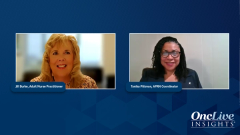
– Jill Burke, NP, introduces the program and Tanika Pittman, APRN, who brings more than 15 years of oncology experience from the UAMS Myeloma Center.
Jill Burke, NP, introduces the program and Tanika Pittman, APRN, who brings more than 15 years of oncology experience from the UAMS Myeloma Center. The discussion opens with the evolving multiple myeloma treatment landscape and the increasing use of quadruplet regimens in frontline management. Tanika describes the shift from simply achieving a response toward pursuing deeper and more durable responses, highlighting the incorporation of an anti-CD38 antibody, proteasome inhibitor, immunomodulatory agent, and dexamethasone into frontline treatment for appropriate patients. She discusses how evidence from the PERSEUS trial has supported daratumumab plus VRd in transplant-eligible patients, including improvements in progression-free survival and depth of response. From an APP perspective, Tanika emphasizes that quadruplet therapy affects the broader care pathway, requiring assessment of transplant eligibility, stem cell collection, infectious risk, thrombosis prevention, renal function, neuropathy, steroid tolerance, adherence, financial toxicity, caregiver support, and maintenance planning. She also discusses how patient counseling has evolved to explain the rationale for combining multiple mechanisms of action. The conversation further addresses CEPHEUS data supporting quadruplet therapy in transplant-ineligible or transplant-deferred multiple myeloma, shifting the clinical discussion toward appropriate treatment intensity and duration.