In TASKIN, the 12-month OS rate was 61.3% with vilamakitug vs 55.7% with placebo plus trifluridine/tipiracil.
This episode highlights Dr Meric-Bernstam's evolution from a science-focused student into a leader in precision oncology and early-phase drug development.
How This Is Building Me, hosted by world-renowned oncologist D. Ross Camidge, MD, PhD, is a podcast focused on the highs and lows, ups and downs of all those involved with cancer, cancer medicine, and cancer science across the full spectrum of life’s experiences.
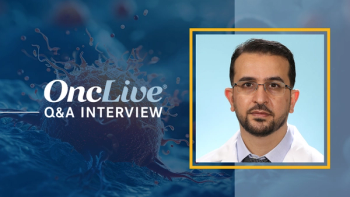
In this episode, Dr Camidge sat down with Funda Meric-Bernstam, MD, the department chair and Endowed Nellie B. Connally Chair in Breast Cancer, in the Department of Investigational Cancer Therapeutics, medical director of the Khalifa Institute for Personalized Cancer Therapy, and a professor of breast surgical oncology at The University of Texas MD Anderson Cancer Center in Houston; as well as a regular member of Cancer Biology at the University of Texas Houston Graduate School of Biomedical Sciences.
Drs Camidge and Meric-Bernstam discussed Dr Meric-Bernstam's evolution from a science-focused student into a leader in precision oncology and early-phase drug development. Dr Meric-Bernstam was raised in a hybrid fashion between the US and Turkey, attending a science-focused boarding school before beginning medical school in Turkey and ultimately restarting her medical education at the Yale School of Medicine in New Haven, Connecticut. Drawn to both the immediacy of surgery and the questions of basic science, she pursued a surgical residency with built-in research time, spending 2 years at the National Institute of Health studying translational regulation, an experience she credited with making her fearless in tackling the unfamiliar.
In this discussion, Dr Meric-Bernstam offered a candid look at building a career without a clear roadmap. She emphasized that clinician-investigators must work hard, arguing that a meaningful clinical presence sharpens translational research by revealing patients' true unmet needs. Her work spanning cell signaling, mTOR biology, window-of-opportunity trials, and genomic testing led her to direct MD Anderson's personalized cancer therapy efforts and grow its phase 1 program.
Beyond administration, Meric-Bernstam reflected on lessons from the lab, including a year of lost data that taught her to scrutinize primary results at every step, and her conviction in patient-derived models and co-clinical trials. Ultimately, Dr Meric-Bernstam described a transformational moment in oncology, where AI, comprehensive profiling, and newly druggable targets will reshape combination therapy. She concluded by reaffirming her mission to improve cancer outcomes, calling it the best job in the world.