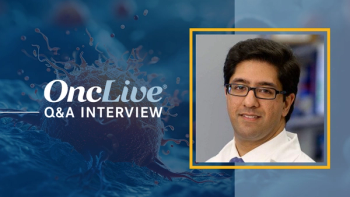
Although surgical resection remains the cornerstone of treatment for most patients with cutaneous squamous cell carcinoma (CSCC), the emergence of checkpoint inhibitors, along with growing data supporting their use in the neoadjuvant setting, is prompting the field to reconsider how and when systemic therapy should be integrated into treatment regimens, according to Vishal A. Patel, MD, FAAD, FACMS.
“Systemic therapies have entered our world and at earlier points than we traditionally have thought of, and that’s because of the advent of immunotherapy,” Patel said in an interview with OncLive®. “For most patients with CSCC, surgery remains the backbone, especially when we know we can achieve clear margins. But that needs to be balanced with whether surgery is possible, [so we need to consider] if there’s acceptable function [and address any] cosmesis concerns.”
In the interview, Patel, an associate professor of dermatology and medicine at the George Washington (GW) School of Medicine & Health Sciences, as well as the director of the cutaneous oncology program at the GW Cancer Center in Washington, DC, discussed how tumor biology, surgical feasibility, and patient-specific factors increasingly intersect with immunotherapy-driven strategies in CSCC.
Key Considerations in Modern CSCC Care
- Surgical resection remains the standard when clear margins and acceptable function can be achieved.
- Checkpoint inhibitors such as cemiplimab are now being used before surgery to shrink tumors and reduce treatment intensity.
- Dermatology, surgical oncology, radiation oncology, and medical oncology increasingly collaborate to guide treatment sequencing.
OncLive: What are some of the key factors that determine whether patients with CSCC are optimal candidates for surgery or systemic therapy?
Patel: The first decision point is resectability. Can we remove the tumor completely? What’s the anticipated surgical morbidity? What is the anticipated outcome and the confidence for [achieving a] cure? I’m looking at tumor factors like the size, the depth, the location, whether we suspect higher risk features like perineural invasion or proximal location to critical structures, whether there is any evidence of potential regional nodal disease, and then patient factors like age, comorbidities, whether the patients are on an anticoagulant, or if there’s wound healing risk. Lastly, [I consider] immune status. Immunosuppressed patients can have a much higher risk of aggressive tumors, and those tumors behave differently.
We traditionally think of [systemic therapy approaches] for locally advanced or unresectable tumors, when surgery is excessively morbid or disfiguring, certainly when there’s regional, distant spread for which surgery may not lead to cure or might require adjuvant therapy. We’re increasingly thinking of systemic therapy earlier on. What’s most exciting is looking at it in the neoadjuvant setting. There have been remarkable results when utilizing systemic therapy upfront in borderline resectable tumors, [allowing us to] confirm complete pathologic response, but also potentially de-escalate surgery, as well as the need for adjuvant therapy. We select [neoadjuvant therapy] now in certain high-risk cases, and that’s been incorporated into the most recent version of the National Comprehensive Cancer Network guidelines, [which state] that for borderline resectable tumors, one should consider neoadjuvant therapy with cemiplimab-rwlc [Libtayo].
How has integrating these agents into the treatment paradigm affected multidisciplinary care?
Skin cancer, and specifically CSCC, is an interesting disease [to manage] because it does not lie within 1 specialty. We [like to say] that it’s not a siloed disease. [We view management through the lens of] a Venn diagram because the patient has so many different touch points, especially in the locally advanced, borderline resectable, and unresectable settings. Multidisciplinary care is paramount [for] optimizing outcomes, and the incorporation of multidisciplinary care early on is critical. Immunotherapy has pushed us to utilize that integrated, team-based model. Historically, we would have a much more linear approach of dermatologists treating a [patient], when applicable. If a tumor is more advanced, we might refer that patient to a head neck surgeon or surgical oncologist, [only for that surgery] not to be definitive enough, [indicating that] there was a need for adjuvant therapy, at which point a radiation oncologist may be involved followed by a medical oncologist.
Now we know from the data with neoadjuvant therapy and immunotherapy that the sequence and timing of systemic therapies, either before surgery and potentially now with the approval of cemiplimab in the adjuvant setting, as well as the consideration of adding that with or without radiation, require complex discussions that need to happen in real time. This happens with all the team members before a treatment decision is undertaken. Close coordination with dermatologic surgery, surgical oncology, ENT [ear, nose, and throat], radiation oncology, medical oncology, pathology, radiology, and the ancillary team of social workers, etc, [is required]. [We also ask:] What does the family’s support system look like? All that needs to be tightly considered to have the most patient-centered approach taken.
Do you still loop in surgical colleagues for the patients whose disease historically has been deemed unresectable?
Absolutely. The decision [of whether patients are surgical candidates] is being made with our surgical colleagues, as well as our medical oncology colleagues, according to the patient’s priorities. [Even if the case is deemed] borderline resectable or unresectable, that scenario can change because immunotherapy is so robust. A colleague of mine, Dr David Miller, has coined the term for response-determined therapy, [which is essentially the use of] frontline immunotherapy with response-directed treatment plans. That really captures the scenario of patients [who may] have a robust response after receiving 1 or 2 doses of therapy, in which what was once deemed to unresectable or borderline resectable has completely changed such that we may feel comfortable resecting the disease to confirm whether there is any histologic tumor left. And that can help us predict whether adjuvant therapy is necessary, [or if we should] continue therapy since the patient is having a robust response. That ongoing discussion, both at the beginning and during all the touch points [on therapy], is key across all providers, especially the surgeons.
How do you see the CSCC paradigm evolving as more data mature and more agents become available?
This is a rapidly changing landscape, and we’re seeing a shift to earlier systemic therapy in select high-risk patients. A neoadjuvant approach, with or without surgery, is becoming more commonplace. As we gain more data, we get a better sense of who is truly going to benefit upfront, who needs combined modality therapy, and who can be cured with local therapy alone. What’s exciting is that we’re entering the next phase of building upon the data of how many doses somebody needs. Can we shorten treatment to 3 doses, 2 doses, or even potentially 1 dose to limit toxicity and have an optimal response?
There are also trials open right now with interlesional immunotherapy for [patients with] lower risk tumors. That may open the door to [immunotherapy] for populations that historically were left out of [the conversation]. The transplant patients or the highly immunosuppressed patients [have more difficult with tumor treatment], but if we can find a way to balance the risk of toxicity with the response in an interlesional approach, [that would open a world of possibilities]. Those are some of the ways the paradigm is evolving. We’re really trying to tailor [our approach to be] patient-centric and personalized. We’re not trying to overtreat and utilize immunotherapy broadly, but rather in a targeted, smart way to get the exact, well-tolerated response we hope to have.
What factors inform the choice between cemiplimab and cosibelimab-ipdl (Unloxcyt) for patients who are eligible for systemic immunotherapy?
Five or 10 years ago, we didn’t have any options, really. Now we have 3 FDA-approved medications for unresectable, locally advanced, or metastatic tumors: pembrolizumab [Keytruda], cemiplimab, and cosibelimab.1-3 A lot of these data are still evolving. Some of the more exciting work in the neoadjuvant setting has focused on cemiplimab. I think we reach for that [agent] because we have those data. We have phase 2 [data] and now an FDA approval for cemiplimab as adjuvant therapy, [supported by] the robust phase 3 [C-POST] trial [NCT03969004]. I rely on those data when considering a neoadjuvant or adjuvant approach.
On the other hand, I’m very excited and hopeful about cosibelimab, which currently is indicated in the unresectable, locally advanced, and metastatic settings, [similar to cemiplimab and pembrolizumab]. The exciting [aspect of] that medication is its safety profile. It has a slightly different mechanism of action, targeting PD-L1 as opposed to PD-1, like cemiplimab and pembrolizumab. It’s been suggested in the initial trial data that led to its approval, as well as the new, recent updated data, that cosibelimab has an extremely robust and safe toxicity profile. It’s much better tolerated by patients and has less severe adverse effects [AEs]. [We’re seeing] mostly grade 1/2 AEs and minimal grade 3/4 AEs [with the agent], if any at all. Whether that’s because the agent was evaluated in a smaller population or is truly representative of the medication’s benefit remains to be seen. Based on that [information], we are now pursuing new and exciting trials with cosibelimab in the neoadjuvant and other settings. [We’d love to have] a safer medication that we can utilize more broadly.
With immunotherapy, we always worry about tolerability, so for a frailer patient with a lot more comorbidities who may need to be on therapy longer, I certainly am thinking about reaching for cosibelimab [because of] its safety profile, as well as for patients who have had exposure to cemiplimab. Although we don’t have data about switching [in that sequence, it] certainly gives us an option because of its safety profile, so it’s exciting to have all these options for us.
Despite this progress, what unmet needs must be addressed for this patient population?
We’ve come a long way, but there are still several unmet needs. First and foremost, risk stratification or prediction of response [is an area for improvement]. Although we see robust responses in about 50% of patients…, that still means that 50% of patients are not responding. Why? What else do they need? How can we predict that upfront and treat them with more aggressive therapy to get a response before the disease progresses on the neoadjuvant side, as well as the adjuvant side? Can we predict who’s going to respond and how many doses they may need? Can we treat somebody upfront and wait longer and potentially push surgery down the line and have the confidence that the response will continue to evolve over time? Then, is radiation necessary in the adjuvant setting? Can we potentially omit that if we have a robust response? Predicting and personalizing treatment with the data we have is an area that will be focused on for the next few years.
The second [area of unmet need] focuses on immunosuppressed patients. We are really only evaluating interlesional or nonimmunotherapy approaches for these patients, although some trials are looking at the potential for immunotherapy. The [phase 2] TONIX-1500 trial [NCT07204080], which is being led by the Brigham [and Women’s] and Massachusetts General hospitals, is looking at kidney transplant recipients, but this is an area that we really are hopeful that we can now expand immunotherapy into. Maybe cosibelimab, with its safety profile, is the medication we can utilize for those patients.
The future is quite bright [in CSCC]. Although those are the unmet needs, the potential of tapping into immunotherapy, whether that’s interlesional or through other mechanisms of action, [is huge]. There’s a variety of other immunotherapy-like drugs that will be combined with PD-1 inhibitors in an interlesional fashion that are going to be investigated, and that may help increase the response or capture those slight nonresponders or patients who achieve stable disease to get them over the edge. There’s still a lot of work to do, but there’s also a lot of promise, both in the past and on the horizon.
References
- Keytruda. Prescribing information. Merck Sharp & Dohme Corp; 2020. Accessed March 8, 2026. https://www.accessdata.fda.gov/drugsatfda_docs/label/2020/125514s066lbl.pdf
- Unloxcyt. Prescribing information. Checkpoint Therapeutics; 2024. Accessed March 8, 2026. https://www.accessdata.fda.gov/drugsatfda_docs/label/2023/761297s000lbl.pdf
- Libtayo. Prescribing information. Regeneron; 2019. Accessed March 8, 2026. https://www.accessdata.fda.gov/drugsatfda_docs/label/2019/761097s001lbl.pdf