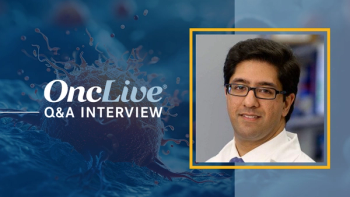
Raajit K. Rampal, MD, PhD, discusses JAK inhibitor choice in cytopenic myelofibrosis, emerging combinations, and anemia-directed agents.
Supplements and Featured Publications
Vishal Patel, MD, FAAD, FACMS, discusses the importance of multidisciplinary care for patients with locally advanced or unresectable CSCC.
“Close coordination with dermatologic surgery, surgical oncology, ENT [ear, nose, and throat], radiation oncology, medical oncology, pathology, radiology, and the ancillary team…social workers, [etc.]. What does the family’s support system look like? All that needs to be tightly integrated [and] considered to have the most patient-centered approach taken.”
Vishal Patel, MD, FAAD, FACMS, an associate professor of dermatology at the GW School of Medicine & Health Sciences, as well as the director of the Cutaneous Oncology Program at the GW Cancer Center, discussed the importance of multidisciplinary care for patients with locally advanced or unresectable cutaneous squamous cell carcinoma (CSCC).
Unlike some malignancies that are largely managed within a single specialty, CSCC often spans multiple disciplines, Patel began. Patients with advanced or borderline resectable CSCC frequently interact with a host of specialists throughout the course of their care. These touchpoints may include dermatologists, dermatologic surgeons, head and neck surgeons, surgical oncologists, radiation oncologists, and medical oncologists, Patel detailed. As a result, early integration of multidisciplinary care is essential to ensure that treatment decisions are optimized and aligned across specialties.
Historically, care pathways for CSCC were more sequential. Dermatologists would typically manage early-stage disease, referring patients with more advanced tumors to surgical specialists when necessary. If surgery proved insufficient for disease control, adjuvant radiation or systemic therapy might be considered later in the treatment course, often bringing medical oncology into the care continuum at a later stage, Patel said.
However, the emergence of immunotherapy and the growing body of evidence supporting its use across different stages of disease has reshaped this paradigm. Data supporting neoadjuvant and adjuvant immunotherapy have introduced new considerations regarding the timing and sequencing of systemic treatment relative to surgery and radiation, Patel explained. For example, the FDA
These evolving strategies require real-time discussion among the full care team before a definitive treatment approach is selected, Patel said. Close coordination among dermatologic surgery, surgical oncology, otolaryngology, radiation oncology, medical oncology, pathology, and radiology is often necessary to determine the most appropriate sequence of therapy for an individual patient.
Beyond close collaboration between the treating physicians, comprehensive cancer care also involves the broader support network surrounding the patient, Patel emphasized. Considerations such as social support systems, care coordination, and ancillary services, including social work can influence treatment feasibility and outcomes. Integrating these perspectives into multidisciplinary discussions helps ensure that care remains patient centered while navigating increasingly complex therapeutic options, Patel concluded.