Vishal Patel, MD, FAAD, FACMS, discusses the importance of multidisciplinary care for patients with locally advanced or unresectable CSCC.
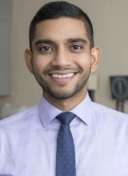
Vishal A. Patel, MD, is an associate professor of dermatology at the George Washington University School of Medicine & Health Sciences and director of the Cutaneous Oncology Program at the George Washington Cancer Center.
Vishal Patel, MD, FAAD, FACMS, discusses the importance of multidisciplinary care for patients with locally advanced or unresectable CSCC.
Drs Whitman and Patel discuss the evolving treatment paradigm for patients with CSCC, emphasizing the role of neoadjuvant and adjuvant immunotherapies.
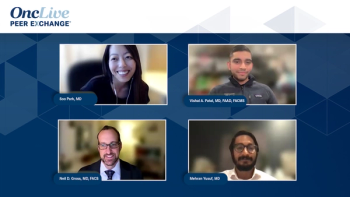
Panelists discuss strategies for integrating dermatology, surgery, radiation, and oncology to deliver cohesive, patient-centered cSCC care.
Panelists discuss strategies for long-term surveillance and management of patients with cSCC who have received adjuvant immunotherapy.
Panelists discuss ongoing clinical trials evaluating adjuvant immunotherapy for cSCC and the implications of early outcomes for clinical practice.
Panelists discuss how clinicians identify which patients are most likely to benefit from adjuvant immunotherapy based on clinical and pathologic risk factors.
Panelists discuss ongoing clinical trials, including adjuvant immunotherapy studies, and identify which patients are most likely to benefit from these strategies.
Panelists discuss the growing use of systemic immunotherapy for advanced or unresectable cSCC and how it integrates with other modalities.
Panelists discuss when radiation therapy is appropriate for treating cSCC, and how it complements surgical management.
Panelists discuss how to identify appropriate surgical candidates and coordinate timely referral to specialized surgical teams.
Panelists discuss standard primary treatment modalities for cSCC, emphasizing surgical control and selective use of adjunctive therapy.
Panelists discuss patient populations requiring earlier biopsy and aggressive workup to detect high-risk cSCC.
Panelists discuss the importance of following evidence-based clinical pathways and national guidelines to streamline cSCC care.
Panelists discuss when cSCC can be managed within dermatology and when multidisciplinary referral is warranted.
Panelists discuss how dermatologists serve as the first line of detection and play an essential role in early management and triage of cSCC.
Panelists discuss best practices for evaluating suspected cSCC, including lesion assessment, biopsy strategies, and initial patient workup.
Panelists discuss clinical and pathological factors used to stratify cSCC into low-, high-, and very high-risk categories.
Dr Patel discusses the clinical relevance of the FDA approval of adjuvant cemiplimab for the management of high-risk cutaneous squamous cell carcinoma.
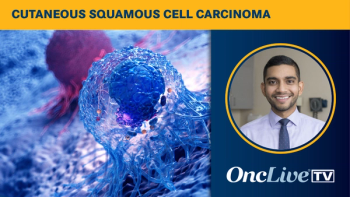
Vishal A. Patel, MD, discusses the FDA approval of adjuvant cemiplimab for CSCC at high risk of recurrence following surgery and radiation.
Vishal Patel, MD, FAAD, FACMS, discusses the evolving use of neoadjuvant and adjuvant PD-1 inhibition in cutaneous squamous cell carcinoma.
Closing out their discussion on the management of cutaneous squamous cell carcinoma, expert panelists share clinical pearls and excitement for the future.
Dr Vishal Patel shares a surgeon’s perspective on MDC, followed by a discussion on how intensifying treatment after surgery may improve outcomes for higher-risk patients with CSCC.
Experts in the field of CSCC revisit the concept of multidisciplinary care and consider best communication strategies.
Shared insight on novel treatment modalities in the setting of cutaneous squamous cell carcinoma and how they may be triaged moving forward.
Following their review of recent clinical data, expert panelists consider how neoadjuvant cemiplimab will fit into the real-world treatment paradigm of resectable CSCC, including the possibility of delaying or avoiding surgery in patients who have an adequate response to cemiplimab.
A brief overview of clinical trials evaluating the potential use of neoadjuvant immune checkpoint inhibitors—pembrolizumab, atezolizumab, and cemiplimab—in CSCC, followed by a focused discussion of recent cemiplimab trial data.
Key opinion leaders take time to review how immune checkpoint inhibitors have transformed outcomes in rectal cancer and non-cutaneous squamous cell cancers and consider how to better structure clinical trial endpoints in CSCC.
Shared insight on the use of immune checkpoint inhibitors in other patient populations within the skin cancer paradigm, and how lessons may be applied to patients with CSCC.
Expert panelists consider the broader evolution of therapy in resectable stage II-IV cutaneous squamous cell carcinoma.
Expert perspectives on real-world, in-practice identification and management of patients with resectable CSCC.
March 15th 2023
March 15th 2023