Now Playing
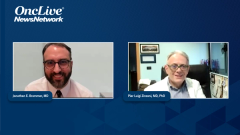
Jonathan Brammer, MD, of The Ohio State University, and Pier Luigi Zinzani, MD, of the University of Bologna, open a discussion devoted to duvelisib in peripheral T-cell lymphoma. Brammer introduces himself as a researcher focused on T-cell malignancies, and Zinzani notes his work as a hematologist with broad experience across lymphoma subtypes and a particular interest in peripheral T-cell lymphoma. Together they frame the conversation around a disease setting that has seen little meaningful progress in recent decades, positioning duvelisib as a development of genuine interest for patients with limited options. Brammer establishes that the discussion will center on the agent's activity in T-cell lymphomas and, in particular, on the recently reported results from the PRIMO study. The introduction sets expectations for a wide-ranging exchange that will move from the current treatment landscape through trial data, mechanism, sequencing, and future directions in this rare and challenging group of diseases.
Jonathan Brammer, MD, of The Ohio State University, and Pier Luigi Zinzani, MD, of the University of Bologna, open a discussion devoted to duvelisib in peripheral T-cell lymphoma. Brammer introduces himself as a researcher focused on T-cell malignancies, and Zinzani notes his work as a hematologist with broad experience across lymphoma subtypes and a particular interest in peripheral T-cell lymphoma. Together they frame the conversation around a disease setting that has seen little meaningful progress in recent decades, positioning duvelisib as a development of genuine interest for patients with limited options. Brammer establishes that the discussion will center on the agent's activity in T-cell lymphomas and, in particular, on the recently reported results from the PRIMO study. The introduction sets expectations for a wide-ranging exchange that will move from the current treatment landscape through trial data, mechanism, sequencing, and future directions in this rare and challenging group of diseases.