
Opinion|Videos|July 28, 2026
Remaining Unmet Needs and Emerging Therapies in PTCL
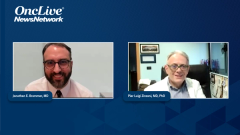
Brammer and Zinzani close by surveying persistent unmet needs and the therapies on the horizon for peripheral T-cell lymphoma.
Advertisement
Episodes in this series
Brammer and Zinzani close by surveying persistent unmet needs and the therapies on the horizon for peripheral T-cell lymphoma. They discuss the cautious history of checkpoint inhibition in T-cell disease, including reports of hyperprogression and the unusual biology in which programmed cell death protein 1 can behave as a tumor suppressor, while noting that combination approaches have shown more encouraging early signals. The experts review emerging cellular and antibody strategies, including CAR T-cell programs directed at CD5 and CD94, ongoing efforts in cutaneous and cytotoxic subtypes, and T-cell receptor–directed approaches targeting TRBC1 and TRBC2. They acknowledge that bispecific antibody development has so far yielded limited results in this setting. Both temper optimism with realism, observing that several of these approaches remain years from maturity, and they reaffirm duvelisib's near-term role in opening the door to durable remissions and potentially curative transplant before offering their closing remarks.
Advertisement
Related to this article

The FDA issued final guidances on performance status, washout periods, and laboratory values aimed at expanding oncology trial participation.
Laurence J. DiNardo, MD, FACS, discusses ctDNA testing in head and neck cancers, advancements in targeted therapies, and multidisciplinary collaboration.
Marina Chiara Garassino, MD, provided a review of AI-designed drugs, autonomous clinical agents, and prescreening devices.
Roswell Park Comprehensive Cancer Center received a grant to advance CAR T-cell therapy research in pediatric AML.
The FDA approved SimpleScreen CRC as a screening option for colorectal cancer in adults 45 years of age and older at average risk for the disease.
Sonesitatug vedotin improved overall survival in pretreated CLDN18.2-positive advanced gastric/GEJ cancers in the phase 3 CLARITY-Gastric01 trial.

Safusidenib produced a 51.9% confirmed ORR and a 79.1% 36-month PFS rate in chemotherapy- and radiotherapy-naive grade 2 IDH1-mutant glioma.
Faculty convened at an OncLive Scientific Interchange and Workshop to discuss individualizing ARPI-based therapy in advanced prostate cancer.
Advertisement
Advertisement
Trending on OncLive
1
FDA Approves SimpleScreen CRC Blood-Based Screening Test for Average-Risk Adults
2
Sonesitatug Vedotin Improves Overall Survival in Second- and Later-Line CLDN18.2-Positive Gastric/GEJ Cancer
3
Updated Safusidenib Data Show Durable Responses in Grade 2 IDH1-Mutant Glioma
4
Dr Le on Choosing Between Zongertinib and Sevabertinib in HER2 TKD–Mutant NSCLC
5