Now Playing
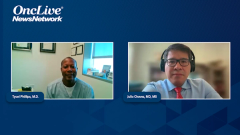
Julio C. Chavez, MD, of Mayo Clinic in Jacksonville, Florida, and Tycel Phillips, MD, of City of Hope in Duarte, California, open their discussion by outlining the treatment landscape for relapsed/refractory diffuse large B-cell lymphoma (DLBCL) in the third-line setting.
Julio C. Chavez, MD, of Mayo Clinic in Jacksonville, Florida, and Tycel Phillips, MD, of City of Hope in Duarte, California, open their discussion by outlining the treatment landscape for relapsed/refractory diffuse large B-cell lymphoma (DLBCL) in the third-line setting. Dr. Phillips reviews available options, including the bispecific antibodies epcoritamab and glofitamab, tafasitamab plus lenalidomide, loncastuximab tesirine, polatuzumab vedotin plus bendamustine and rituximab, brentuximab vedotin plus lenalidomide and rituximab, and several CAR T-cell products. He emphasizes that treatment selection depends heavily on prior therapy and identifies patients with CAR T-refractory disease as the group with the greatest unmet need, noting that many remaining options are chemotherapy based and difficult to deliver after CAR T. Dr. Phillips then explains how bispecific antibodies engage both malignant B cells and T cells to drive tumor killing, highlighting their off-the-shelf availability compared with CAR T-cell therapy, which requires collection, manufacturing, and insurance approval.