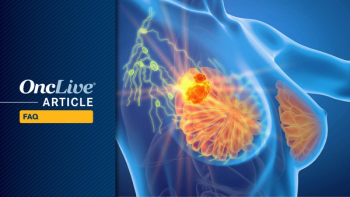
Breast cancer experts address frequently asked questions on adjuvant and metastatic CDK4/6 inhibitor selection in HR-positive breast cancer.
In case you missed any, read a recap of the episodes of OncLive On Air that aired in January 2025.
In case you missed any, below is a recap of the episodes of OncLive On Air® that aired in January 2025. Check out our
In
“Even if you just look at a class of cancer, such as estrogen receptor (ER)–positive breast cancer, now you're looking at first line [treatments for patients with] PIK3CA mutations using AI and precision medicine,” Park emphasized. “It's just phenomenal the clinical research that's occurring, not just in oncology [in general], but subspecies, breast oncology and ER-positive breast cancer [specifically]. The amount of information is just a lot right now, so I think AI and precision medicine will really help us.”
“We need to empower the next generation of oncologists,” Curigliano commented regarding the potential future implications of the recent influx of breast cancer research. “It's now time to empower them to affect the future of cancer treatment and the survival of our patients.”
In
“This is an exciting approval in a patient population that truly has a high unmet need, and I hope that many patients will benefit from this therapy,” Schram said.
In
“Our goal with this study was to use a less toxic systemic therapy to try to reduce the risk of developing distant metastatic disease, because really, that is where the mortality comes from,” Mowery explained.
In
“There are so many different lymphomas,” Park stated. “It's so heterogeneous, and all of them have different treatments. It's so intellectually stimulating.”
“I think in a few years, [for DLBCL], we are going to be beating R-CHOP (rituximab [Rituxan], cyclophosphamide, doxorubicin, vincristine, and prednisone) with some of the new medicines,” Brody emphasized.
In
“[Based on the] first part of the results, using next-generation sequencing and oncogene overlap, we can define a threshold that isn’t just based on us picking a number of what copy number gain we think is clinically meaningful for a cancer,” Watson explained. “But based on biological mutual exclusivity this copy number gain seems to define a subgroup of meaningfully HER2-, KRAS-, and MET-amplified cancers that then could be studied in targeted therapy trials.”
In this episode of
“MedNews Week is dedicated to making medical education global and accessible, and we strive to aim our content toward a mainstream audience in a way that patients, caregivers, medical trainees, and physicians can all understand and appreciate,” Leyfman noted. “This ensures that everyone stays informed about the latest developments in the field. In addition to the medical information, we also dive into the personal stories behind our respective speakers, their motivations, their passions, and why they chose their respective career paths.”
“Oncology Unplugged is something that Dr Leyfman and I have thought about a lot,” Park explained about the podcast offering. “One of the unique features of this [podcast] is that at the end of the day, we're practicing physicians. Whenever new data comes out, it looks great and polished [when it's published in a journal], but we want to have that unplugged discussion. We get into the day-to-day discussion with leading cancer doctors, not just about what's [recommended in the National Comprehensive Cancer Network Guidelines], but also how the person in front of us might respond to treatment differently when considering different medical comorbidities.”
In
“Developing patient-friendly methods of administering cancer therapies, which allow for delivery closer to patients’ communities or [potentially] in their homes, represents a significant paradigm shift in oncology,” Dronca said.
In
“I really loved the way [we can] think about a process at the level of the organism, to the organ, to the system, and then all the way down to a molecule,” Boire said of her decision to become a physician-scientist. “That's so satisfying. And I really liked that this was a way to be helping people in a very concrete way.”
“[When you were] coming to the end of your definitive fellowship in neuro-oncology, [your job was] really 2 jobs,” Camidge noted. “It's running a lab and being a clinical faculty, and it's hard enough to do one.”
In
“It could be a bit hard to extrapolate [the AALL1731] data to adult B-ALL, but I think there's a couple important observations that we as adult physicians can apply,” Cassaday highlighted. “What you might take away from [the trial] is that the addition of blinatumomab is largely preventing medullary relapses from occurring, but it doesn't appear to add any protection in the central nervous system [CNS]. That has implications for adults when we start to think about whether we're going to be using blinatumomab as part of our frontline approaches, we can't necessarily omit or skip the CNS-directed prophylaxis that has to be included with those regimens.”
In
“Anytime you introduce a new class of therapy, that is a promising development for us as clinicians and for our patients,” Gerber said. “When [an agent is in] a new class, I think it means that not only might there be an opportunity for efficacy and disease control beyond what we already have, but hopefully toxicities that don't necessarily overlap with existing therapies, allowing, at least in some cases, perhaps a prolonged period of disease control that patients might not have otherwise experienced.”
In
“Where I am today, in the midst of community and academia and trying to bridge that gap, I think both sides want to do best. Not need to. They want to do best,” Gosain emphasized. “When I'm leaning into my academic colleagues, they're more than willing to help, be it in my own institution, or when I'm just sending emails to the first authors [of studies asking]: Can you walk me through the study design? Would [a certain] patient fall into [a certain] category. [As a] community oncologist, I acknowledge that I don't know everything. I cannot appreciate all the nuances. This field is moving too fast, and I need to tap into my academic colleagues.”
“You do Oncology Brothers, so your passion comes through, there, for staying up to date and for doing a service to the community, for getting [information] out there,” Camidge added. “You and your brother do an amazing job.”
In
“Car T-cell therapies have provided transformative benefits for patients with leukemia, lymphoma and multiple myeloma, and over the past few years, we've seen significant data which attests to the high value of Car T-cell therapies, including the curative potential for these therapies for a variety of different hematologic malignancies,” Patel explained. “However, the recent news of post Car T-cell therapy second primary cancers created significant distress amongst the public physicians and scientists, and there have been scattered reports of T cell lymphomas diagnosed after Car T-cell therapy administration, but the details of these reports were somewhat unclear.”
“As we [learned] in our [research], [the] incidence of these second primary cancers is fairly low. The concern was, of course, [T-cell] malignancies specifically insertional mutagenesis and insertional transgene-positive [T-cell] malignancies,” Dahiya noted. “That was [the] main concern, which was found to be quite a rare incidence [of] transgene-positive [T-cell] lymphoma in our [analysis].”