Now Playing
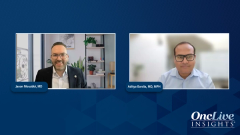
Dr. Aditya Bardia provides an overview of the current standard of care in the first-line setting, emphasizing the established role of endocrine therapy combined with CDK4/6 inhibitors.
Dr. Aditya Bardia provides an overview of the current standard of care in the first-line setting, emphasizing the established role of endocrine therapy combined with CDK4/6 inhibitors. He reviews key landmark trials (PALOMA, MONALEESA, and MONARCH), which consistently demonstrated meaningful improvements in progression-free survival when CDK4/6 inhibitors were added to an aromatase inhibitor (AI) backbone. Among available agents, ribociclib is highlighted for its demonstrated overall survival benefit across multiple MONALEESA trials, contributing to its frequent use in clinical practice. These findings are now well integrated into major international treatment guidelines, including ASCO, NCCN, and ESMO.
The discussion then shifts to remaining gaps in care and opportunities for therapeutic innovation. Dr. Bardia identifies several key areas of investigation, including whether newer endocrine agents such as oral selective estrogen receptor degraders could improve outcomes compared with AIs, and whether more selective CDK inhibition could reduce toxicity while maintaining efficacy. He also raises the broader question of treatment individualization, including whether all patients require upfront combination therapy or if selected patients may do well with endocrine therapy alone. This segment establishes the foundation for subsequent discussions on how the treatment landscape may continue to evolve.