
Opinion|Videos|August 1, 2024
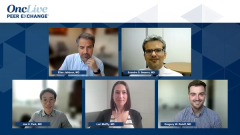
Translating Data Updates from FELIX and ZUMA-3 to the Clinical Practice Setting
A medical expert reviews the FELIX study, highlighting its key findings and characteristics while comparing and contrasting it with the ZUMA-3 trial in the context of CAR T-cell therapy for acute lymphoblastic leukemia.
Advertisement
Video content above is prompted by the following:
- Please review the FELIX Study.
- What are pertinent patient characteristics of this trial - What are some key similarities and differences between FELIX and ZUMA-3?
- What noteworthy efficacy or safety outcomes were demonstrated?
- Depth of response, Persistence of CAR-T, and OS
- Safety
- What are the clinical implications of this data?
Advertisement
Related to this article
BMX-001 was safe and showed encouraging quality-of-life findings in a phase 1/2 head and neck cancer study, supporting randomized evaluation.
Nicolas Girard, MD, PhD, discusses the FDA's CRL for ivonescimab in EGFR-mutated NSCLC, HARMONi survival data, and testing after TKI progression.

MD Anderson researchers find ATRX loss may predict sensitivity to TEAD inhibitors in preclinical sarcoma models.

The expanded clearance extends the mass spectrometry–based EXENT System beyond diagnosis to monitoring of disease status and treatment response.
Paul E. Oberstein, MD, discusses SAR445877’s mechanism of action, the need for immunotherapy in MSS CRC, and strategies for moving novel agents earlier.
Neeta Somaiah, MD, discusses exon 9 and crossover data from the PEAK trial of bezuclastinib plus sunitinib and velzatinib activity in KIT-mutated GIST.
Lauren Banks, MD, PhD, discusses feasibility, safety, and next steps for lifileucel TIL therapy in sarcomas.

Roswell Park outlines a model for partnerships between Native Nations and cancer centers to advance culturally appropriate care and research.
Advertisement
Advertisement
Trending on OncLive
1
SAR445877-Based Treatment Could Pave the Way for Immunotherapy Activity in MSS CRC
2
New Data Reinforce the Strength of TKIs in Advanced GIST
3
Lifileucel Shows Feasibility and Promise in Sarcoma
4
Dr Reid on AdAPT-001 Plus Checkpoint Inhibition in Checkpoint Inhibitor–Refractory Angiosarcoma
5