
Opinion|Videos|September 22, 2026
Weighing CNS Activity and Co-Mutations in Frontline Selection
Experts compare first-line EGFR-mutated NSCLC regimens, showing why subcutaneous amivantamab+lazertinib and chemo+osimertinib boost survival.
Advertisement
Episodes in this series
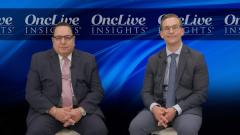
Edgardo Santos, MD, FACP, FASCO, of Starling Oncology, describes which elements of the first-line data carry the most weight in his practice when he treats EGFR-mutated advanced non–small cell lung cancer. He tells Wade Iams, MD, MSCI, of Tennessee Oncology, that both the FLAURA2 regimen of platinum-based chemotherapy plus osimertinib and the MARIPOSA regimen of amivantamab plus lazertinib improved overall survival over osimertinib alone, which he treats as the starting point of any discussion. Dr Santos then walks through the higher-risk features both trials examined: brain metastases, TP53 co-mutation, bone metastases, liver metastases, detectable circulating tumor DNA (ctDNA) at baseline, and failure to clear ctDNA on therapy. In his own clinic he focuses on 2 of these, brain metastases and TP53 co-mutation, and looks for a regimen with durable central nervous system activity when brain disease is present. He returns to overall survival as the measure that matters most to patients.
Advertisement
Related to this article

An observational analysis showed a long-term OS benefit with Orca-T in adult patients undergoing allogeneic transplantation for hematologic malignancies.

FDA has granted fast track designation to LYT-200 plus a hypomethylating agent in relapsed/refractory high-risk myelodysplastic syndromes.

Toon Van Gorp, MD, PhD, discusses key data with TUB-040 in platinum-resistant ovarian cancer and next steps for development.

Japan approved subcutaneous pembrolizumab and berahyaluronidase alfa across all indications for which intravenous pembrolizumab is approved in the country.

New research reveals how cancers carrying mutations in the p53 tumor-suppressor protein can hide those mutations from T cells.

Elise A. Chong, MD, discusses real-world liso-cel efficacy and safety, outpatient use, and future directions in relapsed/refractory mantle cell lymphoma.

Brad S. Kahl, MD, discusses TRIANGLE and EA4151 data reshaping ASCT use in frontline MCL, induction intensity, and high-risk disease strategies.

Mary Ann Anderson, MBBS, FRACP, FRCPA, PhD, discusses recent CLL approvals, BTK and BCL-2 inhibitor safety, and individualizing frontline therapy.
Advertisement
Advertisement
Trending on OncLive
1
Japan Approves Subcutaneous Pembrolizumab for All Approved Pembrolizumab Indications
2
FDA Grants Fast Track Designation to LYT-200 in R/R High-Risk MDS
3
Integrating Bispecific Antibodies Into Frontline Therapy for Newly Diagnosed Multiple Myeloma
4
NAPISTAR-1-01 Data Support Rapid TUB-040 Development in Biomarker-Unrestricted Ovarian Cancer
5